



The Linton Worm: Scotland’s Forgotten Dragon Legend

Beneath the mossy hills of the Scottish Borders, a tale once echoed in the hearth-lit halls of Roxburghshire—of a monstrous beast with coils like tree trunks and a hunger that left fields barren. They called it the Linton Worm.
What is the Linton Worm?
The Linton Worm is a legendary dragon from Scottish folklore, believed to have terrorized the countryside near the village of Linton in the Scottish Borders. Unlike the fire-breathing dragons of continental tales, the Linton Worm was more like a monstrous serpent—a “worm” in the old Scots sense of the word, from the Norse-derived wyrm.
According to tradition, the beast emerged from the caves of Linton Hill, coiling its massive body across farmland and poisoning the earth with its breath. In some tellings, it could wrap its body around entire hills, devouring cattle and causing widespread terror.
The hero of the tale, William de Somerville, is said to have slain the beast using a burning spear affixed to a lance—riding directly into the worm’s mouth. Whether apocryphal or symbolic, the act elevated his family, whose crest would henceforth bear the Wyvern.

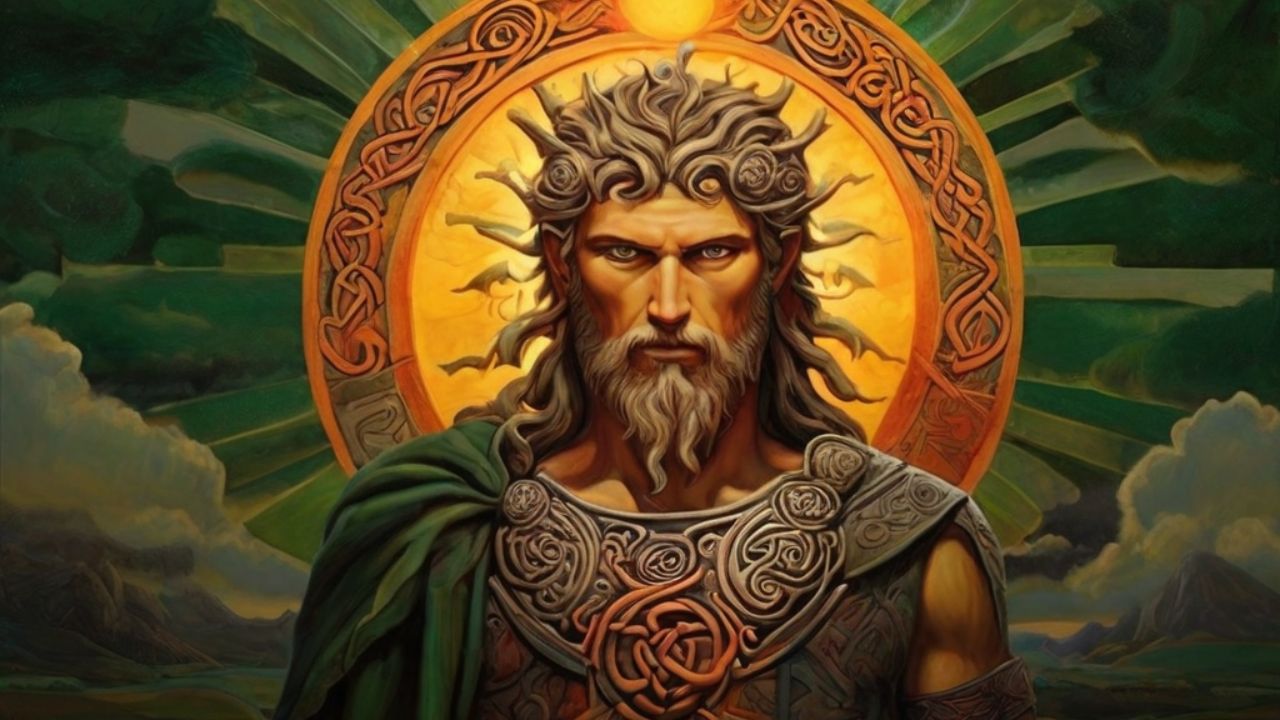
To understand such folkloric beasts, it’s helpful to explore broader Celtic mythological motifs—like those seen in the legends of the Cauldron of Dagda or the Celtic sun god Lugh, where the supernatural is woven into daily life and natural landscapes.
Cultural Importance of the Linton Worm
The Linton Worm is part of a larger family of dragon or wyrm tales across the Celtic world, where such creatures often represent chaos, famine, or an untamed natural force. These beings aren’t simply monsters—they are reflections of social upheaval, plague, and fear of the wild.

Its importance lies not only in the creature itself, but in its connection to Clan Somerville, for whom the story serves as an origin myth. Their family history claims this event as the reason for their elevation in medieval Scottish society—a claim etched into heraldry and passed down through generations.
Scotland’s storytelling tradition—explored more fully in Why Are Irish People Natural Storytellers?—reveals how such legends are both history and heritage, used to explain and immortalize lineage and place.
Like many old-world tales, the Linton Worm’s story is deeply tied to the land itself. Local topography, such as the depressions in the ground or patterns in hills, were often said to be left by the creature’s coiled body—similar to how Scottish sites like the Fairy Glen are woven with mythic interpretations.
The Linton Worm in Today’s World
While the Linton Worm may not be as famous as Nessie, it still holds a place in the hearts of folklore lovers and regional historians. Visitors to Linton Kirk in Roxburghshire can stand where the legend was born—and where it was said to end.

The creature has been referenced at storytelling festivals, in Borders tourism guides, and even in scholarly studies of Celtic dragon motifs. Its tale connects well with the symbolism explored in works like the Celtic stone carvings, where dragons, serpents, and knots reflect ancient cosmologies.
Modern fascination with wyrms like the Linton Worm parallels growing interest in reviving Celtic art, music, and mythology. You’ll find echoes of the worm in everything from children’s books to fantasy reenactments during events such as those listed in Highland Games 2025.
Common Questions About the Linton Worm
Was the Linton Worm real?
No physical evidence exists to confirm the creature’s existence. Like most mythic dragons, it likely symbolized real-life fears—disease, raiders, or unexplained disasters.
Where is the Linton Worm’s lair?
It’s believed the beast lived near Linton Hill, close to Linton Kirk in the Scottish Borders. The surrounding geography, particularly Worm’s Den, is said to reflect the worm’s path.
Who killed the Linton Worm?
According to legend, Sir William de Somerville devised a clever method to slay the beast, which involved impaling it through the mouth with a burning spear. This act is said to have established his family’s prominence.
Are there other Scottish dragons?
Yes—Scotland has a rich legacy of wyrms and serpentine monsters, including tales like the Stoor Worm of Orkney. The Selkies in Folklore (read more here) also hint at hybrid beings in watery settings, showing the variety in Celtic mythical beasts.
Conclusion
The legend of the Linton Worm endures not because of fire and fang, but because of what it reveals about medieval Scotland’s relationship with fear, land, and identity. In a country where hills have memories and stones speak, even dragons leave a legacy.
From clan symbols to carved stonework, from the songs of Borders bards to scholarly records, the Linton Worm lives on. Perhaps not in flesh—but certainly in folklore.
Explore more Celtic mythology and legends and uncover the stories that shaped Scotland’s spirit.


1 Comment
[…] beside other iconic figures of Celtic heritage, much like the heroes and creatures explored in The Linton Worm. Whether portrayed as a fierce commander or a grieving mother who refused silence, each retelling […]