Scottish Bagpiper’s Costume: Sound Woven in Tartan
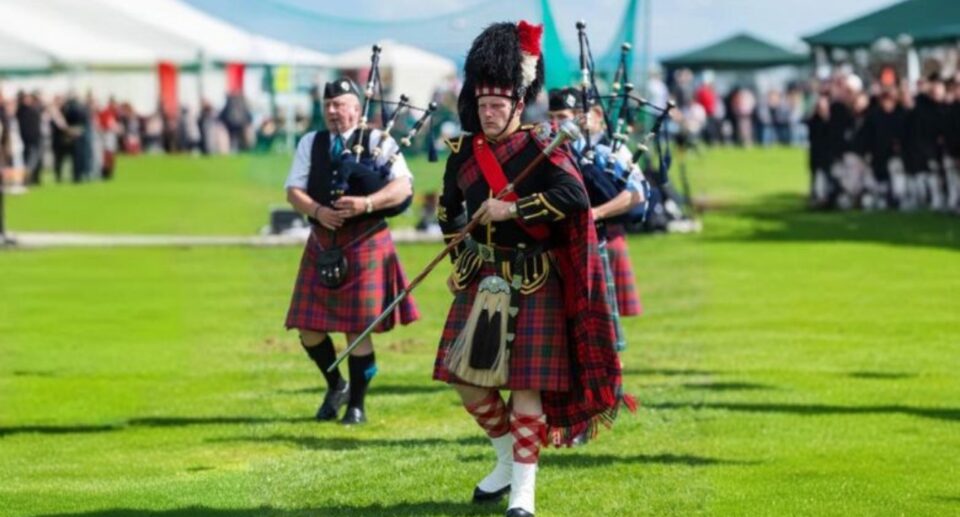
The Scottish bagpiper’s costume does more than frame a musician. It announces lineage, landscape, and loyalty. When a piper steps forward in full Highland dress, the audience sees history before they hear a single note.
The costume combines textile tradition, martial symbolism, and ceremonial precision. Each element carries cultural weight. Together, they transform performance into public heritage.
Readers who explore the wider cultural landscape in the CeltGuide blog will notice how clothing and music often intersect. The piper’s attire offers one of the clearest examples of that union.
The Kilt: Clan Identity in Motion
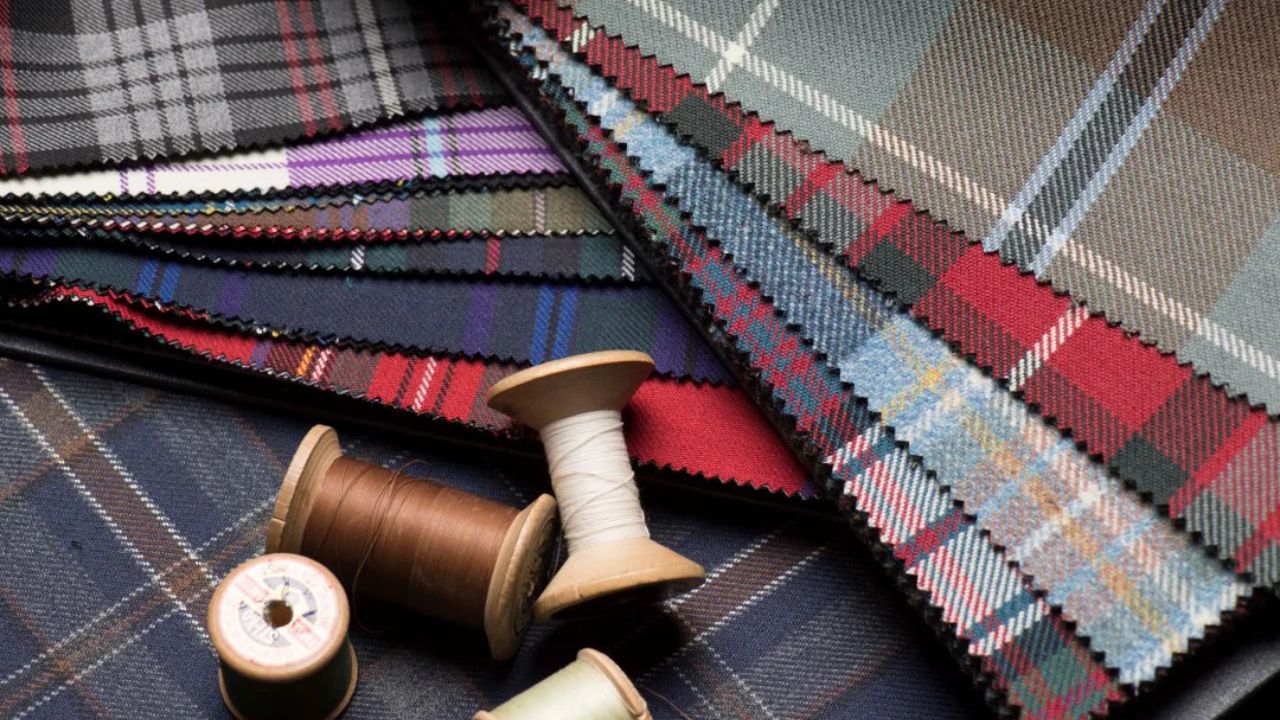
At the centre of the Scottish bagpiper’s costume stands the kilt. This garment reflects clan belonging and regional pride. If you wish to understand its structure and symbolism, begin with our guide to what is tartan?.
Each tartan pattern signals ancestry. Colours and sett designs distinguish one clan from another. For deeper historical context, see our discussion on how long has the tartan prints been around.
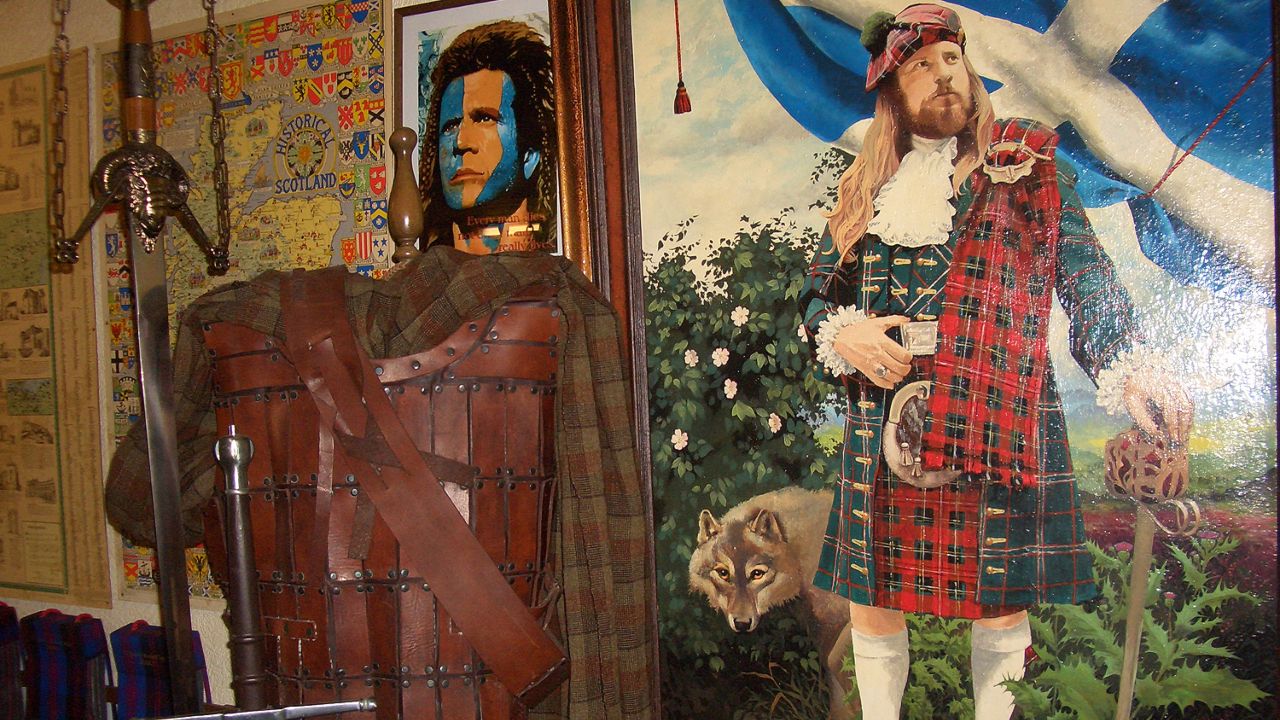
Pipers often wear their clan tartan or that of a regiment. The pleats allow free movement while marching or performing. The kilt does not function as costume alone. It asserts identity in woven form.
If you want practical insight into fit and form, our article on how to measure for a kilt explains the technical details behind proper tailoring.
The Sporran, Belt, and Dirks
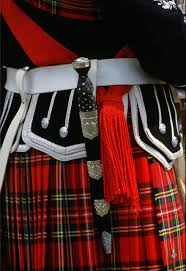
A kilt lacks pockets. The sporran solves that problem. This pouch hangs at the front and balances the visual composition of the outfit. Formal occasions call for ornate designs with fur or silver cantles.
The belt and buckle anchor the look. They frame the waist and stabilise the kilt during movement.
Some pipers include a sgian-dubh or ceremonial blade. For historical background on Highland weaponry, see our guide to what is a dirk knife. These elements echo Scotland’s martial past while remaining largely symbolic in modern performance.
The Jacket and Formal Structure
The jacket varies according to occasion. Daywear often includes the tweed Argyll jacket. Formal events favour the Prince Charlie jacket, worn with a waistcoat and bow tie.
This structure mirrors the evolution of Highland dress from practical attire to ceremonial uniform. You can see how kilts adapted to climate in our piece on kilts weather Scotland.
Military pipe bands refined much of today’s standardised appearance. The result blends regimental precision with clan tradition.
Headwear: The Balmoral and Tam O’Shanter
A piper’s headwear completes the silhouette. The Balmoral bonnet or the Tam O’Shanter often crowns the ensemble. Each carries regional nuance.
Our article on the Tam O’Shanter hat traces its cultural history. The feather hackle attached to some bonnets signals regimental affiliation. Even small details communicate status and story.
The Musical Core: Pipes and Performance
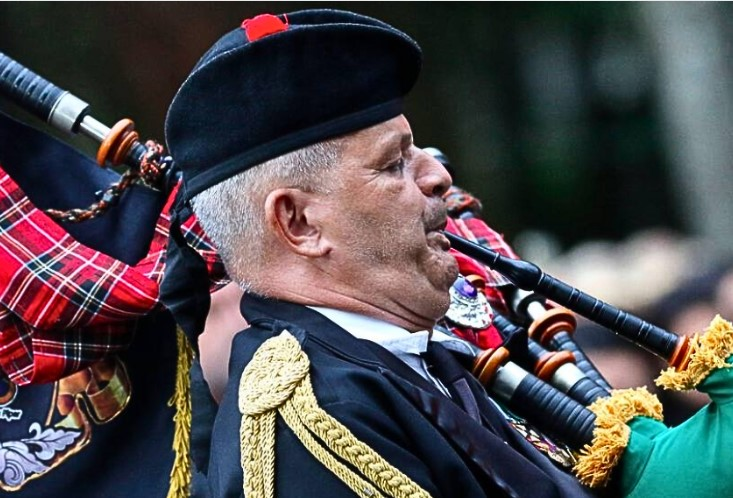
The costume frames the instrument itself. Great Highland bagpipes dominate the visual and auditory field. The drone pipes rise above the shoulder, creating a striking vertical line.
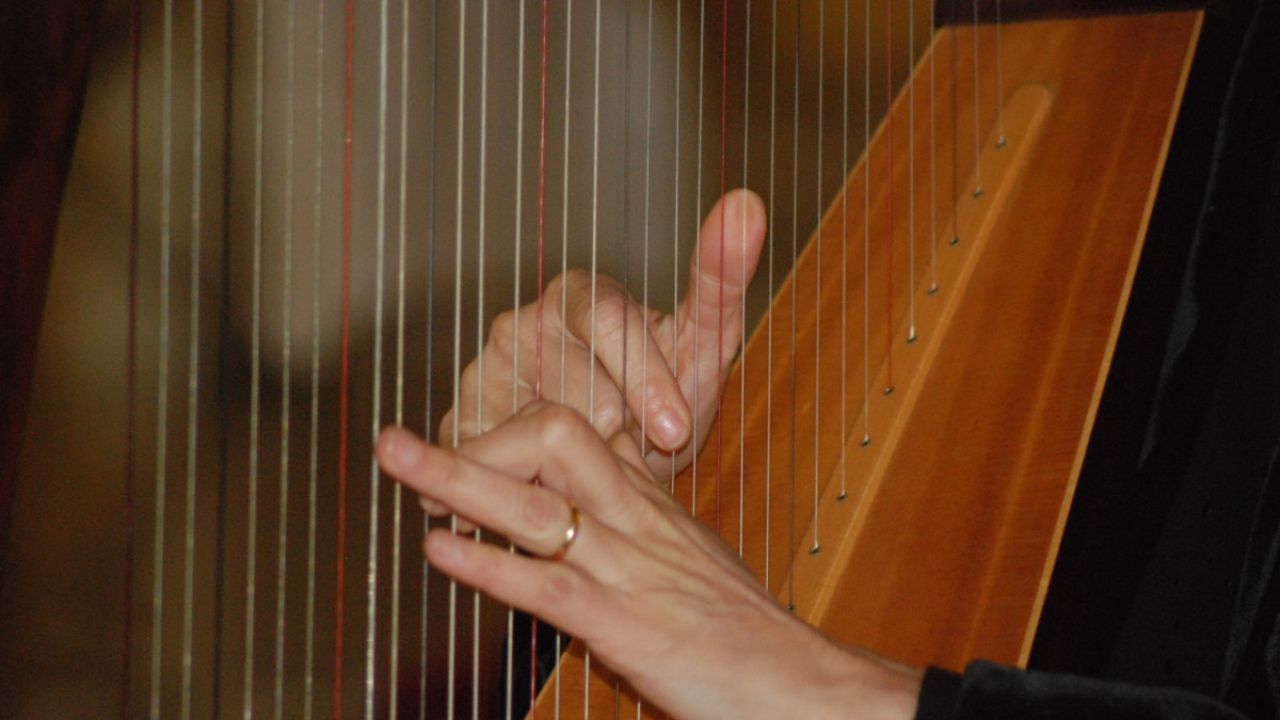
Music anchors the outfit’s purpose. For insight into other Celtic instruments, consider our guide to what is a clarsach? or our exploration of fiddle music. Together, they show how sound shapes Celtic identity.
Bagpipers often perform at events such as those highlighted in events to watch in Highland Games 2025. In such settings, costume and music merge seamlessly.
Landscape, Ceremony, and Cultural Memory
Place matters. Imagine a piper standing near Loch Lomond. If you wonder about its geography, our article on is Loch Lomond in the Highlands provides clarity. Landscape amplifies the visual power of Highland dress.
Ceremonial occasions deepen the symbolism. National celebrations and commemorations, much like those discussed in the significance of Saint Patrick’s Day, remind us how clothing communicates collective identity.
Even funerary traditions, explored in Heartbeat of Farewell: Irish Wake Traditions Through a Celtic Lens, show how music and dress frame moments of communal emotion. The piper’s costume participates in that wider ritual language.
Why the Costume Still Matters
The Scottish bagpiper’s costume persists because it answers more than aesthetic desire. It connects performer and audience to clan history, craftsmanship, and national memory.
Textiles echo ancient patterns. Accessories recall Highland resilience. The pipes themselves project sound that carries across glens and city squares alike.
In an era of global uniformity, Highland dress resists anonymity. It tells us who stands before us. It honours the past without surrendering to it.
When the piper marches forward, tartan sways, drones hum, and history walks beside him.