What Is Annwn? Celtic Otherworld of Welsh Mythology

Annwn is the Otherworld of Welsh mythology — a realm of eternal youth, feasting, and magic ruled by figures like Arawn and Gwyn ap Nudd, first described in the Mabinogion.
To ask “what is Annwn?” is to knock on a mythic door—one that opens not into fire and brimstone, but into mist and music, golden fields and shadowed battles. Annwn, in the Welsh tradition, is the Otherworld—not a hellish punishment, but a sacred place where gods, the dead, and eternal beauty converge.
What Is Annwn?
Annwn (pronounced AH-noon or AN-oon) is the Otherworld in Welsh mythology—a supernatural realm described in ancient poetry and tales, particularly the Mabinogion and Preiddeu Annwn (“The Spoils of Annwn”).

Unlike the Christian concept of heaven or hell, Annwn is not a place of moral judgment. It is often depicted as a land of delight, endless feasting, youth, and music—though not without danger. Gaining access to Annwn usually involves riddles, quests, or confrontation with its guardians.
In early literature, it’s portrayed as:
- A realm beneath the earth or across the sea
- A land of plenty and otherworldly treasures
- A domain ruled by Arawn or Gwyn ap Nudd, depending on the source
- The origin of magical animals, mystical hunts, and poetic inspiration
The question “what is Annwn?” reveals not just geography, but worldview. It speaks to how the Welsh perceived death, the soul, and the realms beyond what eyes could see.
The Cultural Importance of Annwn
In the Celtic worldview—particularly among the Welsh—the boundary between this world and the Otherworld was porous. Annwn wasn’t just a storybook setting; it was a living idea that shaped festivals, beliefs about the dead, and the authority of kings and poets.

Perhaps most famously, Pwyll, Prince of Dyfed, journeys to Annwn and switches places with its ruler Arawn in the First Branch of the Mabinogi. Their mutual respect and honor transform both realms, establishing a bond between the mortal and divine. This tale shows Annwn as a realm not just of spirits, but of moral depth and political power.

In the poem Preiddeu Annwn, attributed to Taliesin, King Arthur himself sails to Annwn in search of a magical cauldron—likely a symbol of poetic inspiration or rebirth. Most of his men never return. The story echoes other Celtic myths of failed journeys to the Otherworld, where mortality meets mystery.
Annwn may also connect to broader Celtic Otherworld concepts, such as the Irish Tír na nÓg, a similarly timeless land of youth and beauty, revealing the shared mythic framework across Celtic nations. You can explore more about this cultural web in our piece on Irish holy wells—earthly sites believed to link to other realms.
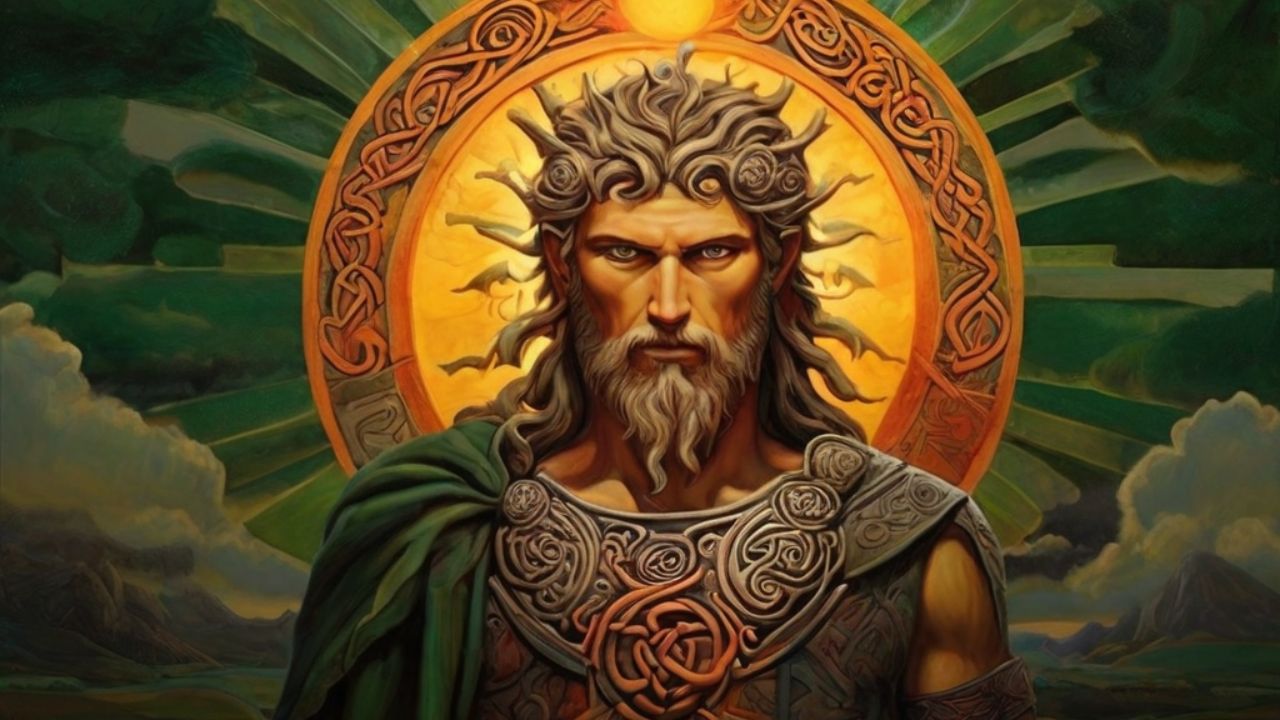
Arawn: The First King of Annwn
The oldest and most detailed portrait of Annwn’s ruler comes from the First Branch of the Mabinogi, and it begins — fittingly for the Otherworld — with a mistake. Pwyll, prince of Dyfed, sets his hounds on a stag another pack has already brought down, and discovers too late that the pack belongs to Arawn, king of Annwn. The insult demands repayment, and Arawn’s price is one of the strangest bargains in medieval literature: the two men exchange faces, kingdoms, and lives for a year and a day, with Pwyll pledged to meet Arawn’s rival Hafgan in single combat at the year’s end.
What the story reveals about Arawn is telling. His kingdom is no gloomy underworld — Pwyll finds it the fairest court he has ever seen, rich in feasting, song, and courtesy. And Arawn himself is no devil: he is exacting about honor but scrupulously fair, and when Pwyll keeps faith (famously sharing a bed with Arawn’s queen for the whole year without touching her), the two part as lasting friends, exchanging gifts between their realms for years after. Arawn’s kingship represents the Otherworld as medieval Welsh tradition understood it — a sovereign, orderly realm alongside our own, dangerous to offend but generous to those who deal with it honestly.
Gwyn ap Nudd: The Later Lord of the Otherworld
In later Welsh tradition a second figure becomes attached to Annwn: Gwyn ap Nudd (“Gwyn son of Nudd”), a huntsman-king associated with the Otherworld and the restless dead. Where Arawn belongs to the measured world of the Mabinogi, Gwyn belongs to wilder material — in the tale of Culhwch and Olwen he is said to contain within him “the fury of the demons of Annwn,” and he fights an eternal battle every May Day for the maiden Creiddylad. Later folklore makes him king of the Tylwyth Teg, the Welsh fairy folk, and places his court beneath Glastonbury Tor.
Gwyn is also the figure who ties Annwn to one of European folklore’s most enduring images: the spectral chase across the night sky. As leader of the Wild Hunt in Welsh tradition, he rides out with the Cŵn Annwn — the white, red-eared hounds of the Otherworld — whose cry was said to foretell death. If Arawn shows the Otherworld’s courtly face, Gwyn shows its untamed one; between them they map the full range of what Annwn meant to the Welsh imagination.
Annwn, Tír na nÓg, and Avalon: Three Otherworlds Compared
Annwn is often mentioned in the same breath as two other famous Otherworld realms, and the comparison is worth making precisely because the three are not the same place under different names. Annwn is Welsh: a parallel kingdom with its own kings, reachable through mist, mounds, and chance encounters, first described in the Mabinogion. Tír na nÓg is Irish: the “Land of the Young” across the western sea, where time itself slows — Oisín spends what feels like three years there and returns to find three centuries gone. Avalon belongs to Arthurian-British tradition: the apple-isle where Excalibur was forged and the wounded Arthur was carried to be healed.
What unites them is more interesting than what separates them: all three are timeless lands of feasting, youth, and healing; none is a heaven or hell in the Christian sense; and each is reached not by ordinary travel but by crossing a boundary — water, mist, or the thin threshold of a fairy mound. They are three cultures’ answers to the same intuition: that another world lies alongside ours, close enough to stumble into.
Annwn in Today’s World
Though modern ears may hear “Annwn” and think of fantasy or metaphor, the concept remains spiritually and artistically resonant.
- Neo-pagan and Druidic circles often refer to Annwn as a realm of the ancestors, the land of the dead, or the dreamworld entered during deep meditation or ritual.
- Poets and musicians continue to draw from the imagery of Annwn—cauldrons of inspiration, white hounds with red ears, and enchanted feasts.
- In some regions of Wales, particularly in the West, echoes of Annwn linger in folklore—particularly in tales of the Cŵn Annwn, the hounds of the Otherworld whose howls signal death or the passing of souls.
Celtic festivals like Samhain and Calan Gaeaf also blur the lines between this world and the Otherworld, offering fertile ground for Annwn’s mythic landscape to reemerge.
Common Questions About Annwn
Is Annwn the same as Hell?
No. While some later Christian interpretations tried to align Annwn with Hell, traditional Welsh sources portray it as a paradisiacal and morally neutral realm—more akin to the Irish Tír na nÓg or Greek Elysium.
Who rules Annwn?
Annwn is ruled by Arawn in the Mabinogi and by Gwyn ap Nudd in later medieval tales. Both figures are kings of the Otherworld, associated with death, the hunt, and the supernatural.
How is Annwn accessed?
Often by crossing water, entering a cave, or following supernatural animals. These thresholds are symbolic of spiritual or transformative journeys. Heroes usually encounter Annwn during dream-states, near sacred groves, or on ritual festivals.
Does Annwn still influence Welsh culture?
Yes—from poetry and storytelling to modern pagan practice, the idea of Annwn endures. Wales’ rich oral tradition and festivals help keep these concepts alive. To understand the storyteller’s role, see Why Are Irish People Natural Storytellers?.
Conclusion
So—what is Annwn? It is a question with many answers, none quite complete. It is a mirror, a mist, a memory. A realm both richly alive and beyond reach. Not heaven. Not hell. But a Celtic imagining of the beyond, filled with music, justice, danger, and divine poetry.
For the Welsh, and indeed for many Celts, death was not the end but a crossing—and Annwn was the land on the other side.
Explore more stories of Celtic myth and meaning on the CeltGuide Blog—where legends still speak if you know how to listen.