Celtic Burial Mounds: Monuments of Memory and Myth

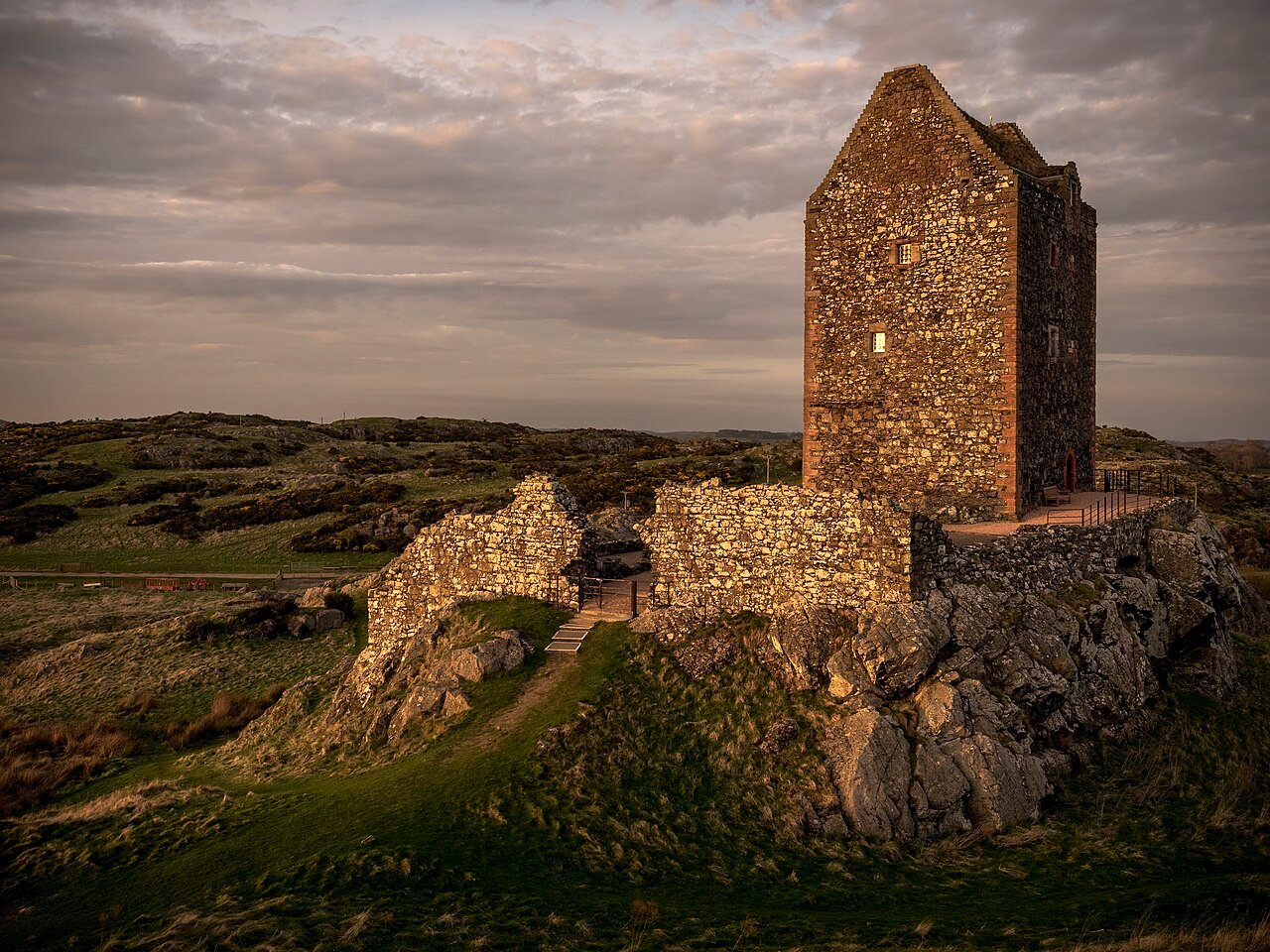
Across the landscapes of Ireland, Scotland, and beyond, grassy mounds rise like silent guardians of the past. These Celtic burial mounds, also known as barrows or tumuli, are more than ancient graves. They are cultural markers, places where history, myth, and ritual converge.
Much like the Irish holy wells, these mounds reflect how Celts understood the thin veil between the living and the dead. They are both archaeological treasures and mythological touchstones.
The Origins of Celtic Burial Mounds
Burial mounds predate the Celts, stretching back to the Neolithic and Bronze Ages. When Celtic culture flourished, these structures were embraced and reimagined, blending older traditions with Celtic cosmology.
For the Celts, mounds were not merely tombs but portals to the Otherworld, a concept echoed in myths like Annwn, the Welsh underworld of heroes and spirits.
Structure and Design: Earth, Stone, and Symbolism
Celtic burial mounds vary in size and complexity:
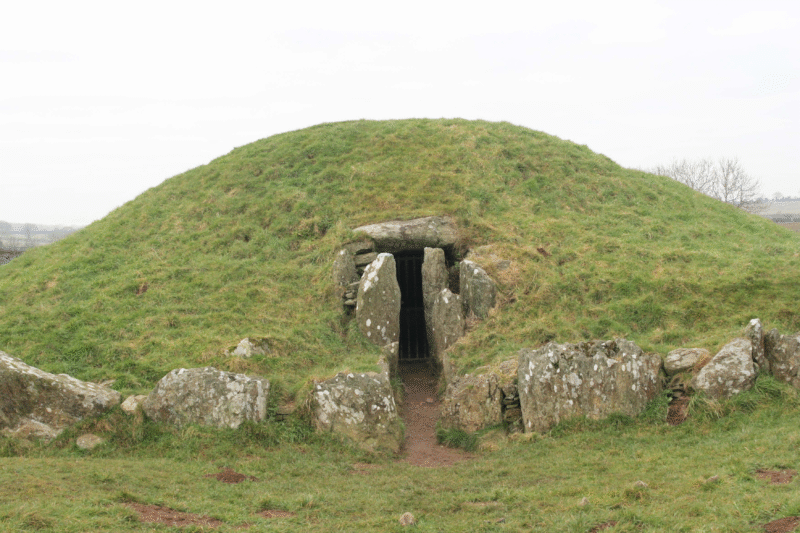
- Simple earthen barrows – rounded mounds covering single burials.
- Passage tombs – chambers with stone-lined passages aligned to the sun, moon, or stars.
- Ring cairns and stone circles – blending burial with ritual landscapes.
These designs often mirror the Celts’ deep relationship with nature. As with Celtic stone carvings, symbolism mattered as much as structure, spirals, circles, and solar alignments spoke of rebirth and cosmic cycles.
Burial Rituals: Honouring the Dead
The Celts believed death was a transition, not an end. Burial rites included:
- Grave goods – weapons, jewellery, and tools for the afterlife.
- Animal offerings – symbolic connections to gods and nature.
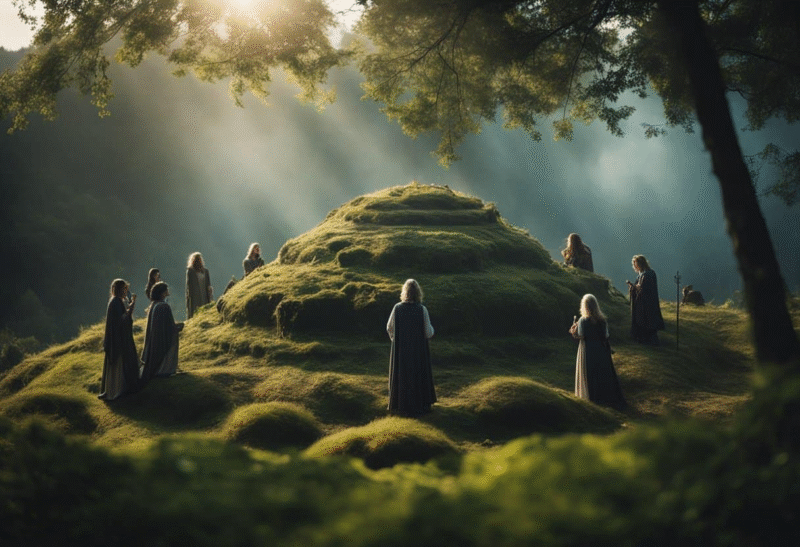
- Seasonal rituals – gatherings at burial sites, echoing the role of ceili bands in modern Celtic community life.
This continuity of community and remembrance resonates with traditions of Irish wake rituals.
Myths and Legends Around the Mounds
Folklore paints burial mounds as enchanted places:
- In Ireland, some mounds were thought to house the Aos Sí, or fairy folk, connecting them to tales like the Legend of the Fairy Glen.
- In Scotland, mounds were associated with ancient kings, echoing the grandeur of sites like Hill of Tara.
- Some stories describe mounds as entrances to realms of gods, akin to the Cauldron of Dagda, a vessel of endless bounty and knowledge.
Celtic Burial Mounds in the Landscape Today
Many mounds still shape Celtic landscapes, standing alongside castles, glens, and rivers. Visiting them feels like stepping into both history and myth. Just as Isle of Mull blends natural beauty with heritage, burial mounds bind together land, ancestors, and story.
They also remind us of the Celts’ cyclical view of life—death as transformation, much like the ever-renewing Celtic oak tree.
Conclusion: Monuments of Memory
Celtic burial mounds are not silent relics. They are living landscapes of memory, myth, and meaning. They remind us that to the Celts, the land was sacred, the ancestors were ever-present, and every mound was a bridge between worlds.
For further explorations of Celtic heritage, browse our culture and tradition section.