Irish Holy Wells: Portals to the Past, Pathways to the Divine
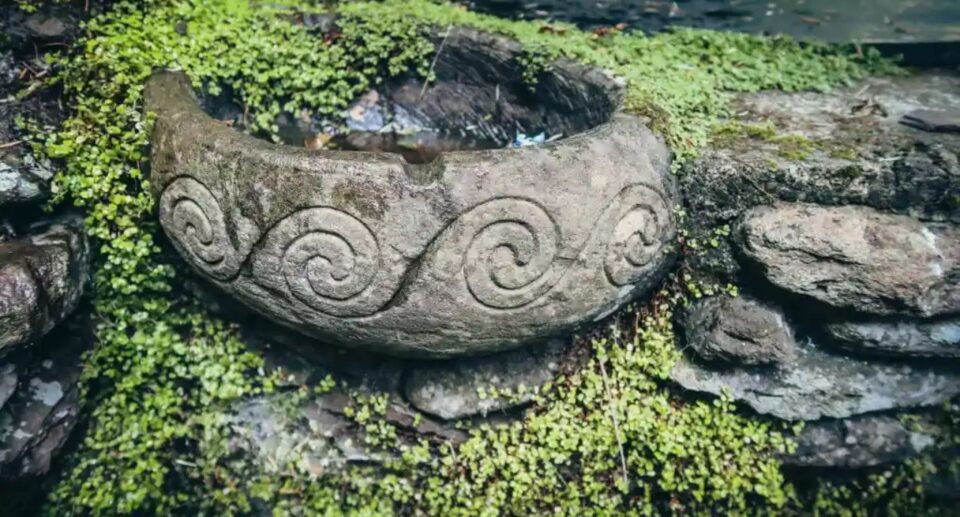
In the emerald folds of Ireland’s landscape, where mist clings to hawthorn trees and stone crosses rise from dew-soaked earth, lie the Irish Holy Wells—sacred springs that have quenched both body and spirit for millennia. These wells are not mere sources of water; they are living archives of Ireland’s spiritual evolution, where pagan deities and Christian saints coexist in a tapestry of faith. For centuries, pilgrims have traced paths to these sites, seeking healing, hope, and a tangible connection to the divine. Let us journey through their history, rituals, and enduring legacy.
More from Culture & Tradition: The Echo of Ancestors: How Celtic Bells Ring Through Time
Origins: From Pagan Springs to Christian Sanctuaries
Long before Christianity’s arrival, the Celts revered natural springs as gateways to the Otherworld, realms inhabited by deities like Bóann (goddess of the River Boyne) and Nechtan (guardian of Connla’s Well). These waters were believed to hold imbas—a luminous wisdom granting poetic inspiration or prophetic sight.

Early holy wells were often part of triadic landscapes: a spring, a sacred tree (hawthorn or oak), and a stone marker. This triad symbolized the union of earth, water, and sky. Pre-Christian devotees left votive gifts—bronze artifacts, carved stones—to appease spirits. The Well of Segais, mythic source of Ireland’s rivers, was said to house a salmon imbued with infinite knowledge.
With the arrival of St. Patrick in the 5th century, pagan wells were ingeniously rebranded. Sites once dedicated to goddesses like Brighid became St. Brigid’s Well, their waters now associated with Christian miracles. This syncretism allowed spiritual continuity, ensuring the wells’ survival through Ireland’s conversion.
Rituals and Rounds: The Choreography of Devotion
Visiting a holy well is a choreographed ritual steeped in symbolism, blending prayer, movement, and offerings.
The ‘Pattern’ (Patrón) Day
Each well is linked to a saint’s feast day, known as a Pattern Day. At St. Brigid’s Well in Kildare, pilgrims circle the well three times deiseal (sunwise), reciting prayers in Irish. These gatherings mix solemnity with festivity—a hallmark of Celtic spirituality.

The Turas (Pilgrimage Rounds)
- Circumambulation: Walking sunwise around the well, often on bare knees, to honor the sacred geometry of the cosmos.
- Prayer Stations: Pausing at crosses or stones to recite decades of the Rosary. At St. Declan’s Well in Ardmore, pilgrims kneel at a stone slab said to bear the saint’s knee imprint.
- Clootie Offerings: Strips of cloth (clooties) are tied to nearby trees. As the fabric rots, so too does the illness or sorrow it represents.
- Water Rituals: Drinking from the well or bathing afflicted body parts. At Tobar na nGealt (Well of the Mad), waters rich in lithium were historically used to treat mental ailments.
Taboos and Consequences
Misusing well water—washing clothes, for example—could provoke supernatural wrath: dried springs, vanishing guardian fish (often trout or eels), or even death.
Notable Wells: Saints, Cures, and Legends
From rugged coastlines to hidden glens, Ireland’s holy wells are as diverse as their stories. Below are four of the most revered.
St. Brigid’s Well, Liscannor
Nestled near the Cliffs of Moher, this well honors the beloved saint/goddess of fire and healing. The site includes a rag tree heavy with offerings and a stone tunnel where pilgrims crawl to symbolize rebirth.

St. Patrick’s Well, Clonmel
One of Ireland’s largest holy wells, where Patrick allegedly baptized converts. Its “pattern” involves circling a medieval church ruin and a curative pool linked to eye ailments.

Tobar na nGealt, Kerry
The “Madman’s Well” was renowned for curing mental illness. Modern science found its waters contain lithium, used today in bipolar treatment—a striking convergence of folklore and pharmacology.

Doon Well, Donegal
Guarded by twin hawthorns, this well attracts thousands on Garland Sunday. Crutches left behind testify to its healing power.

The Penal Era: Wells as Subversive Sanctuaries
During the 17th–18th centuries, British Penal Laws suppressed Catholicism. Holy wells became covert worship sites. Mass rocks doubled as altars, and “pattern days” morphed into acts of cultural resistance. The Well of the Triple Goddess in Minster-in-Sheppey, though a modern invention, echoes this defiance.

Modern Revival: From Pilgrimage to Tourism
Today, Irish holy wells straddle faith and heritage:
- Spiritual Tourism: Sites like Gougane Barra (Cork) draw global visitors, blending meditation with Instagram snaps.
- Environmental Stewardship: Groups like The Living Water Workshop map and restore wells, recognizing their ecological and cultural value.
- Neopagan Resurgence: Wells like Chalice Well in Glastonbury (though English) inspire New Age rituals, reflecting Ireland’s enduring “thin places” mystique.
The Science Behind the Sacred
While faith drives pilgrimage, science offers intriguing validations:
- Lithium in Tobar na nGealt: Its waters contain mood-stabilizing elements.
- Antimicrobial Properties: Some wells’ mineral content (e.g., sulphur) may explain historical cures for skin diseases.
Conclusion: Eternal Springs in a Changing World
The Irish Holy Wells are more than relics—they are mirrors reflecting Ireland’s soul. From pagan rites to TikTok travelogs, they adapt yet endure. As a scholar and storyteller, I’ve witnessed tears at St. Brigid’s Well as a mother ties a clootie for her sick child, and laughter at Toberpatrick as teens snap selfies. These wells remind us that the sacred is not static; it flows, like water, through time.