The Piper’s Bonnet: History & Highland Meaning
When the pipes begin to play, the eye rises instinctively to the piper’s head. Before the tartan settles into view and before the drones command the air, we notice the bonnet. It frames the face,, steadies the silhouette, and crowns the music.
The Piper’s Bonnet stands as more than a practical cap. It signals lineage, discipline, and Highland identity. Like tartan, it carries memory in fabric form. And like the pipes themselves, it binds ceremony to sound.
In this study, we consider its origins, its variations, and its enduring place within Celtic culture.
What Is the Piper’s Bonnet?
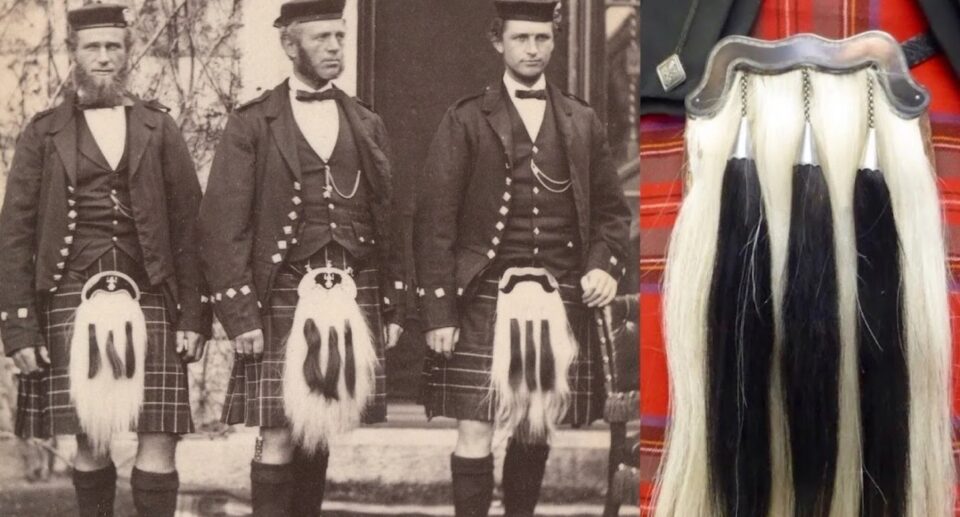
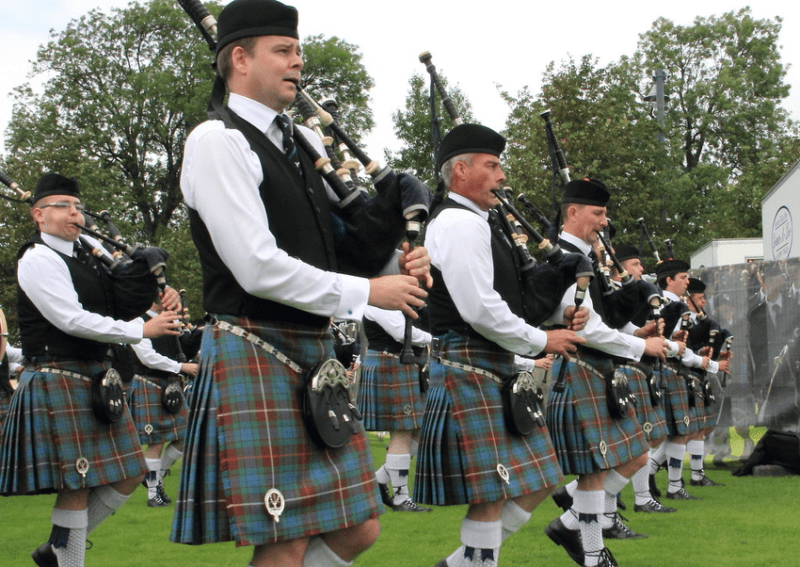
The Piper’s Bonnet refers most commonly to the traditional Scottish military-style bonnet worn by Highland pipers. Two principal forms dominate: the Balmoral bonnet and the feather bonnet.
The Balmoral bonnet presents a rounded wool cap with a toorie (pom-pom) at its centre and ribbons trailing at the back. It offers elegance without ostentation.
The feather bonnet rises taller and carries dramatic plumes. Regimental pipe bands favour this style for formal display.
Both styles align closely with Highland dress traditions explored in What Is Tartan? (https://celtguide.com/what-is-tartan/) and How Long Has the Tartan Prints Been Around? (https://celtguide.com/how-long-has-the-tartan-prints-been-around/). The bonnet completes the visual grammar of the kilted piper.
Origins in Highland Life
The bonnet developed from practical Highland headwear. Harsh climates required woollen protection. As discussed in Kilts and Weather in Scotland (https://celtguide.com/kilts-weather-scotland/), clothing evolved in direct response to wind, rain, and cold.
Early forms resembled the tam o’shanter, a soft wool cap still worn today. You can explore its cultural context in Tam O’Shanter Hat (https://celtguide.com/tam-oshanter-hat/).

Over time, military standardisation shaped the bonnet into a symbol of regimented pride. Highland regiments formalised its structure in the eighteenth and nineteenth centuries. The bonnet moved from crofter practicality to ceremonial authority.
This evolution mirrors broader Highland transitions described in A Crofter’s Journey Through Time (https://celtguide.com/crofters-journey-through-time/). Rural life shaped the form; military pageantry refined it.
The Bonnet and the Bagpipe
A piper does not merely wear the bonnet. He inhabits it.
The Great Highland bagpipe demands posture and composure. The bonnet anchors that presence. It balances visually with the drones that rise above the shoulder. Together, they create symmetry.
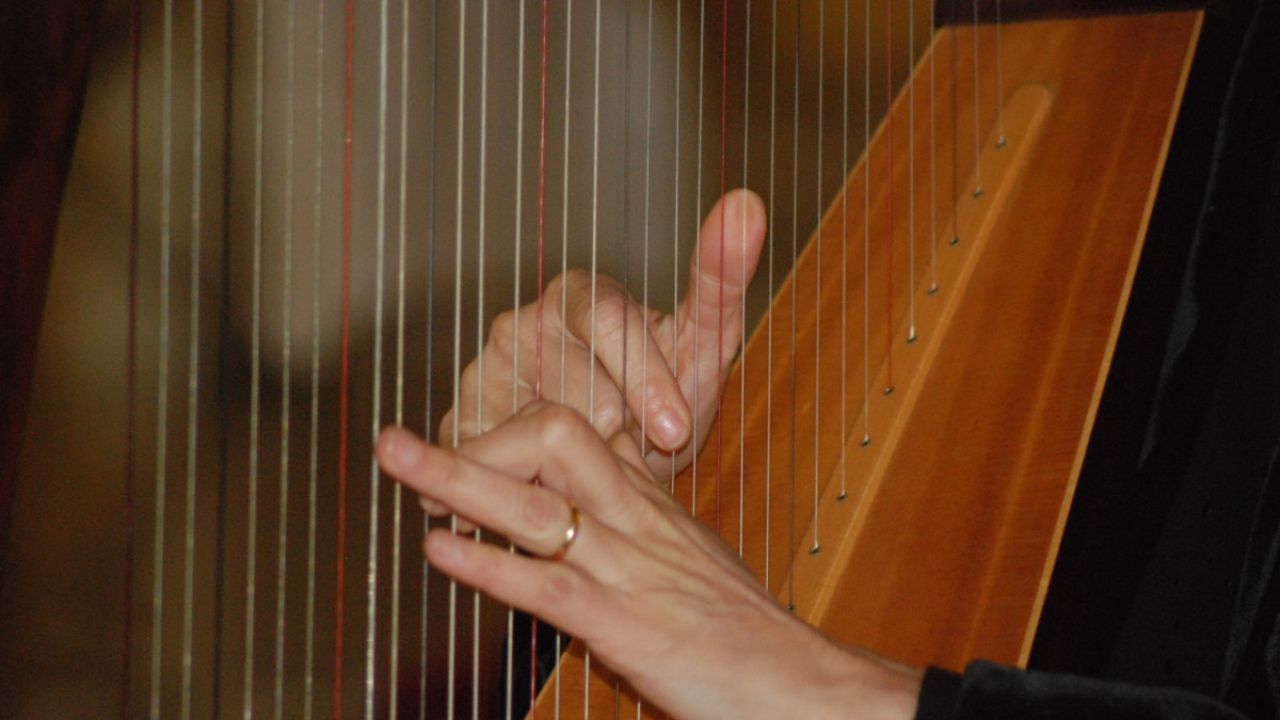
Scottish music traditions run deep. While the bagpipe commands outdoor ceremony, other instruments such as the clarsach, explored in What Is a Clarsach? (https://celtguide.com/what-is-a-clarsach-a-comprehensive-guide-to-the-celtic-harp/), express the lyrical interior of Celtic sound. The bonnet belongs to the more martial register of that tradition.
At Highland Games, where pipes accompany athletic spectacle, the bonnet becomes instantly recognisable. See Events to Watch in Highland Games 2025 (https://celtguide.com/events-to-watch-in-highland-games-2025/) for the broader cultural frame in which pipers perform.
Symbolism and Clan Identity
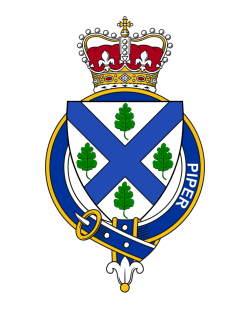
The Piper’s Bonnet often carries a clan badge pinned to its side. That badge may feature oak leaves, thistles, or heraldic devices.
Clan identity remains central to Scottish heritage. For deeper understanding, consult How Many Scottish Clans Are There? (https://celtguide.com/how-many-scottish-clans/). The bonnet serves as a visible affirmation of belonging.
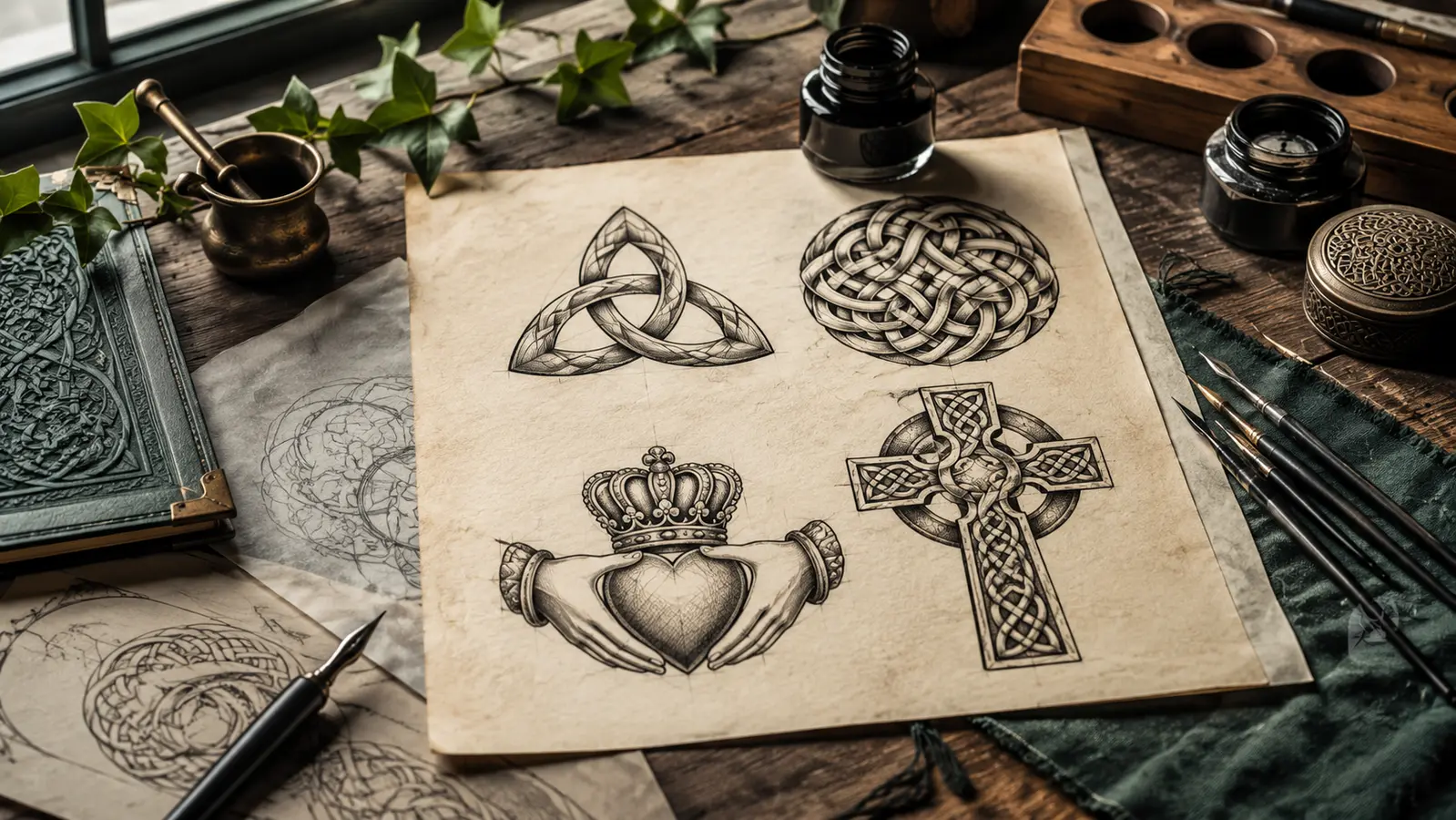
Like the Claddagh ring in Irish culture, discussed in Claddagh Ring Meaning, History and Symbolism (https://celtguide.com/claddagh-ring-meaning-history-and-symbolism/), the bonnet expresses loyalty and continuity.
It also signals authority. In regimental settings, pipers lead troops into ceremony. The bonnet crowns that leadership.
Religious and Ceremonial Context
Pipers perform at weddings, funerals, national commemorations, and sacred gatherings. The bonnet thus participates in ritual space.
Consider the solemn dignity of an Irish wake, described in Heartbeat of Farewell: Irish Wake Traditions Through a Celtic Lens (https://celtguide.com/heartbeat-of-farewell-irish-wake-traditions-through-a-celtic-lens/). Music shapes mourning. Attire reinforces reverence.
Similarly, in ecclesiastical contexts shaped by the Gaelic tradition, see Scottish Gaelic Bible Translations (https://celtguide.com/scottish-gaelic-bible-translations/), the piper’s presence unites sacred language and ancestral sound.
The bonnet remains integral to that visual harmony.
Craftsmanship and Materials
Traditional bonnets use thick wool, structured bands, silk ribbons, and occasionally ostrich feathers for regimental forms. Artisans maintain precise standards.
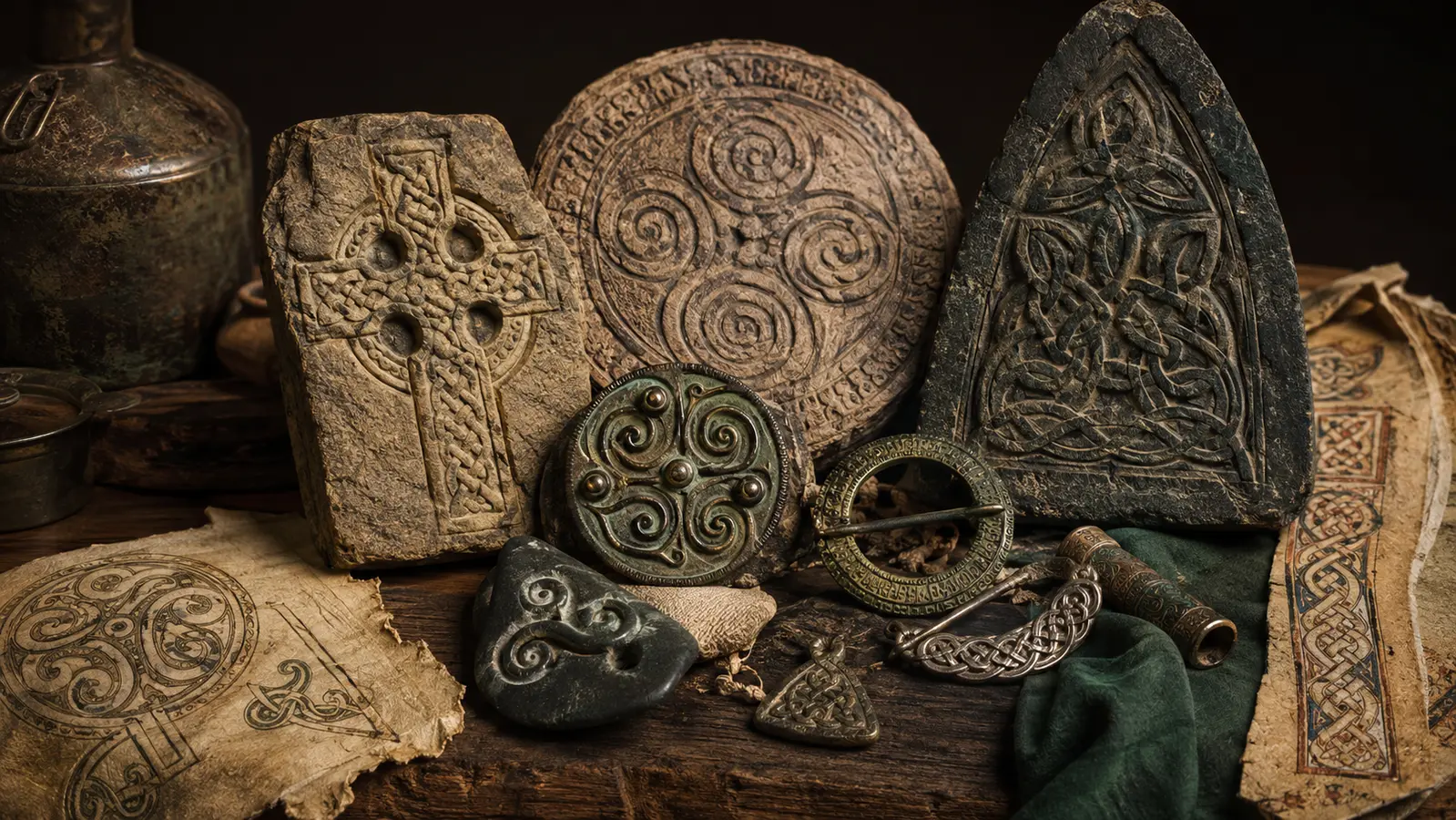
This attention to detail reflects a wider Celtic aesthetic seen in Celtic Stone Carvings (https://celtguide.com/celtic-stone-carvings/). Craft does not tolerate carelessness. It encodes identity.
Modern makers still honour these principles. They measure fit carefully, just as one measures for a kilt, outlined in How to Measure for a Kilt (https://celtguide.com/how-to-measure-for-a-kilt/). Proper proportion matters.
The Bonnet in Contemporary Culture
Film and television frequently portray Highland dress. Explore Kilts in Movies and Shows (https://celtguide.com/kilts-in-movies-and-shows/) to see how costume shapes perception. The bonnet often appears as shorthand for Scottish authenticity.
Beyond Scotland, diaspora communities wear it during St. Patrick’s Day parades and Celtic festivals. See The Significance of Saint Patrick’s Day (https://celtguide.com/the-significance-of-saint-patricks-day/) for context.
Thus the bonnet travels. It adapts. Yet it never loses its Highland core.
Why the Piper’s Bonnet Endures
The Piper’s Bonnet endures because it fuses utility with symbolism. It protects against weather, signals clan allegiance, and dignifies performance.
In Celtic culture, attire does not exist for ornament alone. It participates in narrative. As explored in Why Are Irish People Natural Storytellers? (https://celtguide.com/why-are-irish-people-natural-storytellers/), objects often carry story. The bonnet tells of regiments, glens, ceremonies, and song.
When the piper steps forward, bonnet steady against the Highland wind, we witness continuity. The music fills the air, but the bonnet crowns the tradition.
For more heritage explorations, visit our main blog hub: https://celtguide.com/blog/