

The Legend of the Tuatha Dé Danann
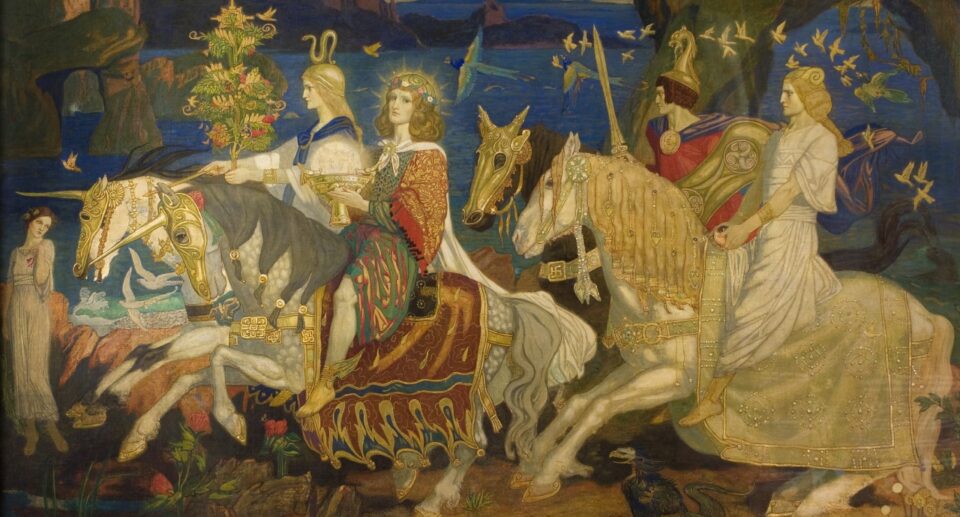
Irish mythology begins not with kings or battles, but with a mysterious arrival. The Tuatha Dé Danann came to Ireland from distant, otherworldly lands, bringing knowledge, magic, and sacred power. Their story forms the backbone of Ireland’s mythological memory.
Unlike simple folktales, this legend reflects how early Irish communities understood ancestry, landscape, and the unseen world. Storytelling shaped identity, a theme explored deeply in Why Are Irish People Natural Storytellers?.
Who Were the Tuatha Dé Danann?
The name Tuatha Dé Danann translates to “The People of the Goddess Danu.” They represented a race of semi-divine beings rather than gods in the classical sense. Medieval texts describe them as skilled in arts, healing, poetry, and warfare.
They arrived shrouded in mist, landing on Irish soil with supernatural authority. Instead of conquest alone, they established order through wisdom. Their presence shaped sacred sites, rituals, and mythic geography across Ireland.
The Four Sacred Treasures
The Tuatha Dé Danann carried four legendary objects, each representing mastery over existence:
- The Cauldron of the Dagda – a source of endless nourishment
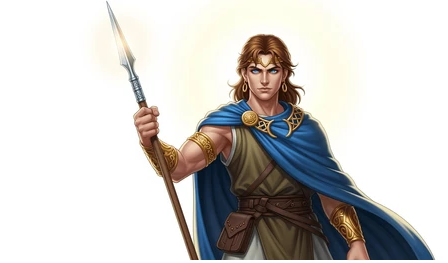
- The Spear of Lugh – unbeatable in battle
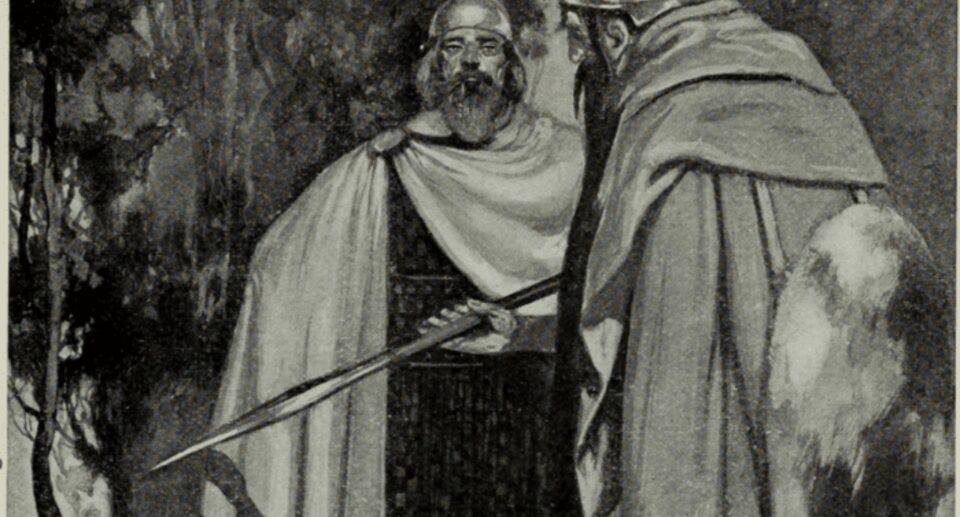
- The Sword of Nuada – a blade of absolute justice
- The Lia Fáil (Stone of Destiny) – which cried out for the rightful king
These items symbolized authority, survival, and legitimacy. The Cauldron of Dagda, in particular, reflects a Celtic belief in abundance as a sacred duty.
Gods, Heroes, and Teachers
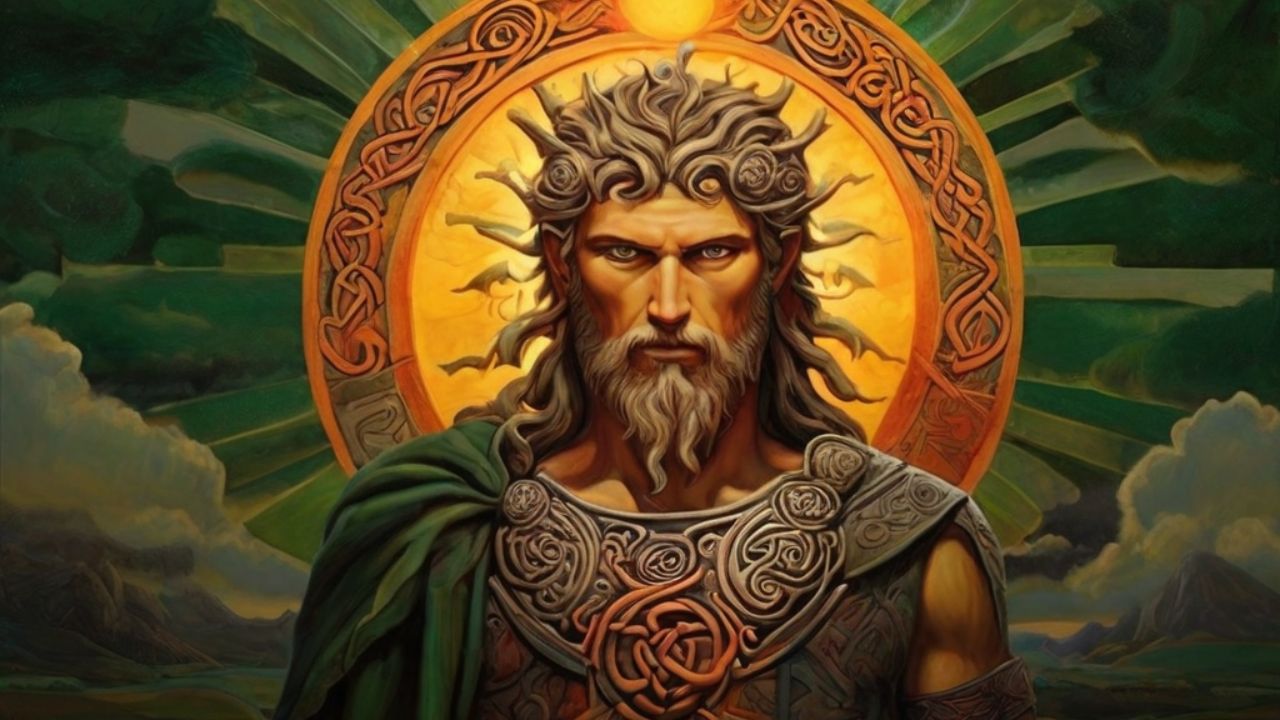
Several figures stand out within the Tuatha Dé Danann. The Dagda ruled as a father-figure, balancing strength with generosity. Brigid embodied poetry and healing. Most prominent was Lugh, master of every skill, whose solar symbolism echoes older Indo-European traditions.
You can explore his legacy further in Celtic Sun God Lugh, where light, kingship, and craftsmanship converge.
Rather than distant deities, these figures taught humans how to live well.
The Battle for Ireland
The Tuatha Dé Danann did not rule unchallenged. They fought the Fomorians, chaotic beings linked to destruction and imbalance. These battles symbolized order versus chaos, cultivation versus wilderness.
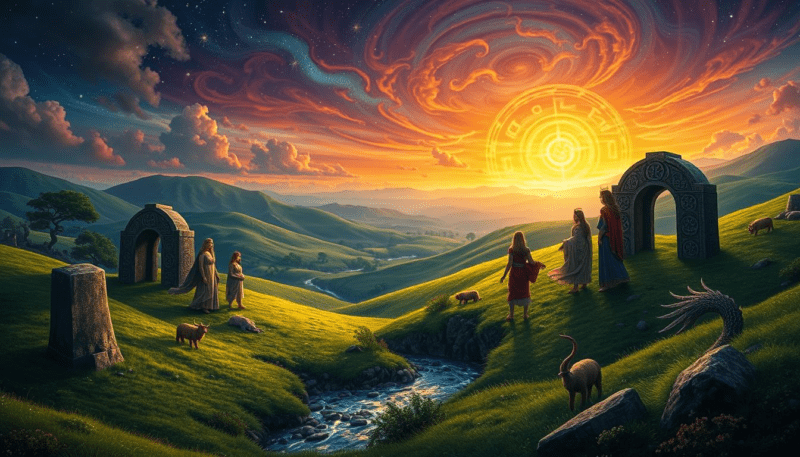
Later, they faced the Milesians, ancestors of modern Irish people. After defeat, the Tuatha Dé Danann retreated into the sí, the hollow hills and ancient mounds.
This retreat connects them to the fairy traditions discussed in What Is Annwn? and Legend of the Fairy Glen.
From Gods to the Aos Sí
Over time, Christian scribes reframed the Tuatha Dé Danann as the Aos Sí, the fairy folk. This shift preserved older beliefs without open conflict with new religion.
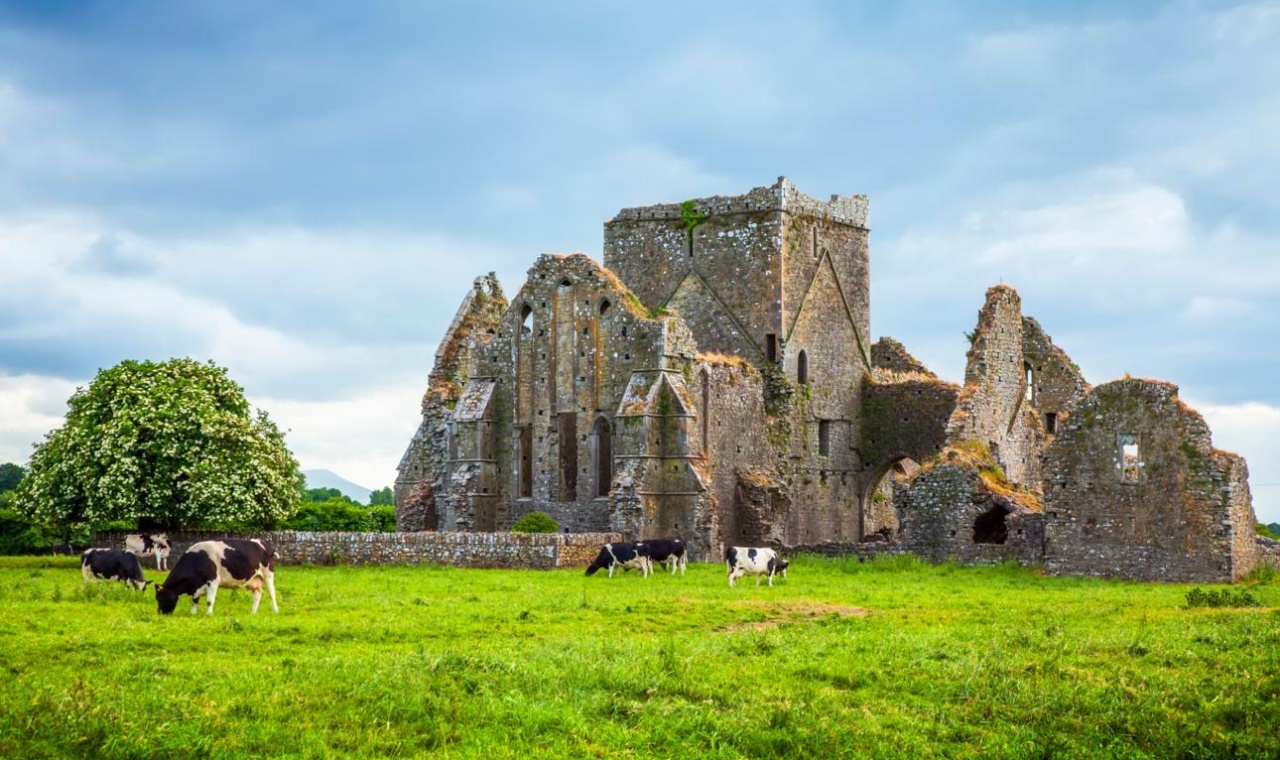
Sacred landscapes such as Hill of Tara remained central, blending myth, kingship, and memory. The stories adapted, but the reverence endured.
Why the Legend Still Matters
The Tuatha Dé Danann represent more than myth. They embody Ireland’s understanding of balance, knowledge, and respect for the unseen. Their stories explain why land holds memory and why ancestry carries responsibility.
In a modern world seeking roots, these legends offer continuity rather than nostalgia.
For more explorations of Celtic myth, folklore, and sacred tradition, visit the CeltGuide Blog.