Targe (Scottish Shield): A Symbol of Strength and Heritage

When we think of the Scottish Highlands, images of tartan, bagpipes, and Highland games often spring to mind. But for centuries, one of the most important symbols of Highland resilience was the targe, a round wooden shield, often leather-covered and richly decorated, that Highland warriors carried into battle.
What is a Targe?
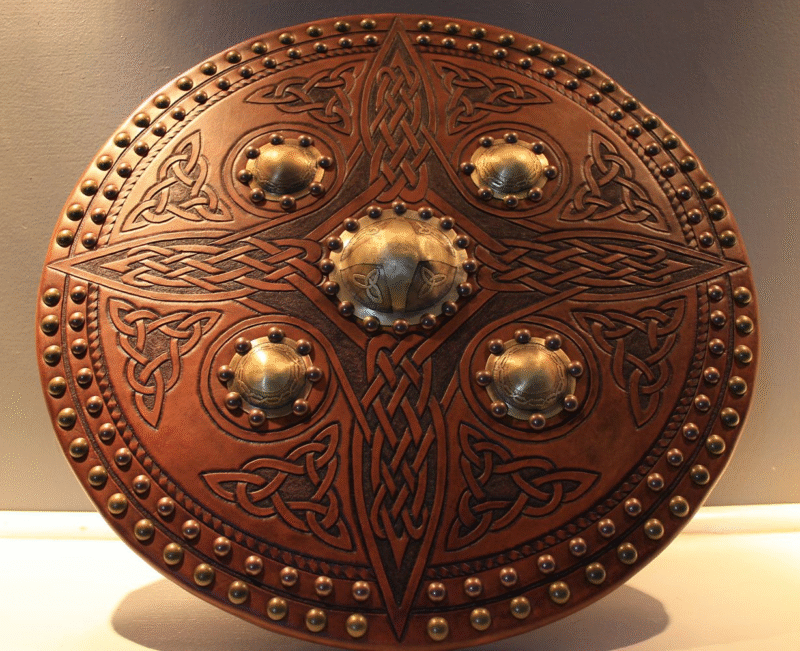
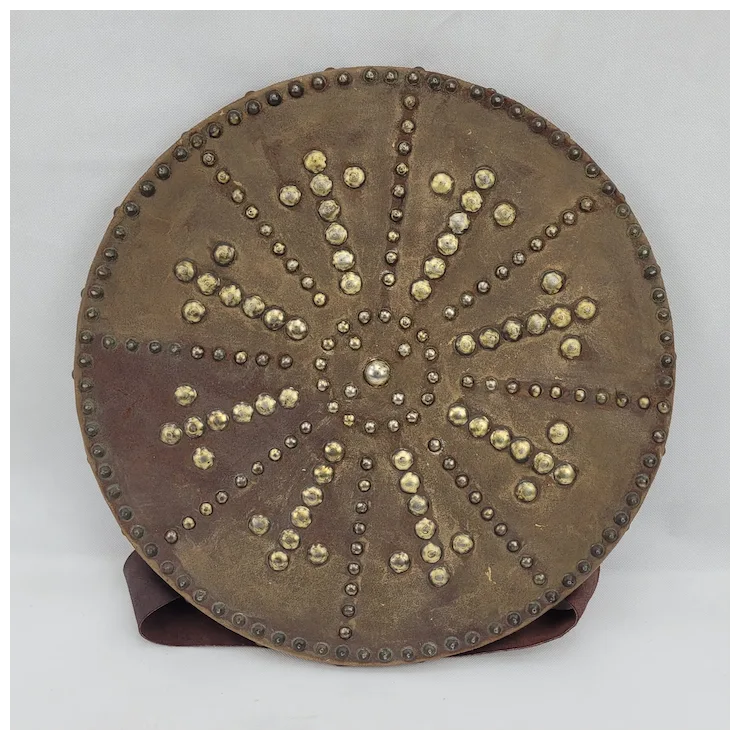
The word targe comes from the Old French targe meaning “shield.” In Scottish tradition, it referred to a round defensive shield, usually 18–21 inches in diameter, crafted from wood and reinforced with leather and metal studs. Many targes were decorated with intricate Celtic patterns, not unlike those found in Celtic stone carvings.
The Role of the Targe in Highland Warfare
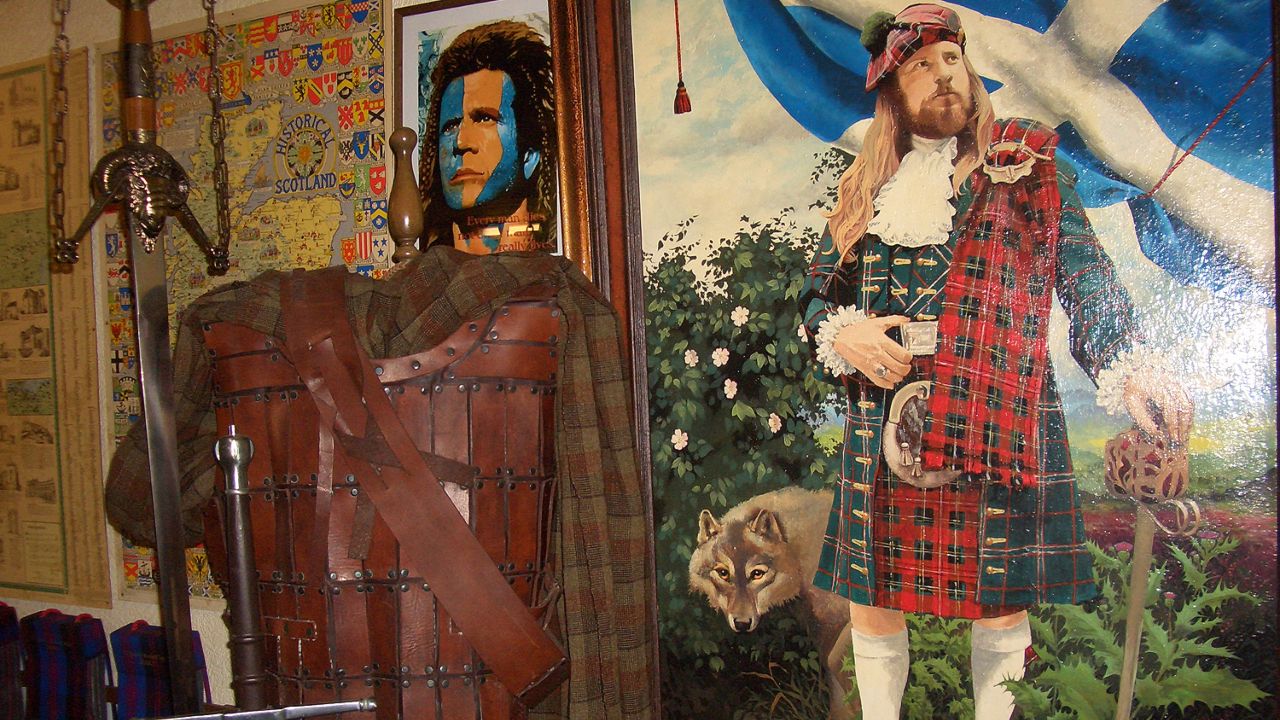
From the late Middle Ages through the 18th century, the targe was more than a shield, it was a mark of identity and pride. Carried by Highland clansmen, it was used alongside the dirk knife (learn more about dirks here) and the broadsword. Together, these weapons created the classic image of the Highland warrior.
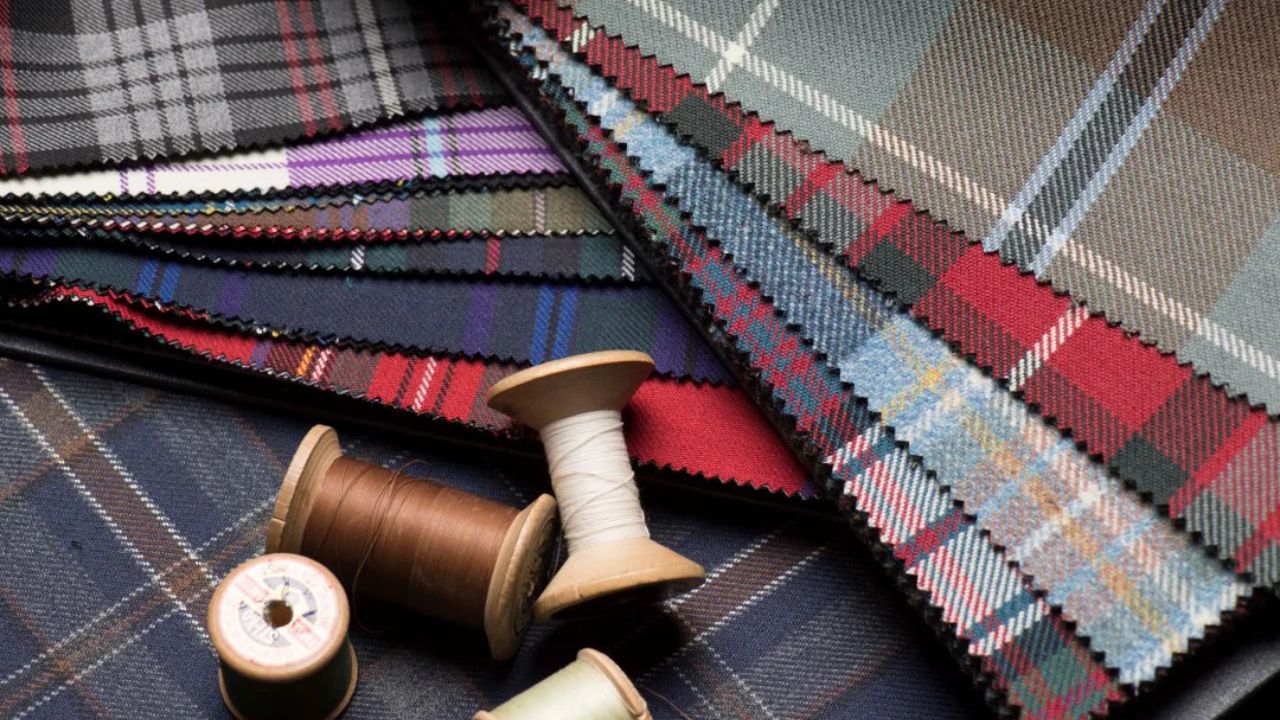
Targes were not only practical for deflecting blows but also symbolic of clan loyalty much like tartan patterns distinguished one clan from another.
Craftsmanship and Decoration
Scottish targes were made with care:
- Materials: Wood core, covered with cowhide or deerskin
- Reinforcements: Brass, iron studs, or nails
- Designs: Celtic knotwork, spirals, and clan symbols
- Utility: A central metal boss sometimes held a spike for close combat
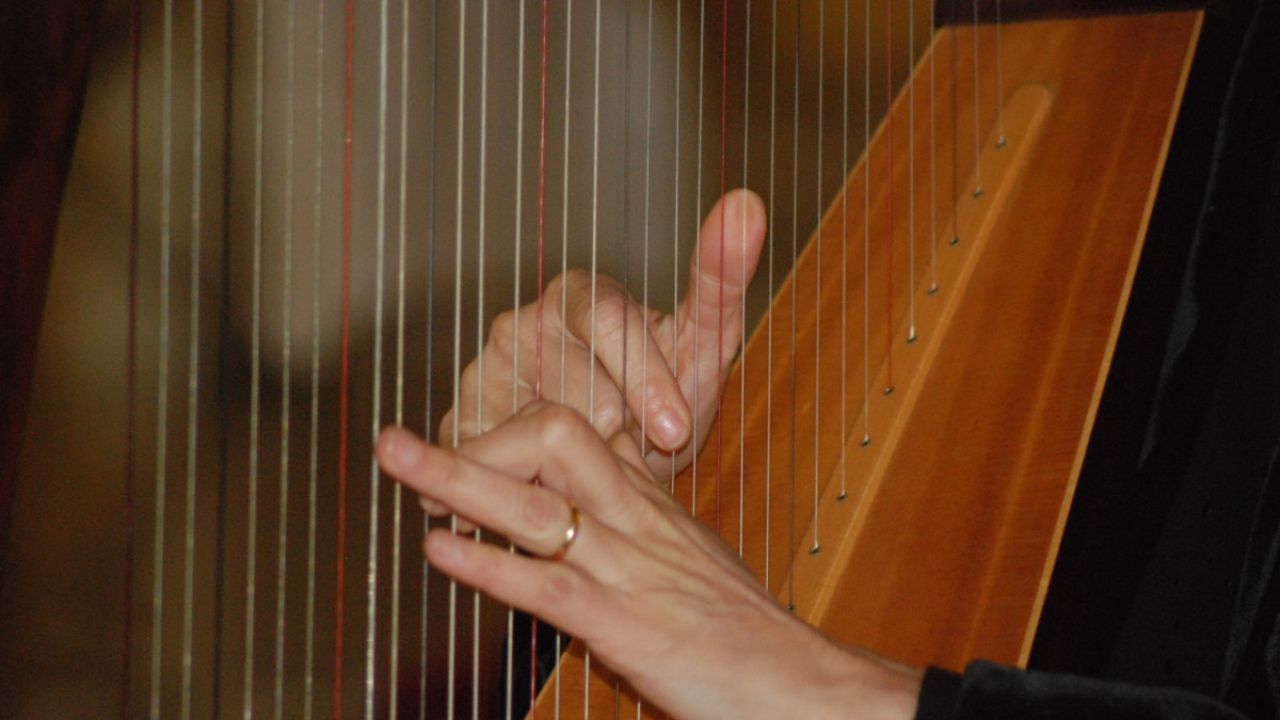
This blending of utility and artistry is similar to the cultural role of instruments like the bodhrán drum or the clarsach harp—objects that served both practical and symbolic functions.
The Decline of the Targe
By the mid-18th century, after the Jacobite uprisings, targes became less common. The British government, wary of Highland resistance, suppressed traditional arms and attire. This was the same period when debates over the wearing of kilts and tartan prints also surfaced, highlighting how deeply cultural identity was tied to material objects.
Targe as Heritage Today
Today, targes are rarely seen in battle (thankfully) but survive as museum pieces, reenactment gear, and cultural symbols. They often appear in Highland festivals, alongside Scottish Gaelic traditions and Celtic storytelling.
The targe is not just a shield; it’s a reminder of how Scots defended not only their lives but their culture.

Final Thoughts
The Scottish targe is more than a weapon, it’s a piece of history, artistry, and identity. Just like the oak tree in Celtic symbolism, it stands as a testament to resilience and heritage.
If you’re fascinated by Scottish traditions, don’t miss our other explorations from selkies in folklore to the legend of the Fairy Glen.