
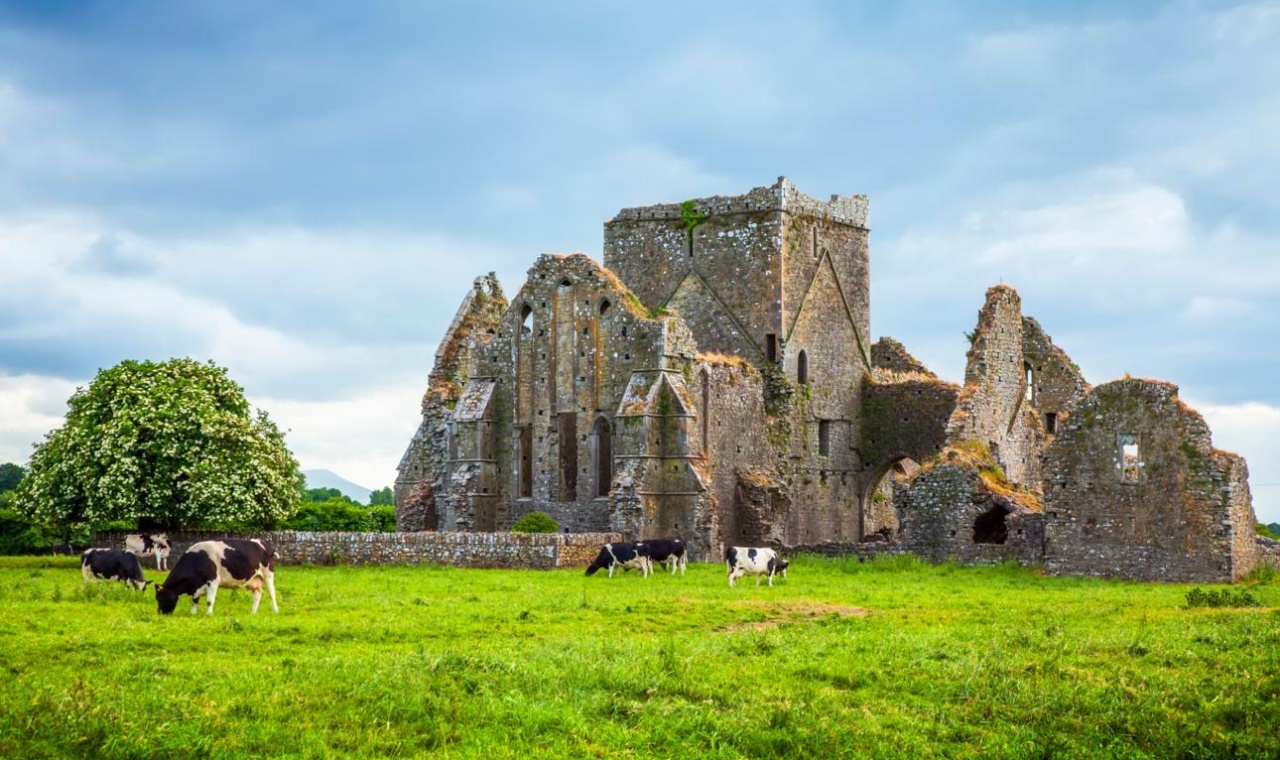
Irish Holy Wells: Sacred Springs of Ireland’s Past and Present

Introduction: Where Water Meets the Sacred
Ireland is often called the land of saints and scholars, but it might equally be called the land of holy wells. Scattered across the island; hidden in meadows, near churchyards, or deep in the woods. These sacred springs are places where history, folklore, and spirituality converge. For centuries, Irish people have visited them to seek healing, guidance, and blessings.
Just as Irish storytelling preserves tradition, holy wells preserve a living connection to the land, the saints, and perhaps even older pre-Christian deities.
What Are Irish Holy Wells?
Holy wells are natural springs or water sources imbued with spiritual significance. Their waters are believed to hold curative powers, offering healing for ailments of the body and soul. Many are dedicated to Irish saints, such as St. Patrick, St. Brigid, or St. Columba, while others carry echoes of Celtic gods and nature spirits.
The idea of sacred waters is not unique to Ireland. It runs deep across Celtic culture, just as stone carvings and sacred landscapes reflect a people who saw the divine in nature.
Pagan Roots and Christian Transformations
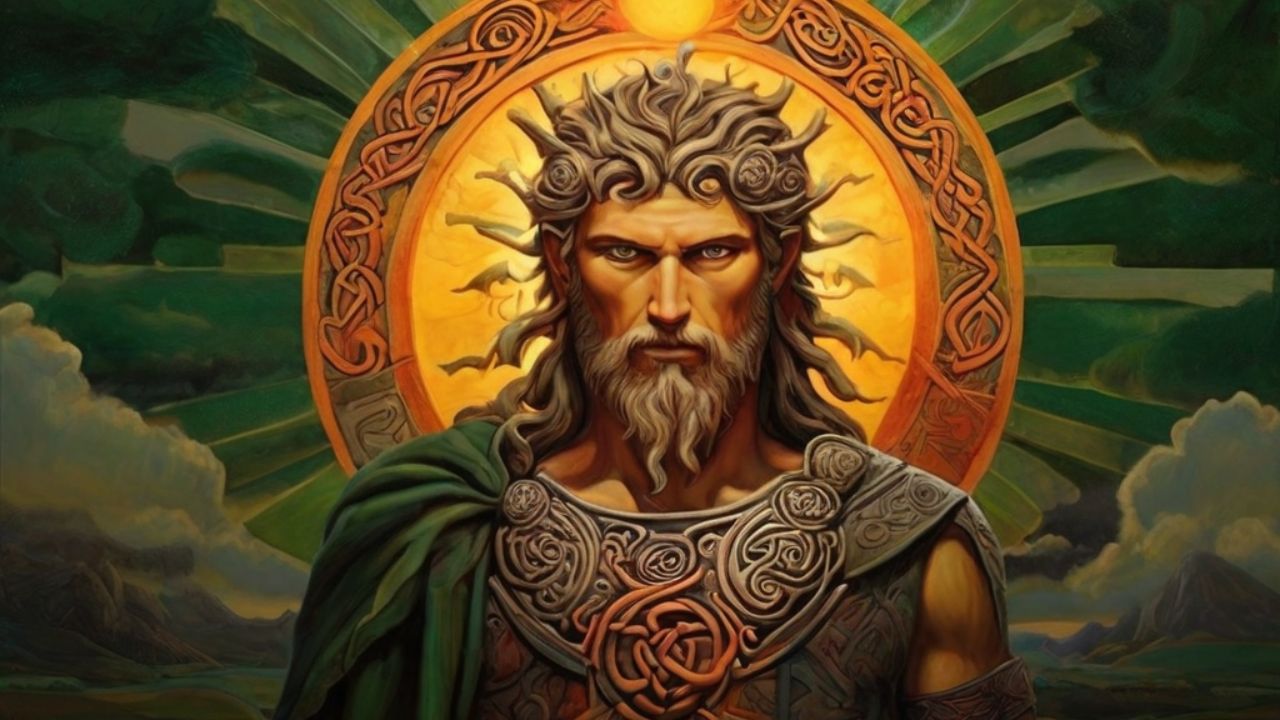
Before the arrival of Christianity, wells and springs were linked to fertility, healing, and the Celtic gods. The Celtic sun god Lugh and river goddesses, for instance, were associated with life-giving waters (learn more about Lugh).
When Christianity spread through Ireland, instead of erasing these traditions, the Church often repurposed them. Wells became dedicated to saints, transforming pagan sacred sites into Christian pilgrimage destinations. This blending is similar to how St. Patrick’s Day mixes folk tradition with religious devotion.
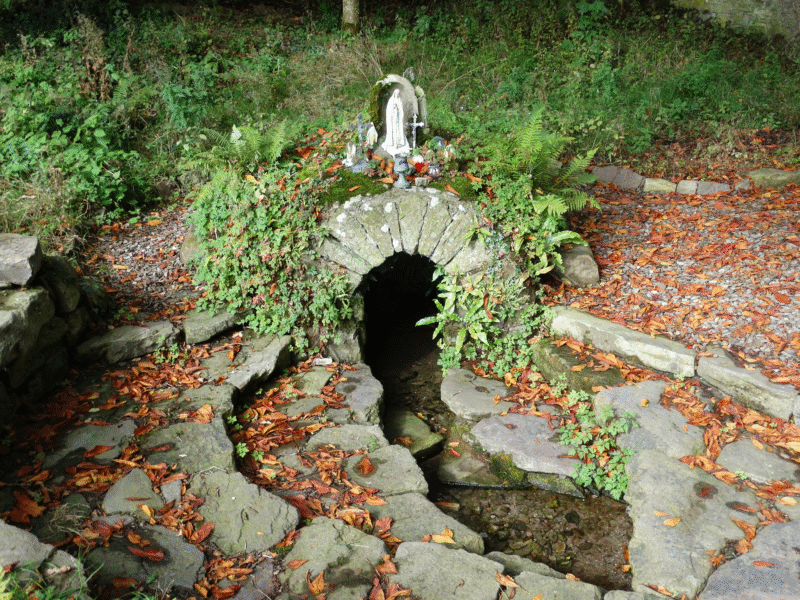
Rituals and Pilgrimages
Visiting a holy well is not merely a sightseeing experience; it’s a ritual act. Pilgrims might:
- Walk rounds (circuits around the well, often in a set number).
- Pray or recite rosaries.
- Tie clooties (pieces of cloth) to nearby trees as offerings.
- Collect water to bring home for blessings.
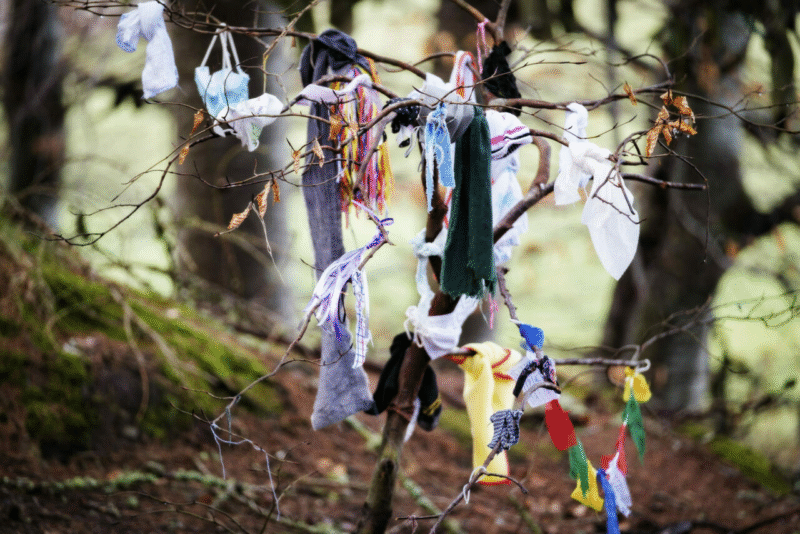
These rituals echo both ancient fertility rites and Christian devotion. Much like the Claddagh Ring, holy wells embody layers of meaning, personal, communal, and spiritual.
Famous Holy Wells in Ireland
Some of the most visited and storied wells include:
- St. Brigid’s Well (Kildare): Associated with Ireland’s beloved saint and goddess figure.
- St. Patrick’s Wells (Tipperary & Down): Linked to Ireland’s patron saint.
- St. Declan’s Well (Ardmore, Waterford): A site of pilgrimage for centuries.
These wells often sit within a larger sacred landscape, much like the Hill of Tara or the mystical Fairy Glen.
Holy Wells Today: Living Heritage
Despite modernity, holy wells are not relics. Locals still visit them for cures, blessings, and quiet reflection. They remain spaces where the past flows into the present, carrying with them both folklore and faith.
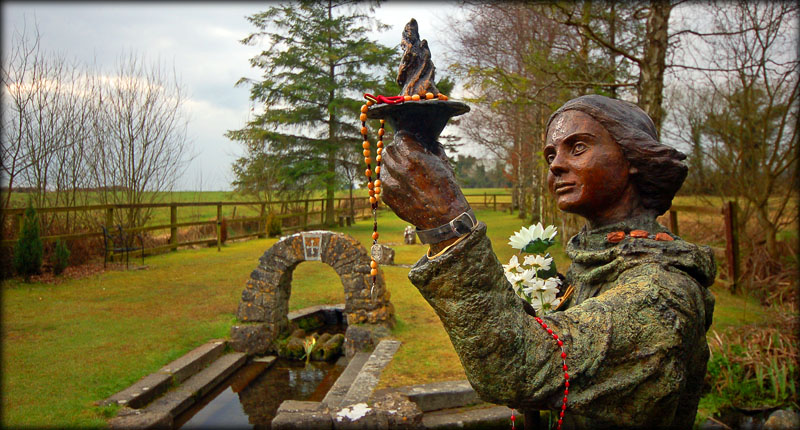
In an era where spirituality often feels detached from nature, these wells remind us of an older rhythm-where water, earth, and belief are bound together.
Conclusion: Wells as Pathways to the Divine
Irish holy wells are not just about water. They are about memory, continuity, and connection—linking generations of worshippers across centuries. They remind us that landscapes are not passive backdrops, but living participants in culture, spirituality, and identity.
Just as Gaelic proverbs carry timeless wisdom, these wells carry the essence of Ireland itself: rooted in myth, renewed by faith, and flowing with life.