

Celtic Tribal Shields: Art, Identity, and Warfare in the Ancient World

The Celtic world never treated warfare as a simple contest of blade against blade. Every object carried meaning, and no item showed that better than the Celtic tribal shield. These shields served as more than tools for survival in battle. They expressed status, tribal identity, and the deep artistic instincts that shaped Celtic life. When I walk through museum galleries today, these shields still feel alive. Their design choices, even the smallest carvings, speak to a culture that valued beauty as much as bravery.
This guide explores their design, symbolism, role in tribal identity, and the cultural world they belonged to; drawing on archaeology, myth, and the artistic traditions you’ll also see echoed in Celtic stone carvings and other crafted treasures.
What Made a Celtic Shield Unique?
The Celts used shields made mostly from wood, leather, and metal. They kept them light enough for fast movement, but strong enough to block spears and sword strikes. The average shield stretched about 1 meter in height, which made it large enough to protect the body during charges.
The oval or rectangular body often included a central metal boss. This wasn’t decorative alone, it protected the hand and strengthened the striking power during close combat. Many warriors used the shield not only defensively but also as a blunt-force weapon.
Shields as Symbols of Tribal Identity
Celtic culture loved visual storytelling. You can see that in the swirling patterns of their metalwork, the knotwork in their jewelry, and the expressive forms of their shields. Some tribes used unique symbols or motifs to distinguish themselves. These could range from spiral patterns (similar to motifs discussed in our article on Celtic Sun God Lugh) to animal imagery linked with local mythology.
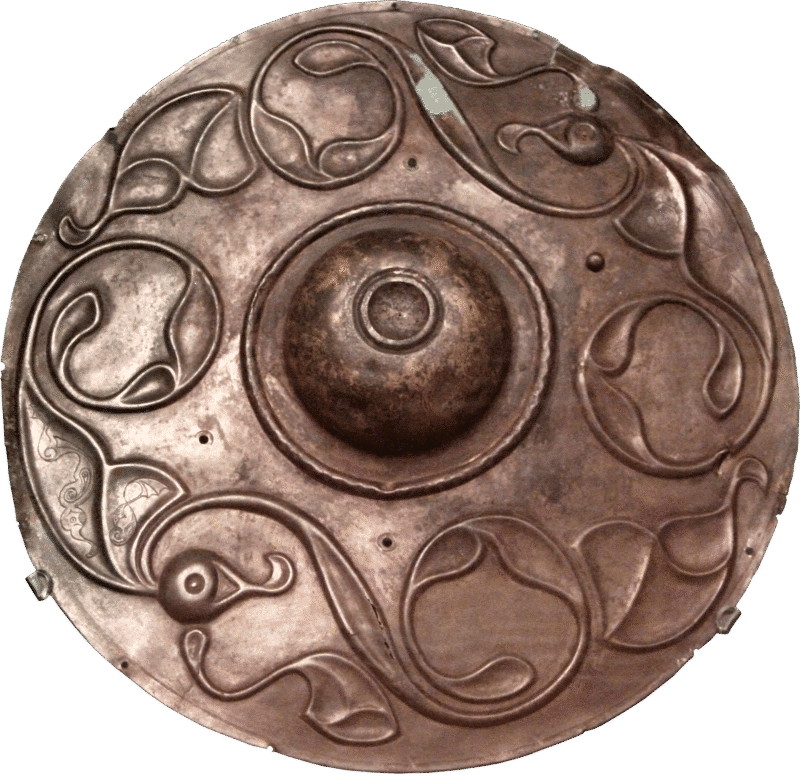
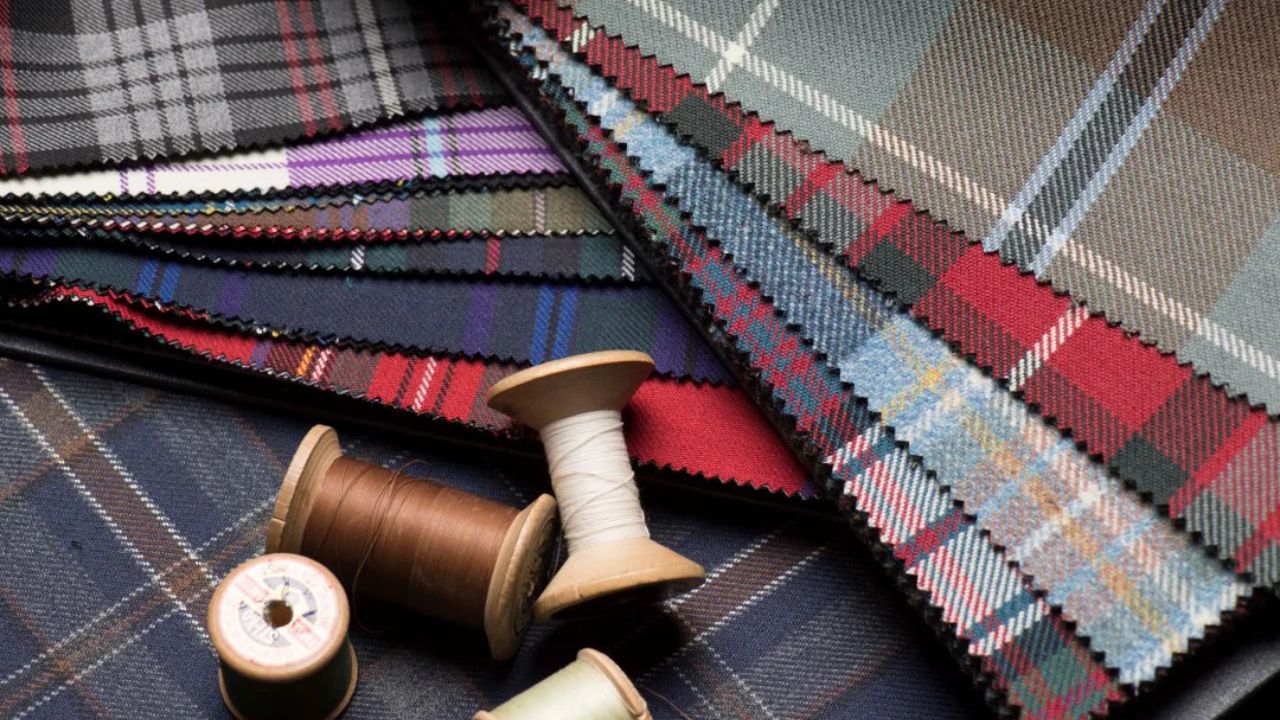
For many warriors, the shield acted almost like a personal banner. It announced their courage, tribal lineage, and the artistic language of their homeland. When we speak about identity in Celtic societies, we often think about tartan today. You can explore this idea further in our article on What Is Tartan?—though shields predate tartan by many centuries, both act as visual markers of belonging.
Craftsmanship and Artistic Language
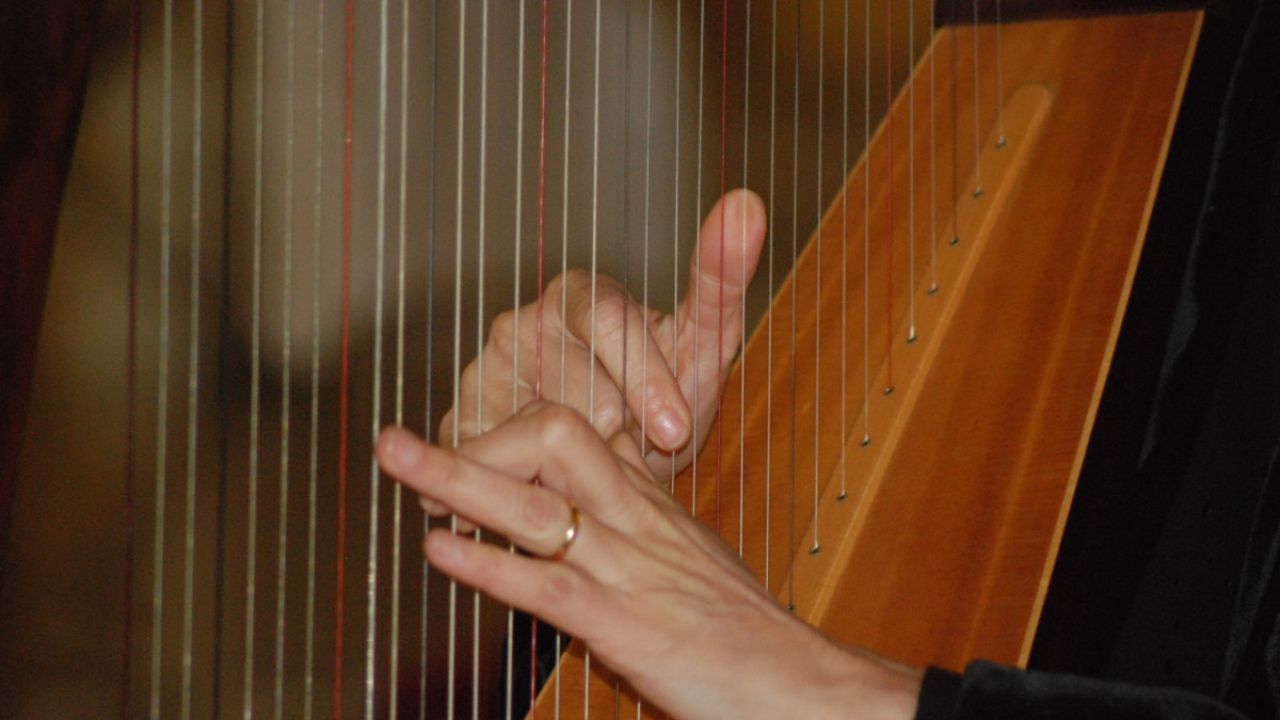
Celtic shields show a level of craftsmanship that goes far beyond functional design. Bronze plating, repoussé work, and intricate carvings show how much pride the Celts invested in their gear. This spirit of craftsmanship mirrors what we see in the creation of the Celtic harp (Clarsach) and other cultural artifacts.
Some shields were even ceremonial and never intended for battle. These pieces appear in hoards and ritual depositions, much like the artifacts discussed in our blog on Bronze Age Hoards.
Shields in Ritual and Myth
Shields often appear in Celtic mythology. They show up in warrior tales, ritual contexts, and heroic poetry. The shield symbolised courage, protection, and the boundary between the mortal warrior and the mysterious otherworld, a space explored deeply in Celtic lore such as Annwn.
Some shields were deposited in lakes, rivers, or bogs, possibly as offerings to gods or ancestors. This ritual behaviour speaks to a worldview where the spiritual and physical worlds stayed closely connected.
What Celtic Shields Teach Us Today
Studying these shields opens a window into Celtic life. They show us:
- how tribes expressed identity
- how craftsmanship shaped their daily world
- how warfare blended with ritual and storytelling
- how beauty and bravery coexisted in the Celtic mind
If your curiosity leans toward broader cultural themes, you may enjoy exploring Celtic storytelling traditions in Why Irish People Are Natural Storytellers.
Final Thoughts
Celtic tribal shields capture a blend of artistry, identity, and power that few ancient cultures matched. Each shield, even the simplest tells a story about the warrior who held it and the tribe that shaped it. In that sense, these shields remain powerful historical voices, speaking across the centuries.