Celtic Symbols and Their Meanings: The Complete Guide
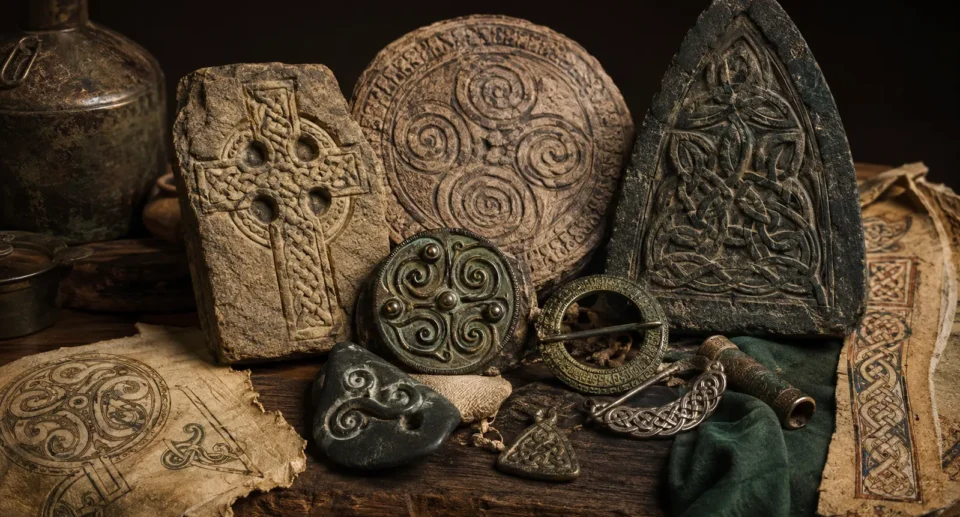
Celtic symbols carry the kind of layered meaning that rarely survives a one-line caption — most of them were shaped over centuries by different peoples, absorbed different meanings along the way, and mean something slightly different depending on whether you are looking at them through a historical, spiritual, or purely decorative lens. This guide brings together the major symbol families covered on this site, with a short honest read on where each one actually comes from.
Celestial Symbols
The Moon
Celtic moon symbolism ties into goddess worship, the marking of festivals by lunar cycles, and ideas of transformation tied to the moon’s phases — themes that run through several figures in Irish and Welsh myth, from the Triple Goddess concept to individual lunar deities.
Read the full Celtic Moon Symbols guide →
The Sun Wheel
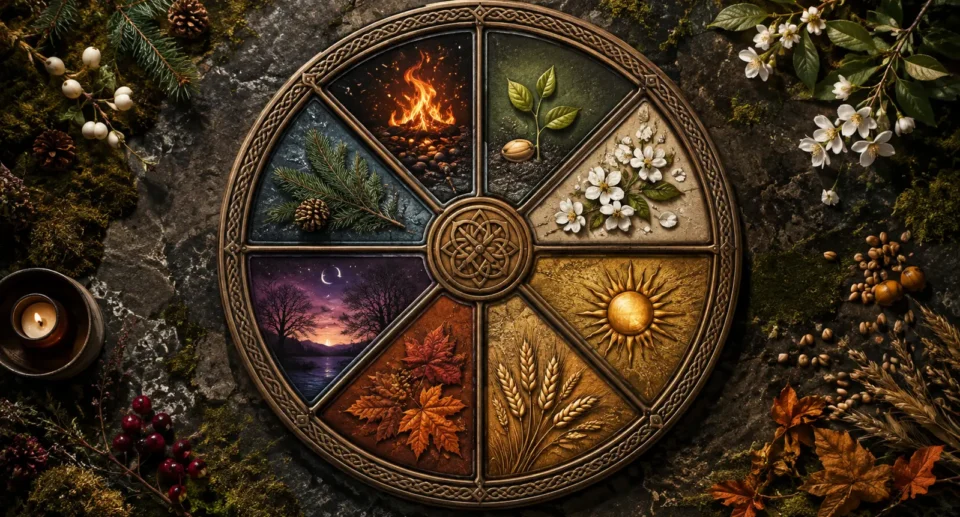
The sun wheel (sometimes linked to solar-cross imagery found across prehistoric and Iron Age Europe, not exclusively Celtic) is associated with the turning of the seasons and solar deities like Lugh. It is one of the oldest and most widely shared symbol forms in this list, appearing well beyond Celtic culture specifically — worth being upfront about that shared history rather than overclaiming it as uniquely Celtic.
Read the full Celtic Sun Wheel guide →
Sacred and Ritual Symbols
Druidic Symbols and Tools
Symbols associated with Druidic practice — from ritual tools to sacred groves — sit at an interesting intersection of genuine historical fragments (most of what we know about Druids comes from outside observers like Roman writers, not the Druids themselves) and centuries of later reinterpretation, much like the Ogham “tree alphabet” tradition covered elsewhere on this site.
Read the full Druidic Symbols and Tools guide →
The Ogham Alphabet
Ireland’s own ancient script, whose individual letters carry both a practical linguistic history and a much-loved (if largely medieval-and-later) tree-symbolism tradition.
Read the full Celtic Ogham Alphabet guide →
Symbols of Nature
Animal Symbolism
Certain animals recur across Celtic myth and folklore as symbols of particular qualities — the stag, the wolf, the raven or crow (closely tied to the Morrígan), and others, each carrying its own associations depending on the story and the region.
Read the full Celtic Animal Symbolism guide →
Woven and Knotwork Patterns
Interlacing knotwork — what most people picture first when they hear “Celtic symbol” — developed its most recognizable form during the early medieval period, especially in illuminated manuscripts and stone carving, rather than in the pre-Christian Iron Age most people assume.
Read the full Celtic Woven Patterns guide → — and see Celtic knots: meaning, history, and symbolism for the knotwork tradition specifically.
A Note on Accuracy
A lot of what circulates online about “ancient Celtic symbol meanings” blends genuine archaeological and historical evidence with much later reinterpretation — sometimes medieval, sometimes as recent as the 20th century. That does not make the newer layers meaningless (people have found real spiritual and aesthetic value in these symbols for a very long time, in their own right), but it is worth knowing which parts of a symbol’s story are ancient and which are more recent additions. Each article linked above tries to be honest about that distinction rather than presenting everything as equally old.
Related Reading
Celtic Gods and Goddesses — the companion hub for deities rather than symbols.
The Celtic Wheel of the Year — many symbols on this page mark specific points in the Celtic festival calendar.
Celtic Tattoo Symbols and Their Meanings — the Triquetra, Trinity Knot, and Claddagh as body art.