St Margaret of Scotland: Queen, Reformer and Saint
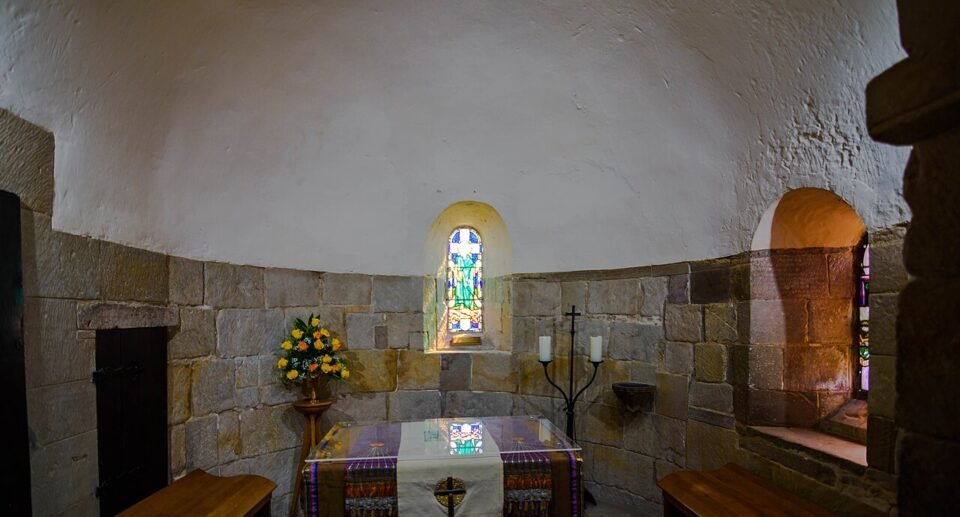
St Margaret of Scotland (c. 1045–1093) was queen consort to Malcolm III, a patron of the Scottish church and a figure remembered for care of the poor. Her influence reached beyond private devotion: she helped reshape royal worship, supported religious communities and connected Scotland’s court to wider European networks. The surviving story, however, comes chiefly through a devotional biography written after her death, so the historical queen and the later saint must be read together.
From English exile to the Scottish court
Margaret was a member of the old English royal family. Her father, Edward the Exile, had spent years away from England, and her childhood is commonly associated with Hungary before the family returned. After the Norman Conquest of 1066, political upheaval pushed Margaret and her relatives north. Accounts differ on the details of their voyage and arrival; the secure point is that the English princess became part of Malcolm III’s Scottish court.
Margaret married Malcolm around 1069 or 1070. This was both a personal union and a dynastic one. The English royal connection gave Malcolm’s household added standing while the Anglo-Norman world was remaking Britain. It is too simple to picture a queen single-handedly “civilizing” Scotland: its church and monarchy had their own established traditions before she arrived.
Marriage, children and royal power
Margaret and Malcolm had eight children. Three sons—Edgar, Alexander I and David I—became kings of Scots; their daughter Edith, who took the name Matilda, became queen of England through her marriage to Henry I. Those marriages and successions make Margaret’s household central to the history of both kingdoms. Her influence continued through her children long after her own death.
The medieval account portrays Margaret advising her husband and organizing court life around worship and charity. A queen could wield influence through patronage, access to the king, control of household resources and the education of heirs. The precise decisions she made in politics are harder to reconstruct than the later effects of the royal family she helped raise.
What did Margaret reform?
Margaret encouraged practices aligned with the wider Latin church, including observance of Lent and Easter and more regular communion. Her biographer describes discussions with Scottish clergy about religious custom. These accounts show a real concern with church practice, but they are written from the viewpoint of people who favored reform; they do not mean Scotland lacked a serious Christian tradition beforehand.
Charity is equally prominent in the record. Turgot says she fed people in need, tended the vulnerable and gave generously. Some scenes are shaped as examples of ideal Christian queenship, yet they reveal the values her circle wanted royal power to express. Her religious patronage also strengthened ties to Benedictine communities and to churchmen beyond Scotland.
Dunfermline, the chapel and the landscape of memory
Margaret’s most enduring association is with Dunfermline. According to Historic Environment Scotland’s history of the abbey, she founded a priory there in 1070 and brought Benedictine monks from Canterbury. Her son David I developed the site into a great abbey in the twelfth century. The surviving medieval complex therefore reflects several generations of royal support, not one building campaign by Margaret alone.
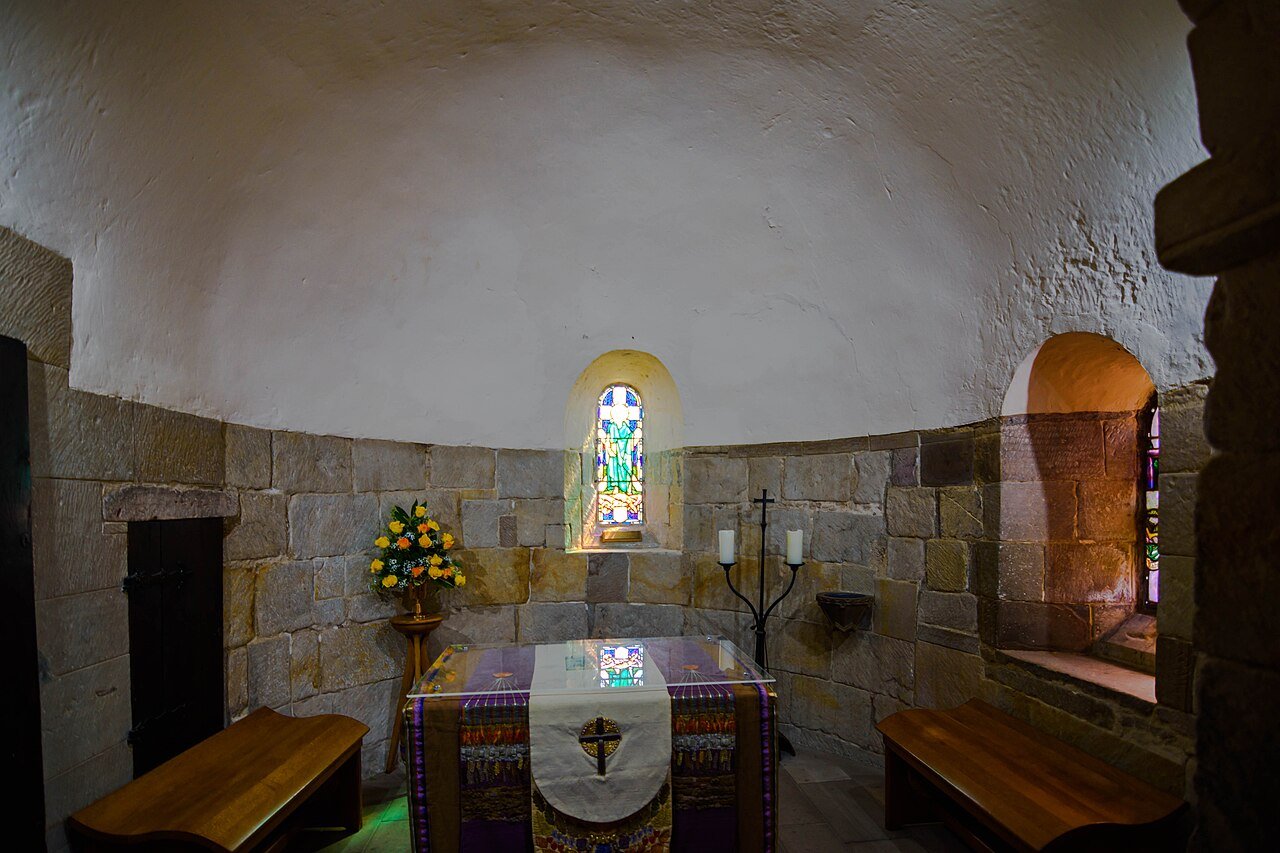
At Edinburgh Castle, the small chapel bearing her name is another tangible memorial. Edinburgh Castle dates its construction to about 1130, during David I’s reign. Margaret died decades earlier: she never prayed in the present chapel. The dedication shows how her children and later Scots commemorated her, rather than identifying a room she herself built.
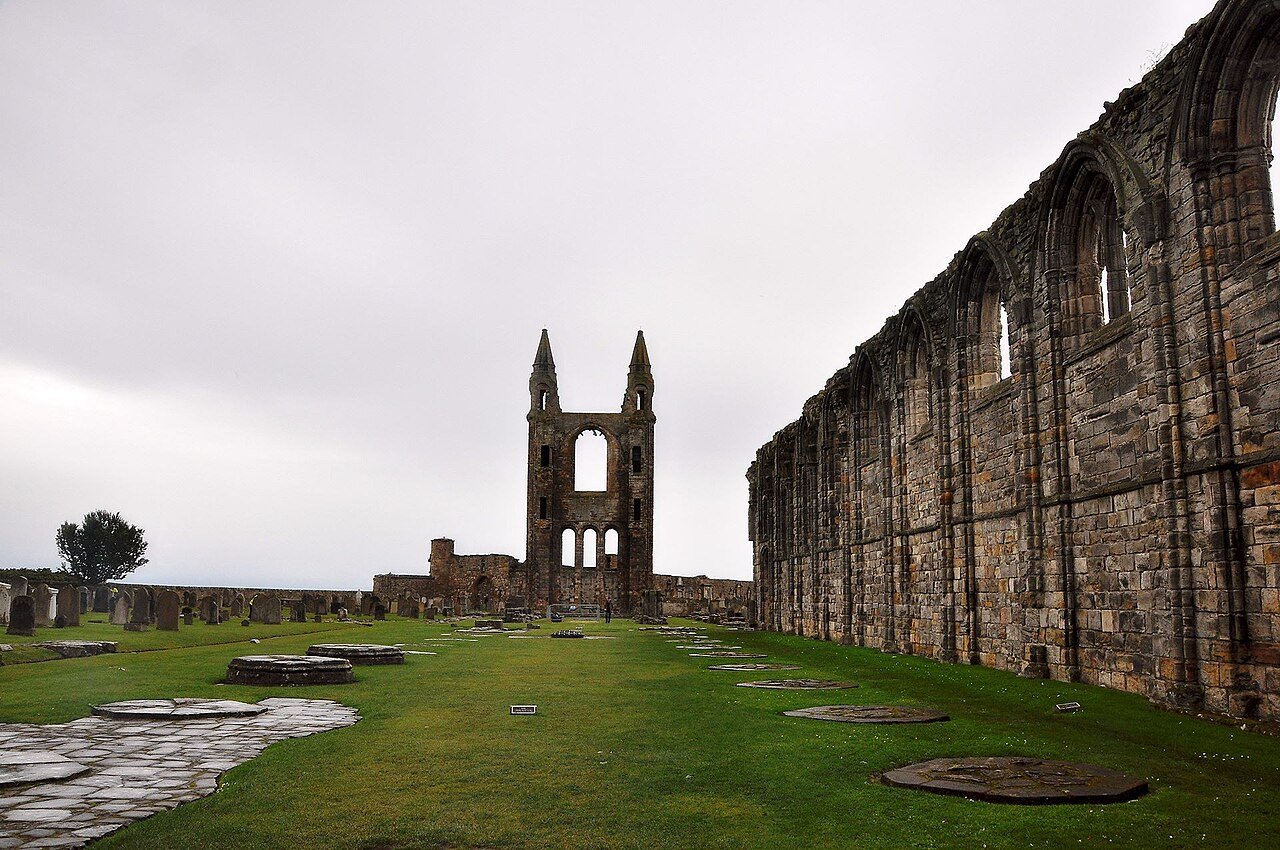
Dunfermline became a place of burial and pilgrimage. The royal church also belonged to a wider landscape of devotion, including the medieval cult of St Andrew, Scotland’s patron saint. The abbey’s story connects Margaret’s early priory, the later royal mausoleum and the shrine that drew medieval visitors. Those layers matter when reading the site today: stones visible to a visitor need not date to Margaret’s lifetime to be part of her legacy.
How reliable is the story of St Margaret?
Much of the personal detail comes from the Life of St Margaret, traditionally attributed to Turgot, a churchman close to her. It was written for her daughter Matilda after Margaret’s death. Columbia University’s Epistolae project describes the account as a source for her administrative and charitable activity. It is unusually close to her world, but it is also a saint’s life designed to praise its subject.
That combination calls for careful reading. Claims about a daily act of kindness are evidence for how contemporaries understood her piety, while dates, family connections and surviving foundations can be checked against other records and places. Stories about a cave used for private prayer, for example, belong to a living local tradition, but the exact scenes cannot be verified from the fabric of the cave alone.
Death, canonization and lasting influence
Malcolm III and their son Edward were killed during a campaign in England in 1093. Margaret, already ill, died soon afterward. She was buried at Dunfermline. Pope Innocent IV canonized her in 1250; her remains were subsequently translated to a shrine at the abbey, intensifying its role as a pilgrimage destination.
Her legacy has several strands: a royal family that shaped twelfth-century Scotland, a model of queenship built around learning and charity, and physical sites at Dunfermline and Edinburgh that still attract visitors. The title “reformer” captures a significant part of her reputation, provided it does not erase the Scottish Christian culture with which she engaged.
Was St Margaret the first Christian queen of Scotland? No. Christianity and royal Christian patronage long predated her. Her distinctive reputation rests on the reforms, foundations and family networks associated with her reign.
Did Margaret build St Margaret’s Chapel? No. David I had it built around 1130 in memory of his mother, several decades after her death.
Featured image: Interior of St Margaret’s Chapel, Edinburgh Castle, photographed by Mattias Hill, CC BY-SA 3.0; resized for this page.