Celtic Gods and Goddesses: The Complete Guide to the Pantheon
Celtic mythology does not have one tidy pantheon the way Greek or Norse mythology does — it is really a family of related but distinct traditions across Ireland, Scotland, Wales, and beyond, each with its own gods, its own emphases, and its own surviving stories (often written down centuries later by Christian monks, which shapes how much we actually know). What follows is a working guide to the figures who show up again and again — a place to start, and a map to the deeper articles already on this site.
The Tuatha Dé Danann
Most of Ireland’s best-known deities belong to the Tuatha Dé Danann (“the people of the goddess Danu”) — a race of supernaturally gifted beings who, according to medieval Irish mythology (recorded in texts like the Lebor Gabála Érenn, the “Book of Invasions”), ruled Ireland before being displaced by the ancestors of the Gaels and retreating into the sídhe, the fairy mounds. Many of the figures below belong to this group.
The Morrígan — Goddess of War, Fate, and Sovereignty
The Morrígan (often “the Morrígan,” treating the name as a title as much as a name) is one of Irish mythology’s most complex figures — a shapeshifting goddess associated with war, death, prophecy, and the sovereignty of the land itself. She is frequently linked with crows and ravens, appearing over battlefields as a portent, and plays a pivotal role in the Ulster Cycle, including her encounters with the hero Cú Chulainn. She is less a single, fixed figure than a name that covers a trio or cluster of related war-and-fate goddesses in different sources.
Read the full Morrígan guide →
Lugh — The Many-Skilled God
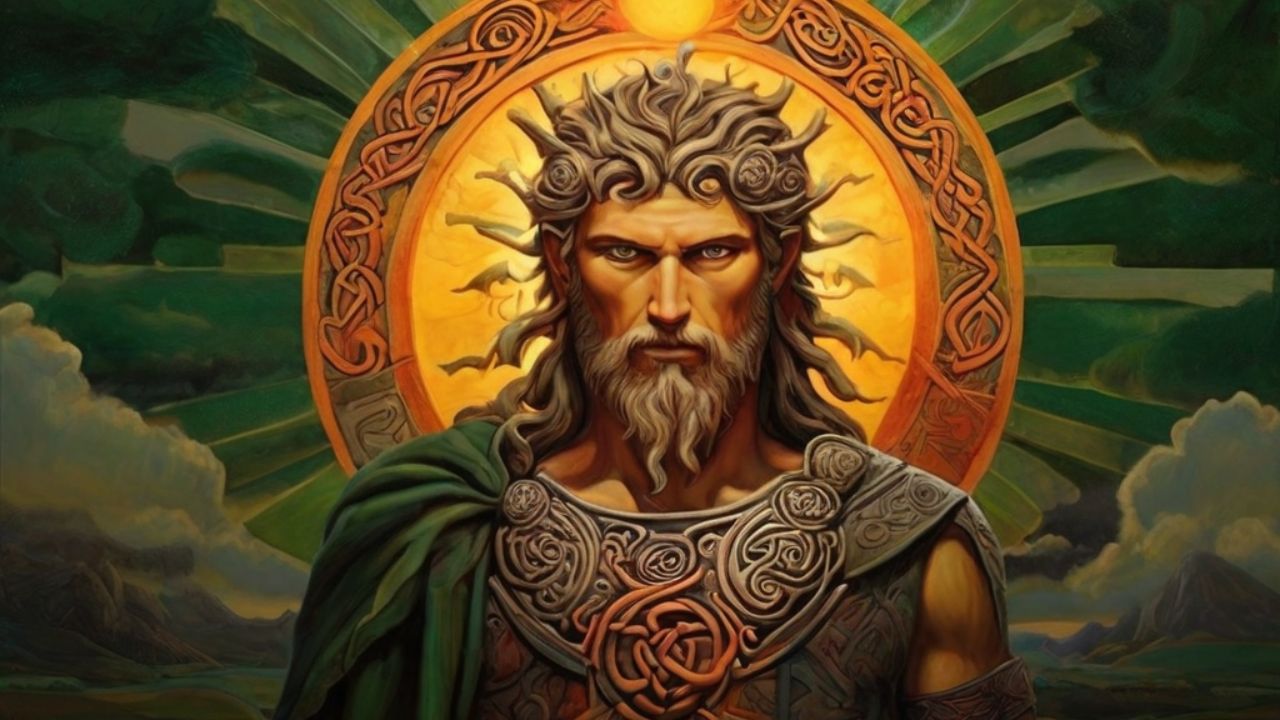
Lugh (Lugh Lámhfhada, “Lugh of the Long Arm”) is celebrated as a master of every skill at once — warrior, craftsman, poet, and more — which is precisely how he talks his way into the court of the Tuatha Dé Danann in the story of his arrival. He is central to the tale of the Second Battle of Mag Tuired, and the harvest festival Lughnasadh is named for him. Later folk tradition sometimes associates him with solar imagery, though his mythological role is broader than “sun god” alone.
Read the full Lugh guide →
The Cailleach — The Divine Hag
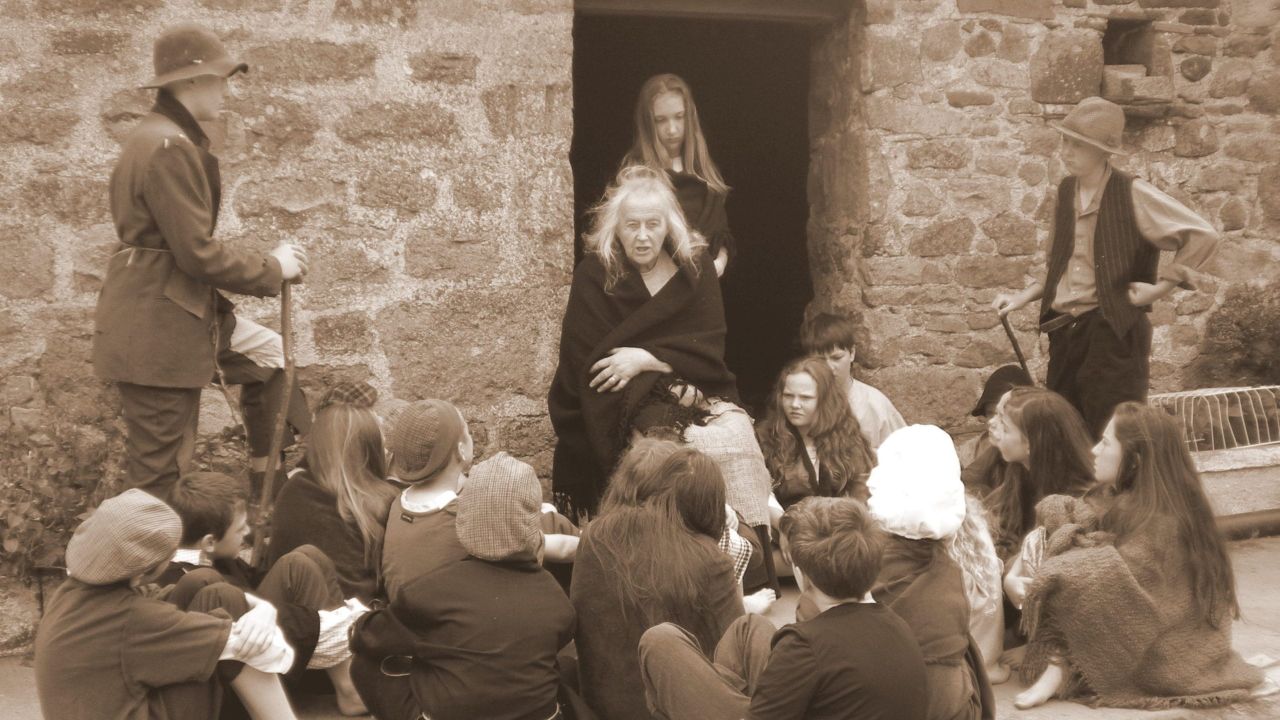
The Cailleach (literally “the veiled one” or “hag”) is a creator and weather deity found across Irish and especially Scottish tradition, closely tied to winter, mountains, and the shaping of the landscape itself — folklore across Scotland credits her with piling up entire mountain ranges. She is often described as ruling the dark half of the year, handing off to a spring/summer counterpart, which places her at the center of the Celtic wheel of the year in a way that is often underexplored compared to the more famous festivals.
Read the full Cailleach guide → — and for the Irish side of her tradition, see Gaelic tales of the Cailleach.
The Dagda — The Good God
The Dagda (“the good god” — good in the sense of skilled, not necessarily gentle) is a father-figure among the Tuatha Dé Danann, associated with abundance, wisdom, and strength. He owns two of Irish mythology’s most memorable objects: a cauldron that never runs empty, and a harp that can command emotion and even the seasons themselves.
Read the full Cauldron of the Dagda guide →
Moccus — The Boar God
Moving outside Ireland to Continental Celtic tradition: Moccus is a Gaulish god known primarily from a single inscription found in Langres, France, where he was worshipped as a patron of boar-hunting and syncretized with the Roman god Mercury under Roman rule. He is a useful reminder that “Celtic mythology” extends well beyond Ireland and Scotland — Gaulish, British, and other Continental Celtic peoples had their own gods, most known only fragmentarily through Roman-era inscriptions and accounts.
Read the full Moccus guide →
Why a Hub Page Like This Matters
Each of the figures above already has (or will have) a full article of their own — the point of this page is not to replace those, it is to give search engines and readers alike a single, well-linked starting point that shows how these figures relate to each other: who belongs to the same mythological cycle, who shares a story, and who comes from a different Celtic tradition entirely. As more deity profiles are added to the site, they will be added here.
Related Reading
Celtic Symbols and Their Meanings — the companion hub for symbols rather than deities; several symbols there connect directly to figures on this page (the sun wheel to Lugh, animal symbolism to the Morrígan’s crows).
The Celtic Wheel of the Year — Samhain, Beltane, Imbolc, and Lughnasadh, several of which connect directly to figures on this page (Lughnasadh to Lugh, the turning of the year to the Cailleach).