
Bronze Age Celtic Jewelry: Beauty Forged in Antiquity
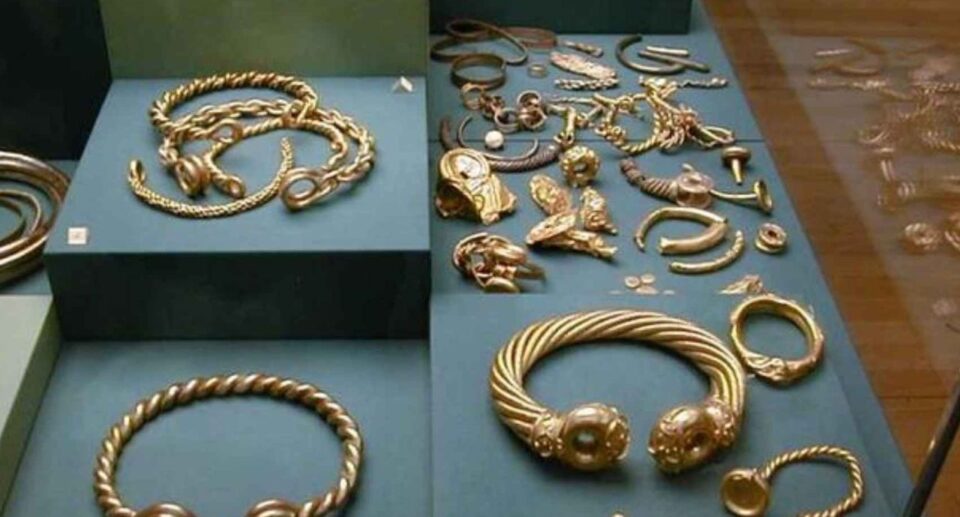
The Bronze Age marked a turning point in Celtic history. Around 2000 BCE, the mastery of bronze and gold opened new horizons, not just for tools and weapons, but also for art. Jewelry became more than adornment: it was status, symbolism, and spirituality fused into metal.
Like the Celtic stone carvings etched into sacred sites, Bronze Age ornaments were a language of their own, shining emblems of identity and belief.
Materials and Techniques
Celtic artisans worked primarily with gold, bronze, and occasionally amber and jet. Using techniques such as hammering, casting, and repoussé, they crafted pieces that balanced elegance with durability.
Gold was prized for its brilliance and resistance to tarnish, symbolizing eternal life and divine favor. This echoes the reverence shown in Celtic mythology, where light and radiance carried sacred meaning.
Iconic Pieces of Bronze Age Celtic Jewelry
Torcs
Perhaps the most recognizable, torcs were neck rings often made of twisted gold or bronze. They signified power, worn by warriors and chieftains.
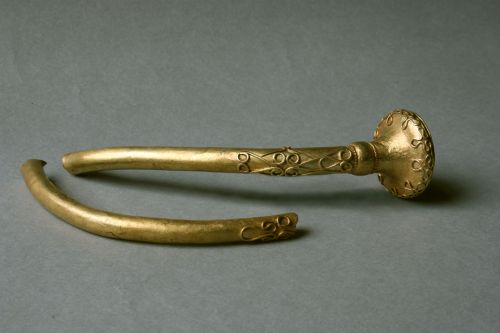
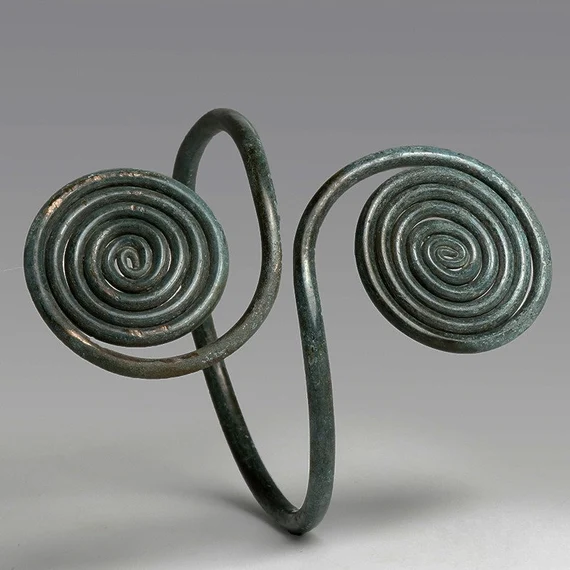
Armlets and Bracelets
These were symbols of status and protection. Their spiral designs mirrored natural forms like vines, waves, and suns.
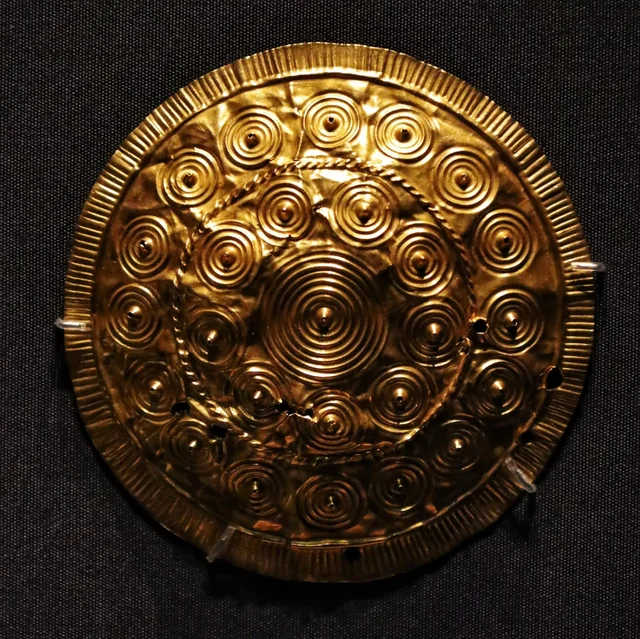
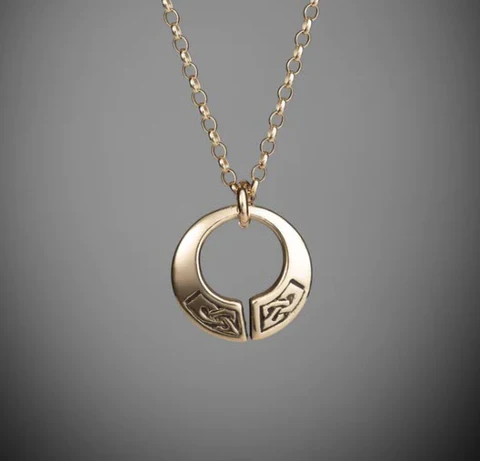
Sun Discs and Pendants
Circular motifs represented cosmic order, echoing the worship of solar deities such as Lugh, the Celtic Sun God.
Jewelry as Identity and Power
Jewelry in the Celtic Bronze Age was not decorative alone; it was political and spiritual. Chiefs wore heavy gold torcs as a public display of dominance. Pendants and amulets may have served as protective charms, much like later traditions such as the Claddagh Ring did in Ireland.
The spirals and knots used in design embodied eternity, life cycles, and cosmic unity—symbols that continued into later Celtic art, from tartan motifs to illuminated manuscripts.
The Enduring Legacy
Though the Bronze Age passed, its jewelry left a legacy visible in Celtic culture today:
- Heritage fashion: Modern jewelers still recreate torcs and spiral bracelets.
- Cultural symbolism: Designs echo in Scottish clan traditions and Highland attire.
- Spiritual resonance: Much like Irish holy wells, jewelry embodied the sacred woven into everyday life.
Conclusion: Eternal Ornaments of the Celts
Bronze Age Celtic jewelry is more than archaeology—it is storytelling in gold and bronze. Every torc, pendant, and spiral motif carries whispers of ancestors, identity, and belief. Like the threads of Scottish tartan shawls, these pieces bound people to their heritage, ensuring that beauty and meaning endured across millennia.
For more explorations of Celtic culture, browse the CeltGuide blog.