Symbolism of the Scottish Highland Cow
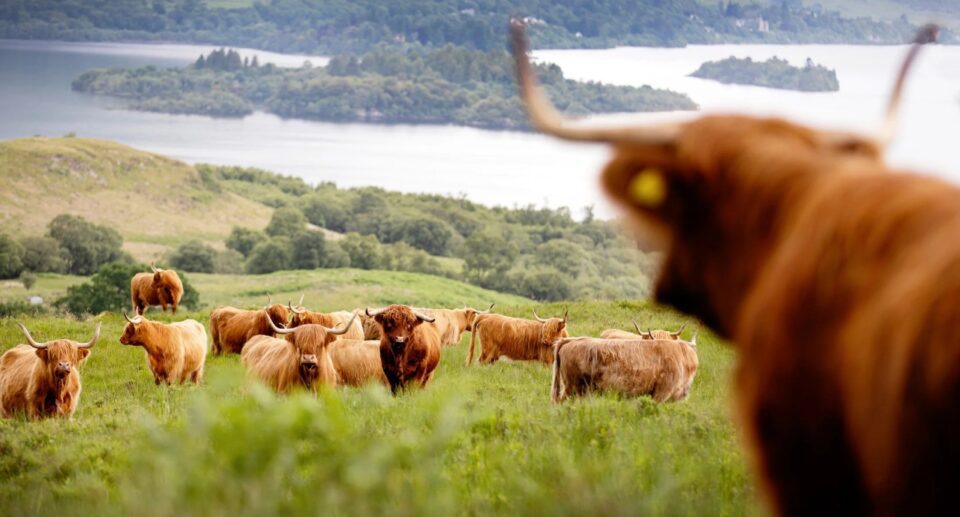
If you have ever stood eye-to-eye with a Highland cow, you know the feeling.
The world goes quiet. The wind moves. And the animal simply stays.
The Scottish Highland cow, affectionately the Heilan’ coo; feels ancient, gentle, and unshakable. Locals see more than an iconic farm animal. They see memory, survival, and guardianship wrapped in shaggy hair.
In this guide, I want to walk you through what this animal symbolizes, and why it still matters in Scotland today.
A Living Symbol of Resilience
The Highlands do not soften themselves for anyone.
Cold rain cuts sideways. Hills lift straight from stone. Winter lingers.
Yet the Highland cow thrives here.
It carries thick hair for insulation. Its horns help it forage. It conserves energy and remains calm when storms arrive. Over centuries, it has become Scotland’s quiet metaphor for endurance.
Highland cows remind Scots of a simple truth:
You cannot always control the weather but you can learn to endure it.
That same spirit echoes in Scotland’s history of hardship and migration. If this theme interests you, see how struggle shaped identity in The Influence of the Irish Potato Famine.
Guardians of Home and Kinship
Historically, cattle meant life.
They provided milk, hides, wealth, and stability. Families guarded their herds as fiercely as their names.
Because of that, the Highland cow grew into a symbol of:
- protection
- provision
- continuity
- shared responsibility
Gaelic tradition treats the herd as part of the household story. It belongs to the lineage as much as to the land. That sense of belonging sits at the heart of many Celtic communities, the same spirit explored in Why Irish People Are Natural Storytellers.
Quiet Strength, Not Loud Power
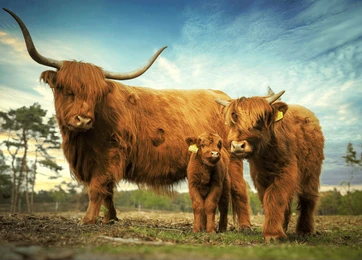
What surprises many visitors is the Highland cow’s demeanor.
It does not rush, does not posture, or observes. It holds space.
That calmness reads as self-assurance. Strength here is not loud or aggressive. It is grounded, and rooted. It feels earned.
The same quality appears in Celtic art and stonework, beauty paired with restraint. For a deeper look at that aesthetic, explore Celtic Stone Carvings.
A Bridge Between Land and Memory
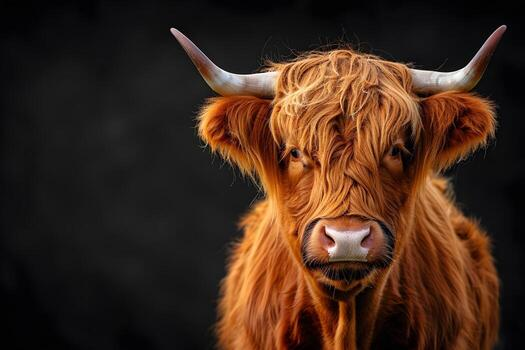
Highland cows seem older than history because, in many ways, they are.
People read them as keepers of continuity, creatures that hold memory longer than human lifetimes.
They symbolize:
- ancestry
- rootedness
- loyalty to place
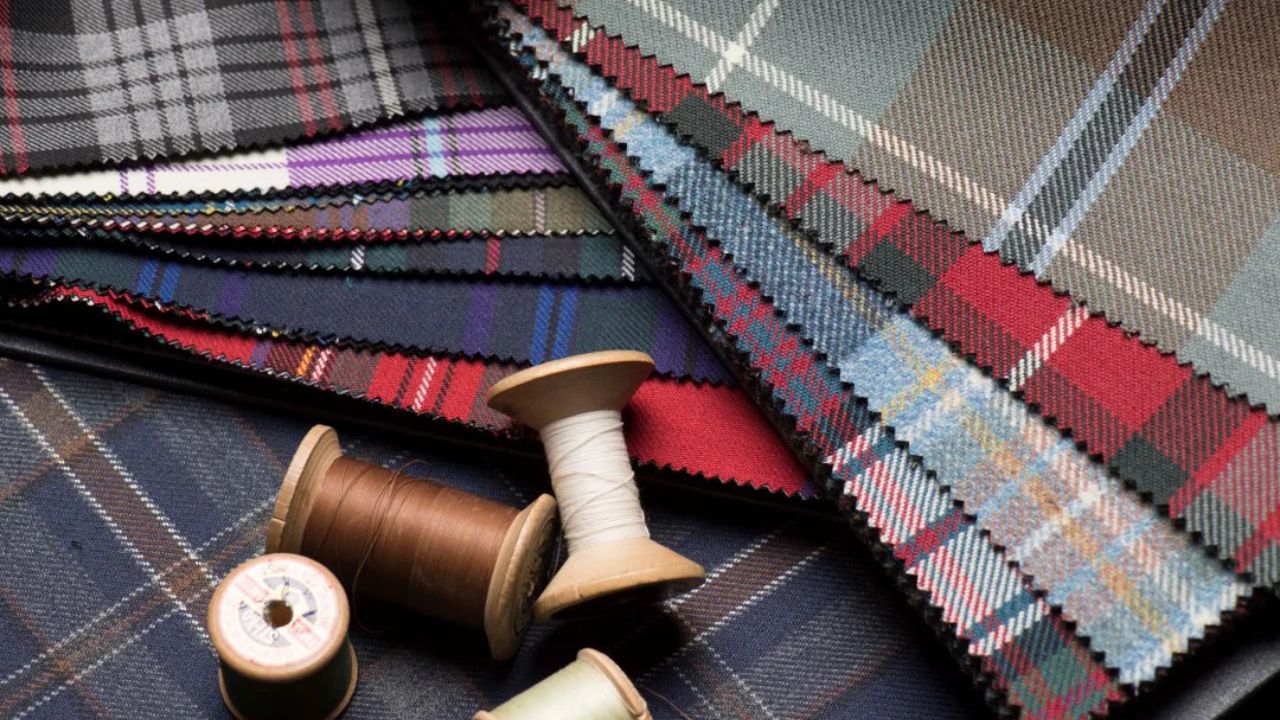
The cow stands where clans once gathered. It grazes near the same hills where songs rose and stories formed. In that sense, it connects us to land the way tartan connects us to lineage, a theme explored in What Is Tartan?.
Spiritual Echoes in Celtic Thought
In Celtic symbolism, animals often guard thresholds between the physical and the sacred.
The Highland cow sits close to earth. It feeds, shelters, and sustains. Because of that, it reflects fertility, protection, and grounded wisdom.
It teaches a lesson that rings through Celtic spirituality:
Strength grows from care.
Roots nourish courage.
And gentleness has power.
You can see similar symbolic layers in mythic figures such as Lugh, explored in Celtic Sun God Lugh.
Why the World Loves the Highland Cow Today
Across social media, farms, and tourism campaigns, the Highland cow has become a global favorite. People feel warmth. They see authenticity. The animal signals slower living, a world where patience still matters.
Yet its meaning remains deeply Scottish. It carries the story of resilience, community, and ancestral memory with every deliberate step.
And perhaps that is why it lingers with us.
Final Thought
To meet a Highland cow is to meet a living chapter of Scottish culture.
It does not boast. It simply stands and invites us to do the same.