Celtic Triple Spiral (Triskele): Meaning, Origins, and Timeless Symbolism

The Celtic world carries a deep love for patterns that speak in silent spirals, and the Triskele, or Celtic Triple Spiral, stands among the most meaningful of all. You see it on ancient stones, in modern jewellery, and across Celtic-inspired art. Yet its message feels as alive today as it did thousands of years ago.
What Is the Celtic Triple Spiral?
The Triskele is a symbol made of three connected spirals that radiate from a central point. It appears in Celtic art as early as 3000 BCE, long before the rise of the historical Celts. This makes it one of the oldest motifs in European culture.
Its structure looks simple at first, but each curve suggests movement, rhythm, and balance. Unlike many ancient symbols that stand still, the Triskele seems to breathe with motion.
The Triskele and the Celtic View of Life
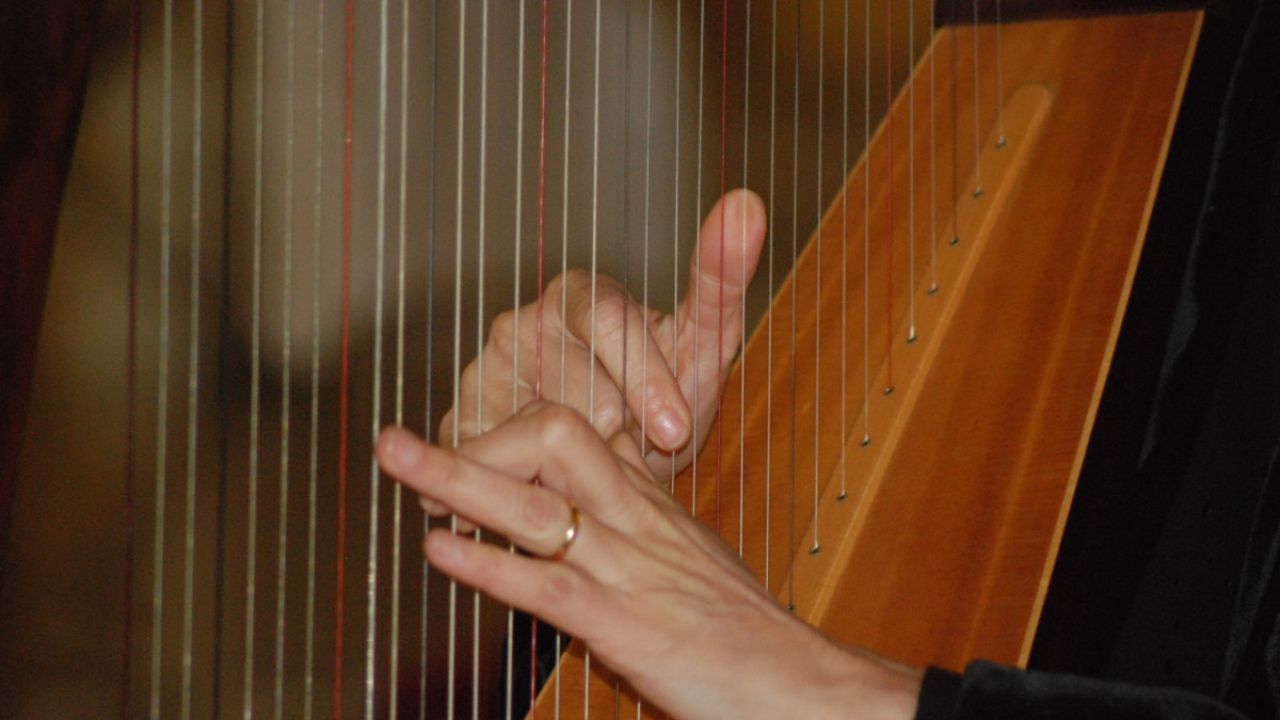
Celtic societies loved the idea of threes—a pattern that shapes mythology, cosmology, and daily life. If you’ve read about Celtic Harps (Clarsach) and how music carried spiritual weight in medieval Gaelic tradition, you will notice this same love for layered meanings in sound and symbol.
The Triskele draws from this worldview. Its three spirals often represent:
- Life – Death – Rebirth
- Land – Sea – Sky
- Past – Present – Future
- Body – Mind – Spirit
The Celts used symbols to express relationships rather than rigid definitions, so the Triskele invites multiple interpretations that overlap with myth, art, and everyday experience.
Ancient Roots: The Triskele at Newgrange
One of the most iconic Triskeles is carved at the entrance of Newgrange, a passage tomb in Ireland older than the pyramids.
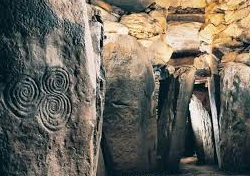
Newgrange was more than a burial site, it was a cosmic monument aligned with the winter solstice. The presence of the Triskele here suggests a symbol tied to cycles, renewal, and the movement of the sun.
The Triskele’s placement also reminds us of the ancient respect for nature’s rhythm. You will find similar reverence in topics like the Celtic Oak Tree, which symbolises wisdom and endurance.
Symbolism Across Celtic Mythology
The Triple Spiral appears in stories that centre on transformation and divine power.
In Welsh mythology, the realm of Annwn, a world of spirit and mystery, reflects similar cyclical ideas.
For more information about Annwn you can visit What Is Annwn?.
In Irish lore, gods like Lugh, associated with light and mastery, embody this sense of motion between worlds.
For those who doesn’t have much information about Sun God can explore Celtic Sun God Lugh.
For Celtic storytellers, the Triskele wasn’t a symbol to be solved but a reminder that life moves in spirals, not straight lines.
Art, Fashion, and Modern Interpretations
Today, the Triskele appears in Celtic jewellery, tattoo art, clothing, and even interior décor. You often see it alongside Celtic stone carvings, where ancient motifs inspire modern artists.
Its appeal goes beyond aesthetics. Many people choose the Triskele because:
- It expresses personal growth
- It celebrates nature’s cycles
- It honours Celtic heritage
- It carries spiritual or meditative meaning
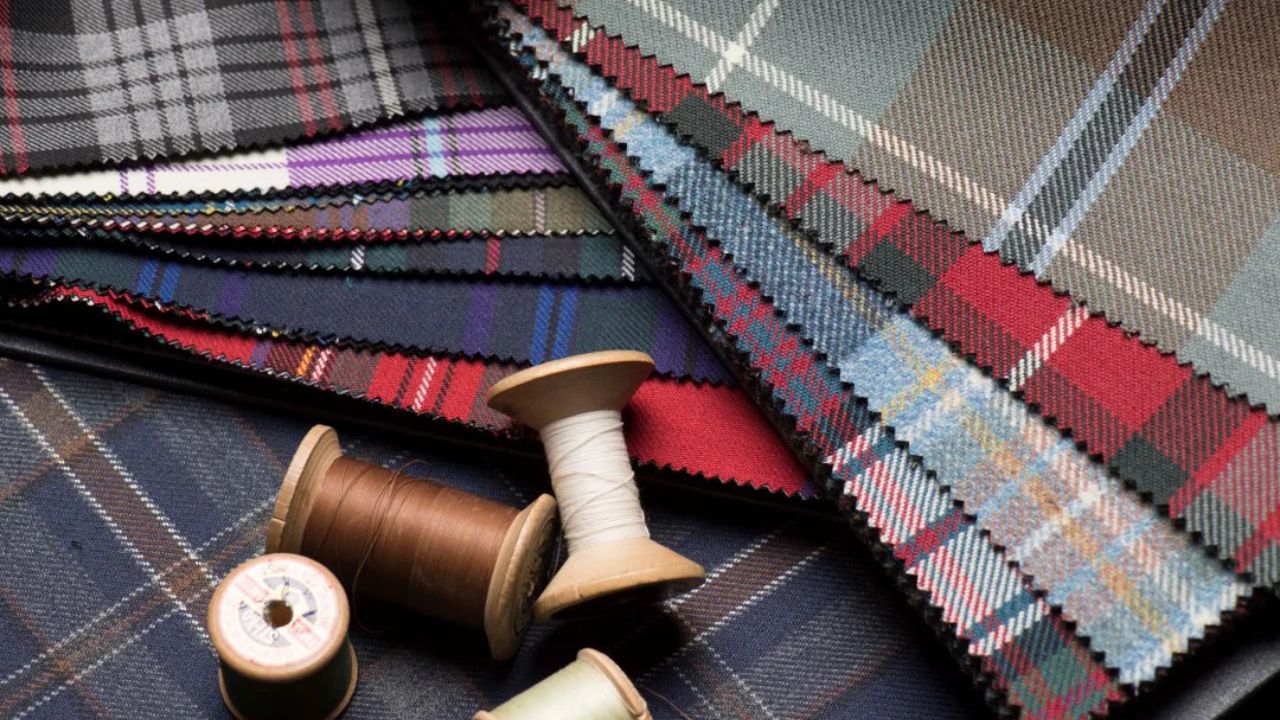
In fashion, it often appears next to patterns like tartan, which also draws on centuries of tradition.
Why the Triskele Still Matters
Symbols endure when they speak to something universal. The Triskele does exactly that. Its spirals encourage movement, reminding us that growth is not linear. Its symmetry offers balance, ancient roots connect modern people to a deep well of Celtic heritage. One that still shapes storytelling, music, and ritual across Scotland, Ireland, and beyond.
Curious about Celtic storytelling traditions? Read: Why Are Irish People Natural Storytellers?
Whether worn as jewellery or carved into stone, the Triskele invites reflection. It is an echo of ancestors and a guide for those seeking meaning in cycles, transitions, and renewal.
Final Thoughts
The Celtic Triple Spiral stands as one of the clearest symbols of continuity in Celtic culture. It connects the living with the ancient, the earthly with the spiritual, and the individual with the cosmic. When you encounter a Triskele whether in a field of standing stones or on a modern pendant, you meet a design shaped by thousands of years of human imagination.