Scottish Crannog Settlements: Life on Ancient Waters

Across Scotland’s lochs and quiet waters lie the remains of crannog settlements, some of the most remarkable achievements of ancient engineering. These artificial island homes offered safety, privacy, and control over the surrounding landscape. Far from being primitive shelters, crannogs reveal careful planning and a deep understanding of nature.
They remind us that early Scots shaped their environment with intelligence and intention.
What Is a Crannog?
A crannog is a man-made island, usually built in a lake, river, or wetland. Builders used timber, stone, brushwood, and clay to create a stable platform. On top, families raised roundhouses or rectangular wooden dwellings.
Archaeological evidence shows that people used crannogs in Scotland from the Neolithic period through the Middle Ages. This long lifespan proves their success as a settlement form.
Why Build Homes on Water?
Water provided protection. A narrow causeway or wooden walkway controlled access to the home. In times of danger, residents could remove or hide these connections.
Crannogs also offered:
- Natural defense against raiders
- Access to fishing and freshwater
- A clear display of social status
Much like clan territories discussed in How Many Scottish Clans?, crannogs marked ownership and authority within the landscape.
Daily Life on a Scottish Crannog
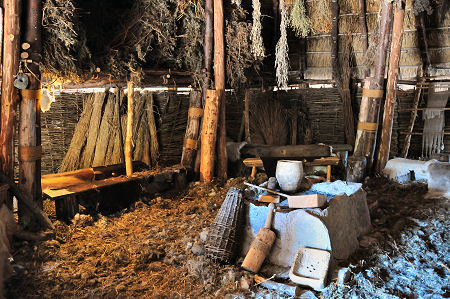
Life on a crannog balanced isolation and connection. Families farmed nearby land, fished from their doorsteps, and traded with surrounding communities.
Excavations reveal:
- Pottery and wooden vessels
- Metal tools and weapons
- Textiles and food remains
These findings show that crannog residents lived comfortably, not cautiously. Their homes reflected the same practicality found in other Celtic traditions, from stone carving to everyday tools (Celtic Stone Carvings).
Construction Skills and Natural Knowledge
Building a crannog required advanced planning. Builders selected strong timbers, often oak, a tree deeply respected in Celtic culture (Celtic Oak Tree). They drove posts into the loch bed and layered stone and soil to stabilize the structure.
This knowledge passed through generations, much like storytelling traditions explored in Why Are Irish People Natural Storytellers?.
Crannogs and Celtic Society
Crannogs often belonged to elite families or local leaders. Their visibility across water sent a message of control and permanence. In later periods, some crannogs functioned as strongholds or administrative centers.
This blend of daily life and authority reflects a wider Celtic worldview, where power intertwined with place. Similar ideas appear in sacred sites like the Hill of Tara, where landscape reinforced leadership.
Famous Scottish Crannog Sites
Several crannogs remain well studied today:
- Loch Tay Crannogs
- Oakbank Crannog, reconstructed for education
- Eilean Dòmhnuill, one of the earliest known sites
These locations attract visitors interested in archaeology and travel history, much like destinations discussed in Isle of Mull.
What Crannogs Teach Us Today
Crannogs challenge the idea that ancient people lived simply. They show innovation, resilience, and respect for the environment. Their builders adapted to Scotland’s waters rather than fighting them.
In an age concerned with sustainable living, crannogs feel surprisingly modern.

Final Thoughts
Scottish crannog settlements represent more than ancient homes. They embody intelligence, adaptability, and cultural identity. These water-built dwellings connect landscape, community, and tradition in a way few structures can.
To explore more stories like this, visit the wider collection on CeltGuide’s blog and continue uncovering Scotland’s layered past, one loch at a time.