Scottish Clan Embroidery Techniques Explained

Embroidery in Scotland does more than decorate cloth. It tells lineage, loyalty, and landscape in thread. When we study Scottish clan embroidery techniques, we uncover a visual language stitched into Highland identity.
As a historian trained in Edinburgh might say, textile work preserves memory as faithfully as manuscript or monument. Clan embroidery sits at the crossroads of art, kinship, and craftsmanship. It transforms fabric into a declaration of belonging.
The Historical Roots of Clan Embroidery
Clan identity in Scotland developed through kinship networks, territory, and heraldry. If you explore how many Scottish clans exist (https://celtguide.com/how-many-scottish-clans/), you begin to see how complex these networks became. Each clan cultivated distinctive symbols—crests, mottos, and badges.
Embroidery allowed these symbols to move beyond shields and seals. Women in Highland households stitched clan insignia onto garments, banners, and ceremonial textiles. Needlework became an act of cultural continuity.
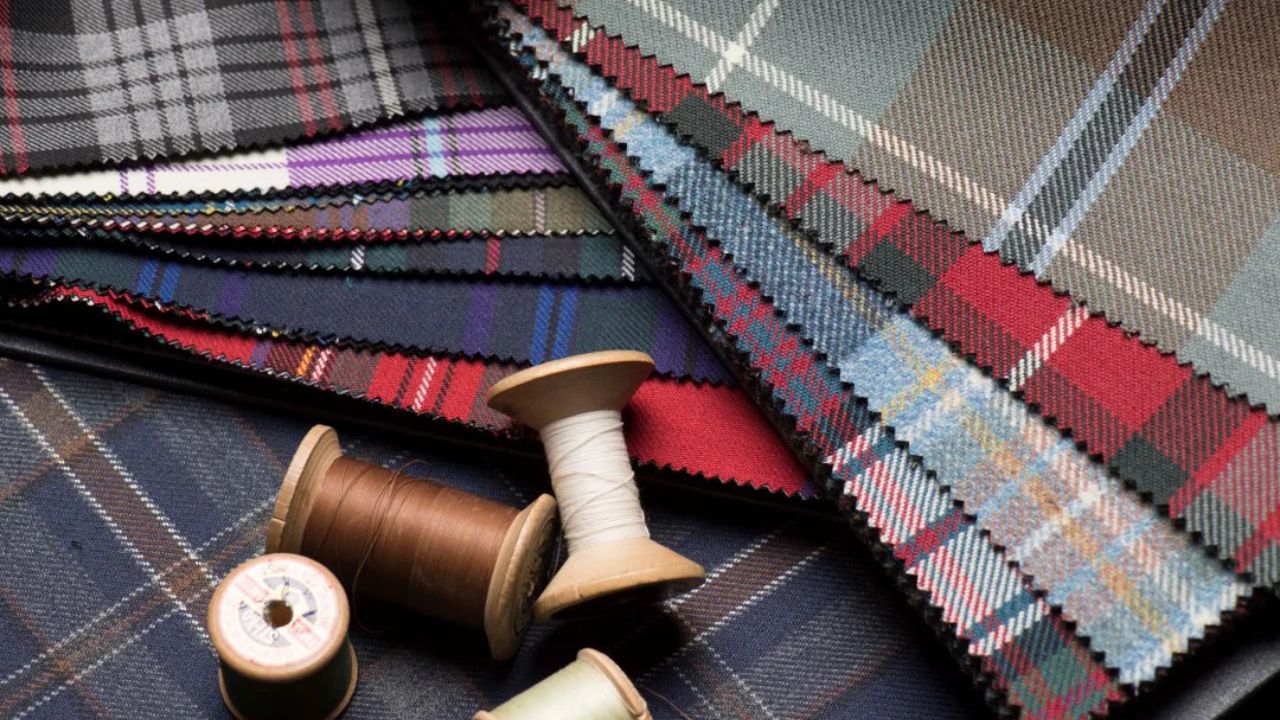
Tartan often provided the woven foundation. Our guide on what is tartan (https://celtguide.com/what-is-tartan/) explains how pattern and colour signal lineage. Embroidery added another layer of meaning.
Materials and Tools in Highland Needlework
Traditional clan embroidery relied on practical materials. Artisans used wool thread for warmth and durability. They chose linen or wool cloth as the base. Later, silk threads entered elite garments.
The needle itself served as both tool and symbol. In crofting communities, described in crofters’ journey through time (https://celtguide.com/crofters-journey-through-time/), textile skills formed part of daily survival.
Modern revivalists often combine historic stitches with contemporary fabrics. Yet the core techniques remain rooted in tradition.
Core Scottish Clan Embroidery Stitches
1. Satin Stitch for Clan Crests
Satin stitch fills solid shapes with smooth colour. Embroiderers use it to define clan animals, shields, and heraldic emblems. The result appears bold and authoritative.
You will often see this technique on sporrans, jackets, and sashes worn at Highland gatherings such as the Highland Games (see events to watch in Highland Games 2025: https://celtguide.com/events-to-watch-in-highland-games-2025/).
2. Chain Stitch for Celtic Motifs
Chain stitch creates flowing lines ideal for Celtic knotwork. The looping structure echoes patterns found in Celtic stone carvings (https://celtguide.com/celtic-stone-carvings/). Those ancient interlace designs translate beautifully into thread.
The stitch also complements organic motifs such as the Celtic oak tree, a symbol of endurance and strength explored in our Celtic oak tree article (https://celtguide.com/celtic-oak-tree/).
3. Stem Stitch for Lettering and Mottos
Clan mottos often appear beneath crests. Embroiderers favor stem stitch for lettering because it produces clean, controlled curves. The motto, once stitched, transforms cloth into a declaration of loyalty.
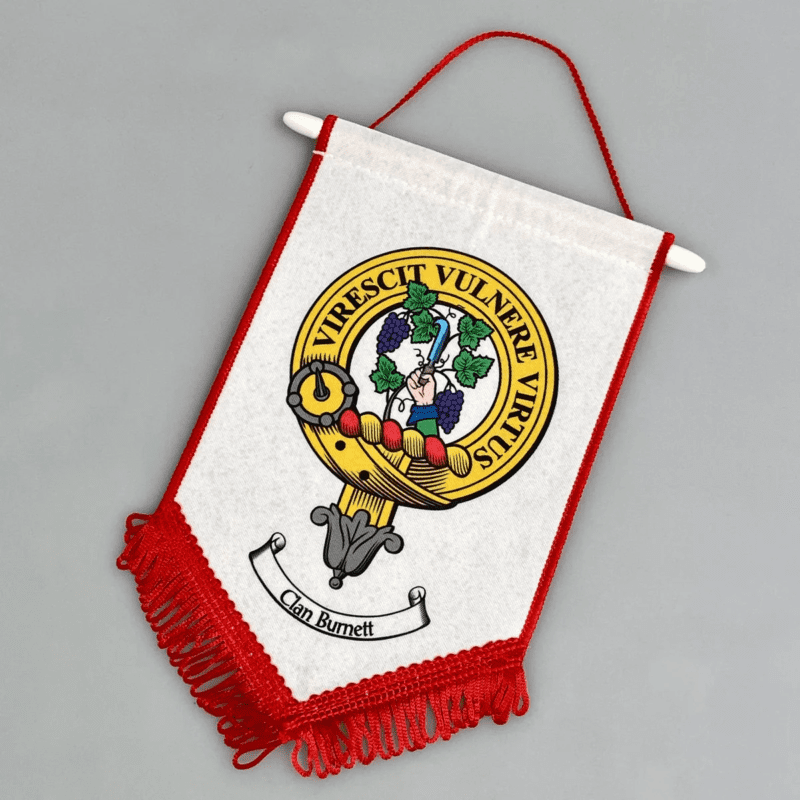
Embroidery in Highland Dress
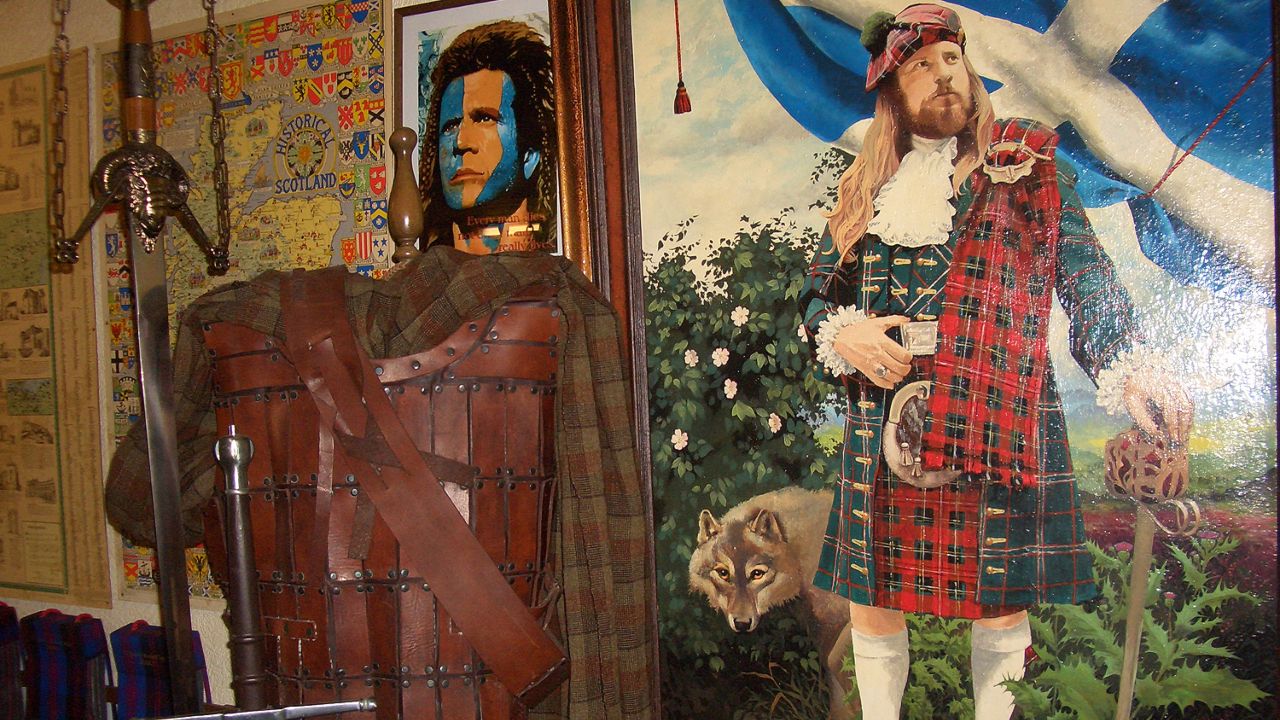
Clan embroidery frequently appears on kilts, sashes, jackets, and accessories. If you are new to Highland attire, our guide on how to measure for a kilt (https://celtguide.com/how-to-measure-for-a-kilt/) explains proper fitting. Fit matters. Embroidery must sit proportionally on the garment.
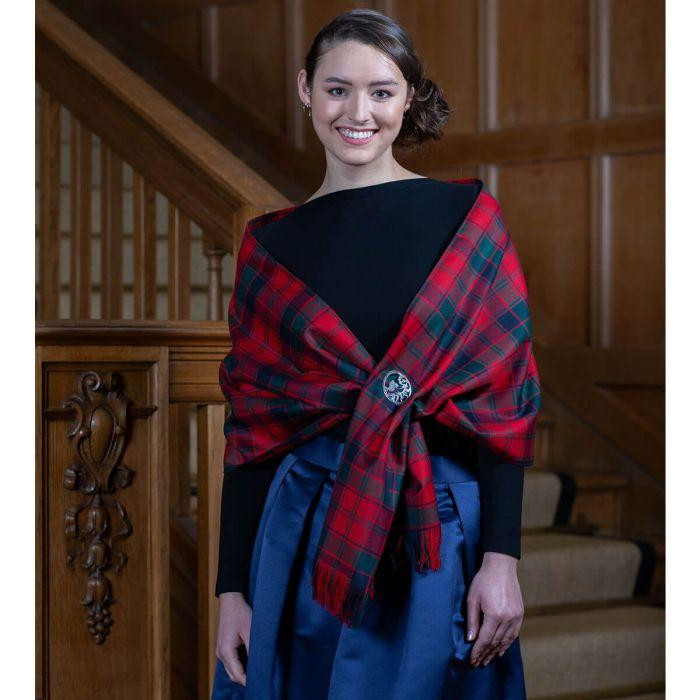
Women often incorporate embroidered crests into tartan shawls. Our feature on Scottish tartan shawls (https://celtguide.com/scottish-tartan-shawls-a-timeless-blend-of-heritage-and-elegance/) shows how textile and thread work together.
Even accessories such as the Tam o’ Shanter sometimes carry subtle stitched details. You can read more about this iconic bonnet here: https://celtguide.com/tam-oshanter-hat/.
Symbolism in Clan Embroidery
Clan embroidery rarely relies on abstract decoration alone. It communicates identity through:
- Heraldic animals such as lions or stags
- Plant emblems tied to clan territory
- Sacred symbols rooted in Celtic spirituality
For example, sacred landscapes like Loch Lomond shape regional pride. You can explore whether Loch Lomond lies in the Highlands here: https://celtguide.com/is-loch-lomond-in-the-highlands/.
Embroidery acts as a portable homeland. When Scots emigrated during periods of hardship, such as those discussed in the influence of the Irish Potato Famine (https://celtguide.com/the-influence-of-the-irish-potato-famine/)—textiles carried memory across oceans.
Technique Meets Storytelling
Scottish and Irish traditions share a devotion to narrative. If you consider why Irish people are natural storytellers (https://celtguide.com/why-are-irish-people-natural-storytellers/), you see how oral culture shapes identity. Embroidery functions as a parallel medium.
Each stitch forms part of a larger narrative. A crest recalls ancestry. A knot evokes continuity. A motto anchors moral values.
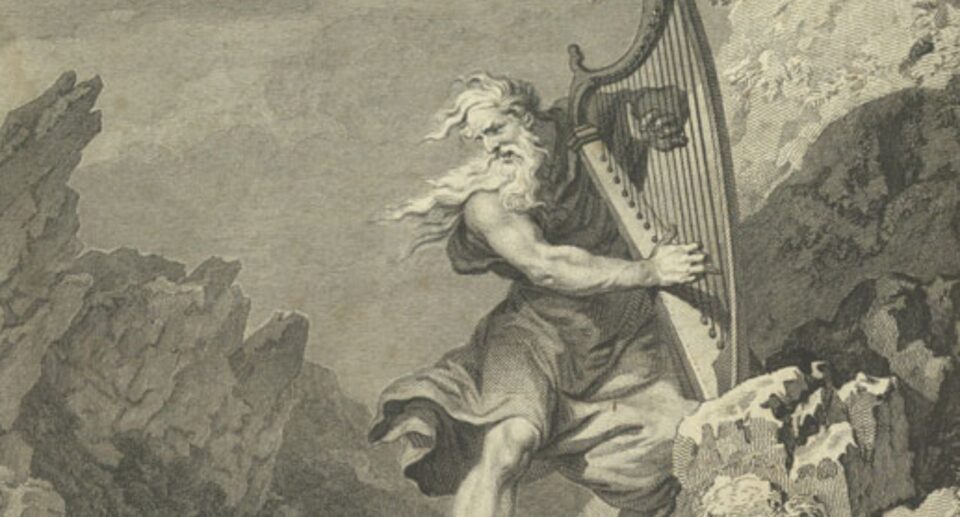
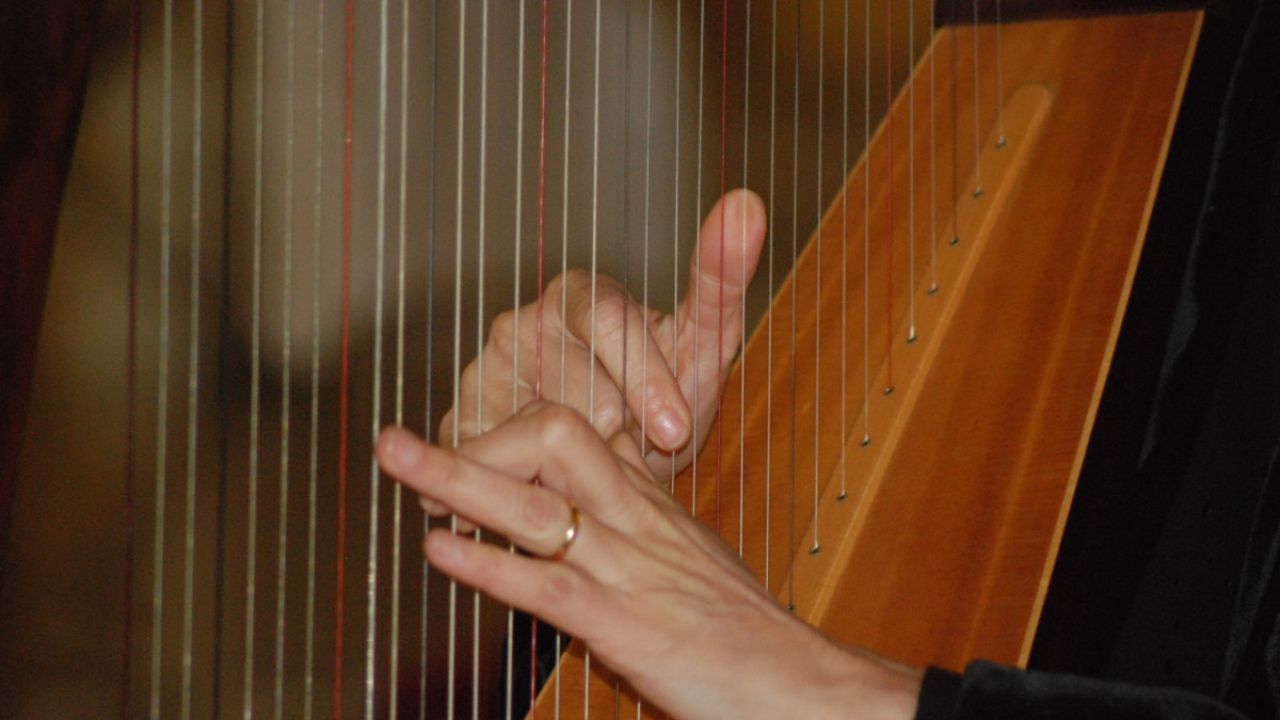
Even music reinforces this continuity. Instruments like the clarsach (https://celtguide.com/what-is-a-clarsach-a-comprehensive-guide-to-the-celtic-harp/) accompanied clan gatherings. Textile, sound, and ceremony wove together into communal expression.
Reviving Clan Embroidery Today
Contemporary artisans continue to revive Scottish clan embroidery techniques. Workshops across Scotland teach heritage stitching. Designers integrate crests into modern fashion without sacrificing authenticity.
Films and popular culture also renew interest. Our article on kilts in movies and shows (https://celtguide.com/kilts-in-movies-and-shows/) demonstrates how visual media shapes global perception of Highland dress.
Yet true revival requires respect for technique. Precision in stitch direction, thread tension, and spacing determines quality. Clan embroidery rewards patience.
Why Clan Embroidery Still Matters
Scottish clan embroidery techniques embody continuity. They unite art and ancestry. They transform garments into genealogies.
In a fast-fashion world, embroidery slows us down. It demands attention, honors detail, and reminds us that identity does not emerge overnight. It forms stitch by stitch, generation by generation.
For more explorations of Celtic heritage, visit our main blog hub: https://celtguide.com/blog/.