The Celtic Tree of Life Symbol: Roots, Branches, and Eternal Balance
Introduction: A Symbol That Connects Heaven and Earth
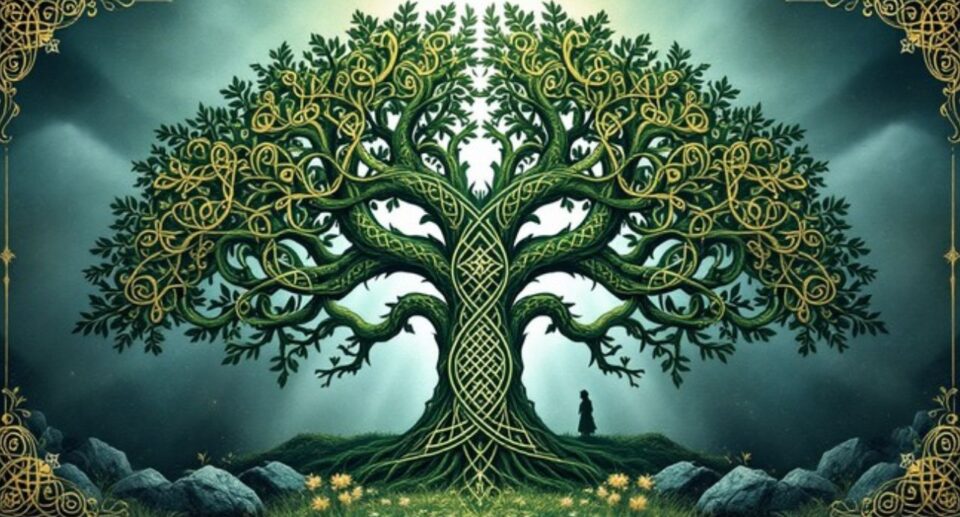
Among the most enduring images in Celtic art and mythology is the Tree of Life. With its roots reaching deep into the soil and branches stretching toward the heavens, it embodies harmony, resilience, and interconnectedness.
Just as the Celtic oak tree was revered for strength, the Tree of Life represented a spiritual map: the unity of land, sea, and sky, the eternal cycle of nature and life.
The Origins of the Celtic Tree of Life
The Celtic Tree of Life (Crann Bethadh in Irish) is found across stone carvings, manuscripts, and jewelry. Its symbolism was rooted in both pagan spirituality and later Christian adaptation.
- Roots symbolized connection to ancestors and the underworld.
- Trunk represented the mortal realm — the human experience.
- Branches reached to the heavens, linking mortals with the divine.
This imagery echoes the balance found in other Celtic beliefs, such as the sun god Lugh, who embodied skill, light, and cosmic order.
Symbolism in Celtic Life and Belief
For the Celts, the Tree of Life was far more than decoration — it was a spiritual emblem:
- Balance & Harmony: A reminder of the connection between earth and spirit.
- Rebirth & Renewal: Like trees that shed leaves and bloom again, it represented resilience and cycles of life.
- Protection & Sacredness: A tree was often planted at the center of Celtic settlements, marking it as a guardian of the community.
This symbolism parallels other cultural icons, such as the Claddagh ring, which also embodies love, loyalty, and unity.
The Tree of Life in Celtic Art
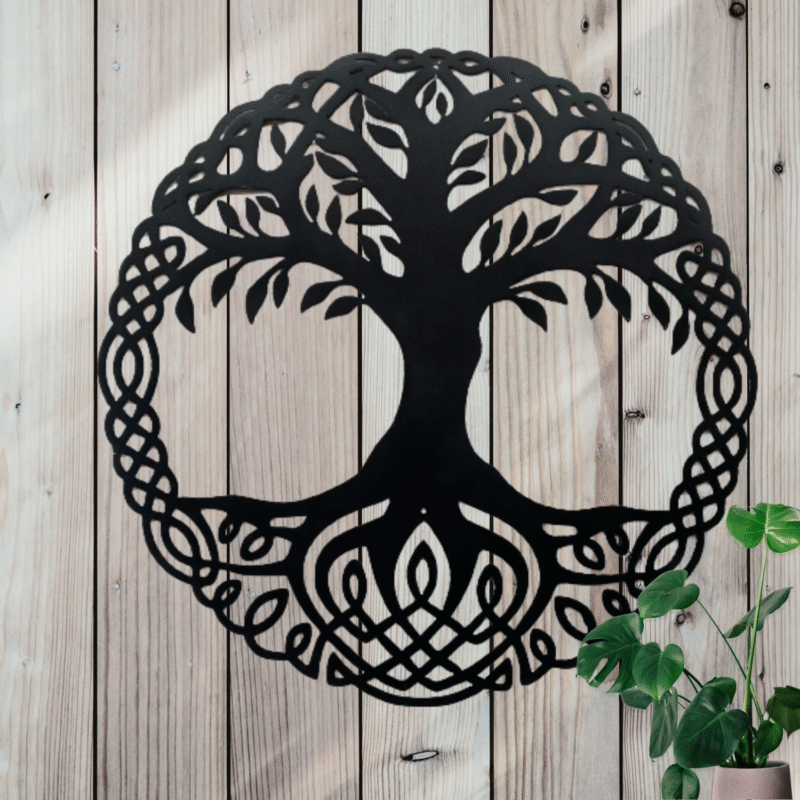
The Tree of Life became one of the most recognized Celtic knotwork motifs. Circular designs emphasized eternity, while interwoven lines showed the interconnectedness of all life.
You’ll find this motif in:
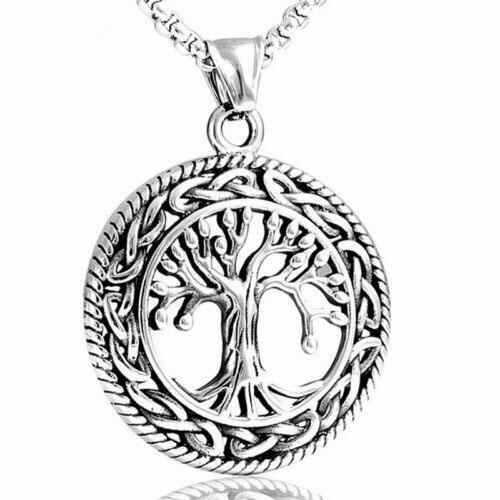
- Jewelry (pendants, brooches, rings)
- Stone carvings (see more on Celtic stone carvings)
- Manuscripts (in illuminated texts alongside Gaelic proverbs)
Connections to Myth and Spirituality
The Tree of Life echoes throughout Celtic mythology and folklore:
- In some legends, cutting down a sacred tree meant destroying the heart of a tribe.
- Trees were seen as portals between worlds, much like Irish holy wells served as gateways to the divine.
- The cyclical nature of trees reflected the Celtic view of life, death, and rebirth ideas also mirrored in festivals and rituals.
The Tree of Life Today
Today, the Celtic Tree of Life continues to inspire:
- Jewelry & Fashion – worn as a symbol of strength and resilience.
- Spirituality – embraced in modern Celtic paganism and meditation.
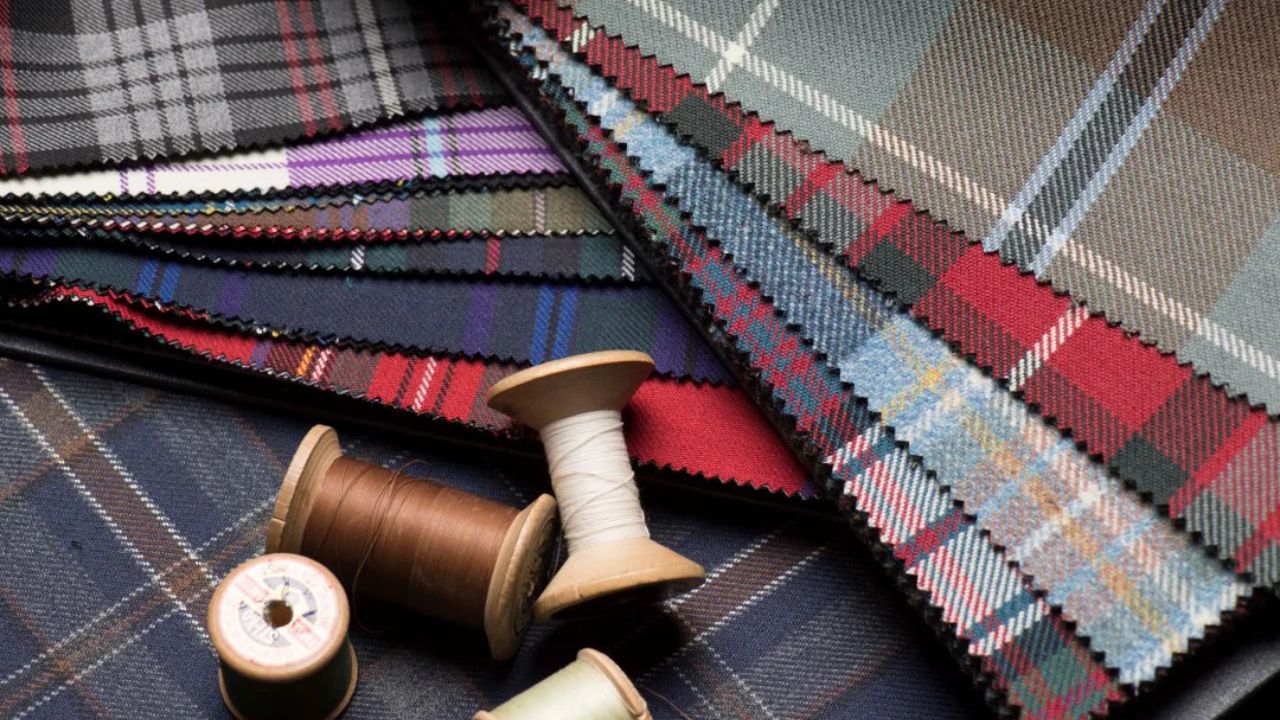
- Heritage – used as a proud emblem of Irish and Scottish identity, just like tartan.
It remains a timeless reminder of humanity’s connection to nature, ancestry, and the divine.
Conclusion: An Eternal Celtic Symbol
The Celtic Tree of Life endures because it speaks to something universal: the cycles of life, the balance of nature, and our shared spiritual roots. It is as much a cultural emblem as it is a personal symbol of strength, growth, and renewal.
Much like the Irish storytellers who kept traditions alive through words, the Tree of Life has kept Celtic wisdom alive through imagery. It is both ancient and ever-renewing, a true symbol of eternity.