
Whisky Barrel Making: Craft, Tradition & Celtic Heritage

If you have ever visited a Scottish distillery, you know that the scent of oak, earth, and warm spirit hangs in the air like an invitation. Whisky is Scotland’s national pride, but the soul of every fine whisky begins long before the first drop touches the still. It begins with the barrel.
Whisky barrel making, also known as cooperage, is a centuries-old craft that shaped Scotland’s cultural identity as much as its clans, tartans, and Celtic mythology. In a world full of modern machinery, coopers still rely on traditional tools, intuition, and generational knowledge. Today, we’ll walk through the steps of making a whisky barrel and explore why this ancient craft matters so much.
The Importance of Oak in Whisky Craft
Every whisky lover knows that the barrel contributes around 60–70% of the final flavor. That is why coopers choose oak so carefully. Oak is strong, flexible, and rich in natural compounds that react beautifully with alcohol. Each stave, those narrow curved pieces of wood is cut from oak seasoned outdoors for years. The slow seasoning process brings out the sugars, tannins, and vanillins that give whisky its warm, deep character.
Shaping the Staves: Where Art Meets Knowledge
Once the oak is ready, the cooper cuts and shapes each stave to fit together with stunning precision. No glue is used. No nails. The entire barrel stays intact because of perfect geometry and skilled hands.
The cooper arranges the staves inside a temporary metal hoop. It looks chaotic at first, but the cooper knows exactly how each piece should sit. This stage often feels almost meditative, a calm but focused moment that reveals the cooper’s craftsmanship.
For readers who enjoy exploring old Celtic crafts, you might also love our piece on Celtic Stone Carvings, where precision and symbolism shape ancient art.
Raising the Barrel: Heat, Water, and Patience
Once the staves stand upright, the cooper tightens them with another hoop. The wood is still stiff, so the barrel is placed over a gentle fire. The heat makes the oak flexible. As the wood warms, the cooper gradually pulls ropes to bend the barrel into shape.
Now comes the part that fascinates visitors the most—the charring.
The Magic of Charring
Charring is a short but powerful step. Flames roar inside the barrel for a few seconds to several minutes. This burns the inner layer and caramelizes the wood sugars. During aging, the whisky interacts with these sugars, taking on notes of vanilla, smoke, honey, spice, or caramel depending on the distillery’s choice.
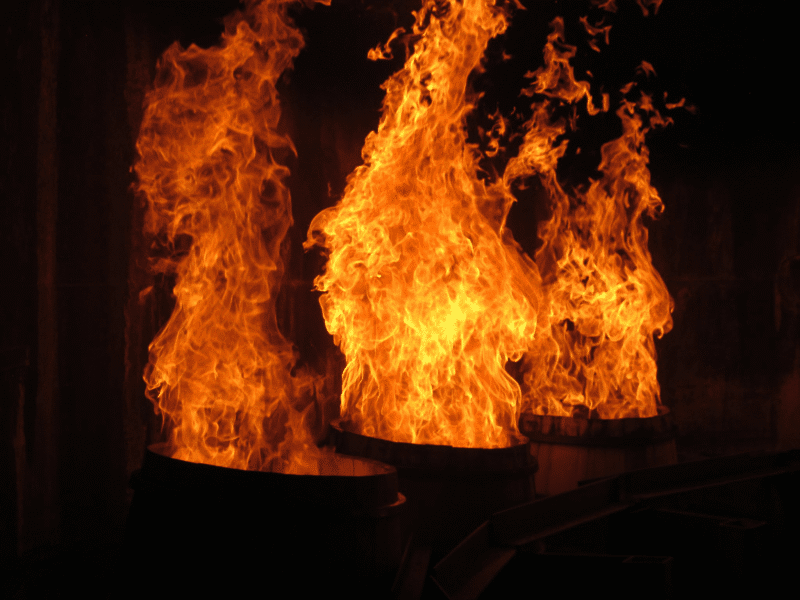
This step feels like alchemy. The barrel becomes more than a container, it becomes a partner to the whisky. The transformation mirrors the ancient Celtic belief in fire as a purifying force, seen in myths like the Celtic Sun God Lugh.
Fitting the Heads and Testing for Leaks
After charring, the cooper creates the barrel’s two “heads” (the round ends). Groove by groove, everything fits together with zero gaps. Then comes the leak test. The barrel is filled with water, and every drop that escapes tells the cooper exactly where to tighten or tap.
This meticulous attention to detail recalls the precision involved in wearing a traditional Highland garment. If you’re curious, you can explore our guide on How to Measure for a Kilt for similar craftsmanship parallels.
The Barrel’s Journey to the Distillery
Once complete, the barrel heads off to a distillery. There, it begins a new life: resting in cool, quiet warehouses, breathing Scotland’s damp air, and shaping the whisky for years or decades.
Every barrel is unique. Some once aged sherry in Spain. Others held bourbon in Kentucky. When whisky flows into them, they share their past and together, they create a new future.
Why Whisky Barrels Matter to Celtic Identity
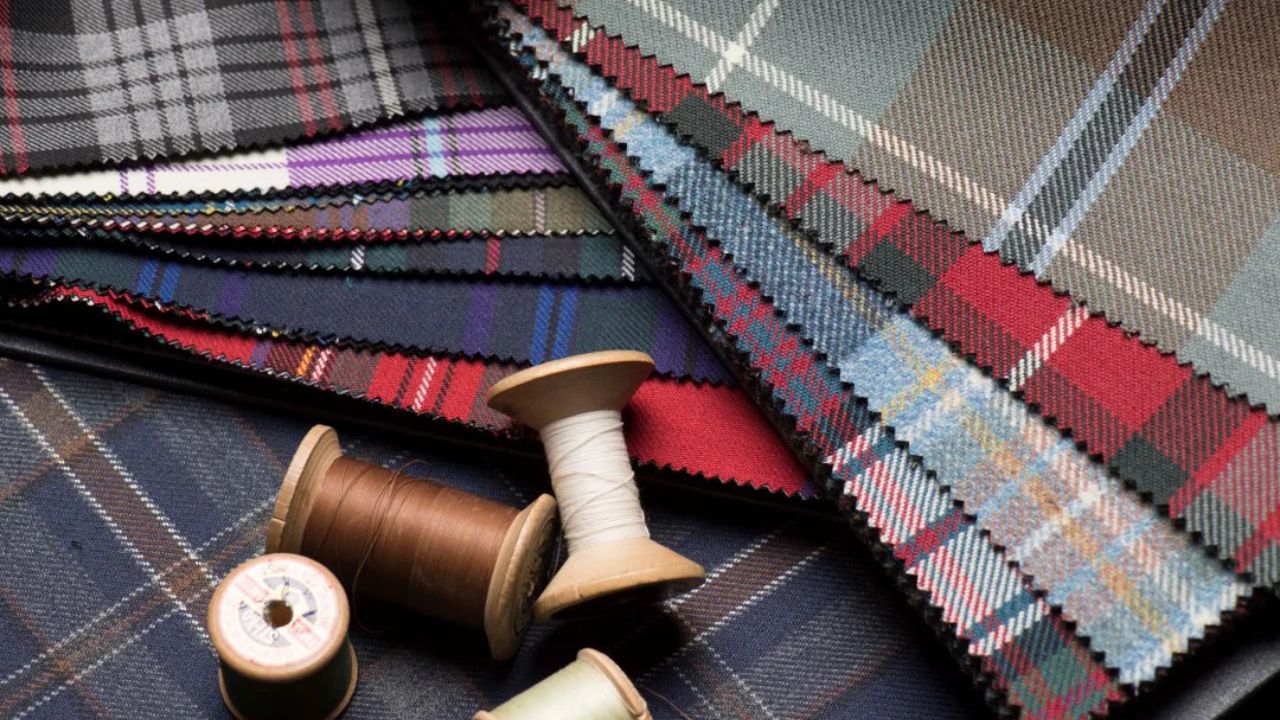
Cooperage is not just a trade. It is part of Celtic heritage. Like traditional storytelling, explored in our article Why Irish People Are Natural Storytellers or the iconic patterns of Tartan, whisky barrel making preserves cultural memory. It connects families, communities, and generations.
Whisky barrels symbolize patience, precision, and respect for the land. They remind us that good things take time—and that craftsmanship still matters in an age of shortcuts.
Final Thoughts
Whisky barrel making remains one of the most remarkable crafts in Scotland. Every step from oak selection to charring, echoes a commitment to tradition and quality. The next time you pour a dram of Scotch, remember the hands, the fire, and the heritage behind every sip.
For more Celtic stories, explore our Celtguide Blog—where history and culture live on.