

Scottish Silk Sashes: A Timeless Blend of Scottish Tradition and Gentle Elegance
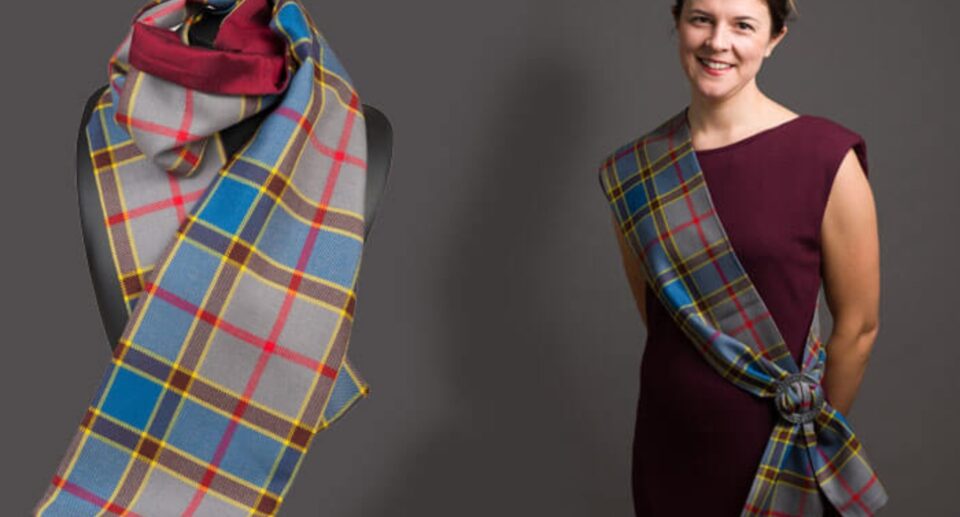
Scottish fashion carries a charm that often feels both ancient and wonderfully alive. Among its most graceful elements, Scottish silk sashes stand out as symbols of honour, heritage, and artistry. Whether worn at weddings, Highland gatherings, ceilidhs, or cultural celebrations, these sashes add a gentle yet striking finish to both traditional and modern outfits.
In this guide, I’ll take you through the origins, meaning, styles, and uses of Scottish silk sashes—keeping things simple, conversational, and deeply rooted in authentic Celtic heritage.
What Makes a Scottish Silk Sash Special?
A Scottish silk sash is more than a decorative strip of fabric. It connects the wearer to centuries of Highland identity. Silk brings softness, lightness, and a lustrous sheen, qualities that create a refined alternative to wool tartan, especially for more formal occasions.
Compared with heavier tartan shawls (see our in-depth article on Scottish Tartan Shawls), silk sashes feel delicate and elegant. This difference makes them especially popular among women who want heritage without the weight.
A Brief Look Into Their Cultural Roots
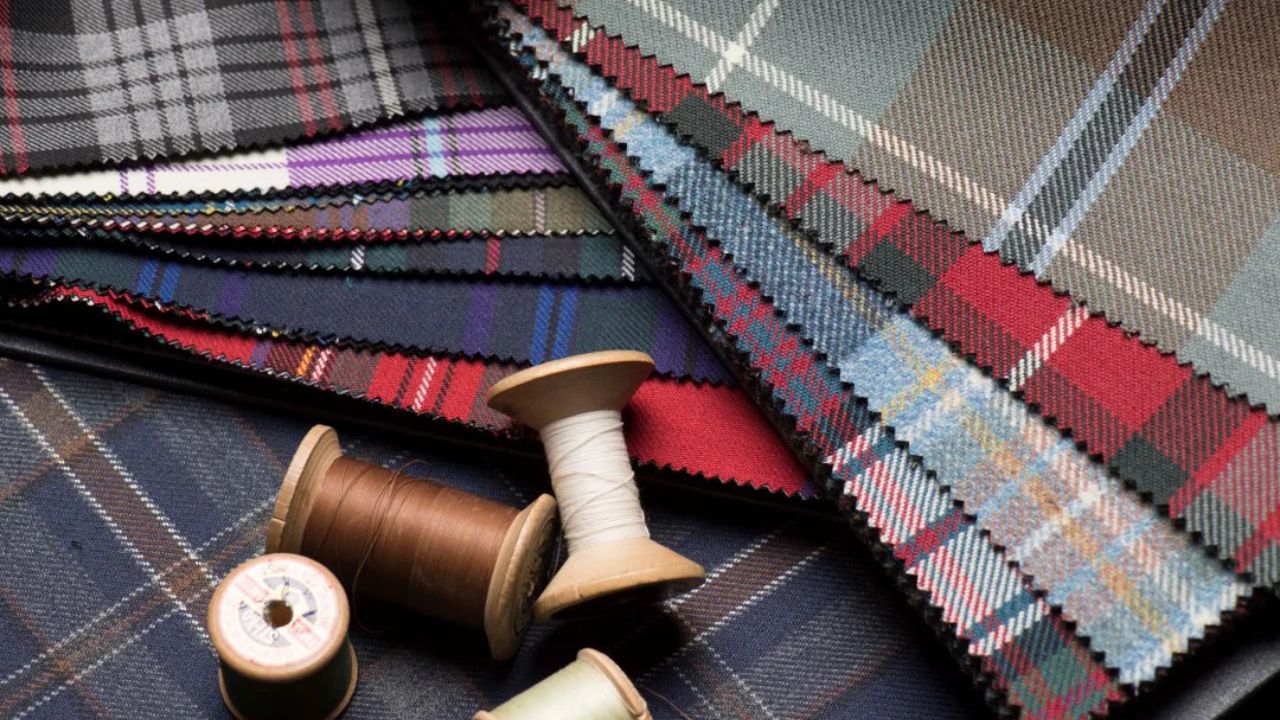
While tartan is usually associated with wool, silk tartans gained popularity during the 18th and 19th centuries as Highland dress evolved into ceremonial wear rather than daily clothing. Silk offered prestige, colour brilliance, and light texture, perfect for formal occasions such as balls, gatherings, and weddings.
If you’re curious about where tartan came from and how it developed, our guide What Is Tartan? offers a clear historical breakdown.
These sashes also helped women take part in clan identity. In eras when men carried dirk knives or wore belted plaids, women expressed their belonging through textiles, particularly sashes and shawls.
Types of Scottish Silk Sashes
1. Clan Tartan Silk Sashes
These showcase a clan’s colours and pattern. They’re ideal for weddings, Burns Night dinners, and Highland Games. If you don’t know your clan, you can explore broader Scottish heritage themes through neutral or district tartans.
2. Formal Evening Sashes
These silk sashes come in solid colours or elegant patterns. They pair beautifully with gowns and lend an elevated, soft aesthetic.
3. Narrow Knot Sashes
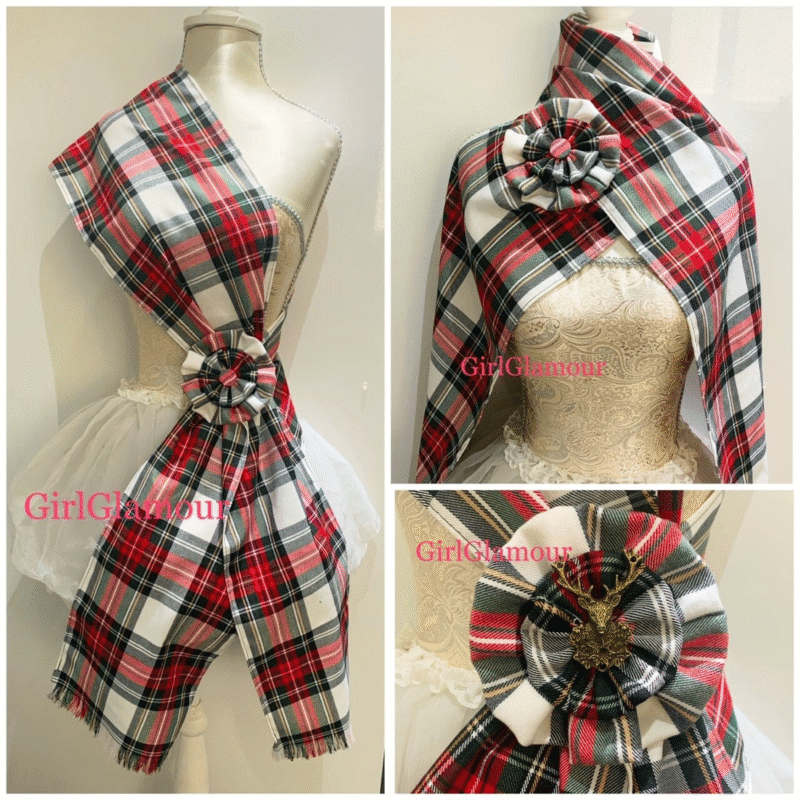
Made for everyday wear, these narrow pieces tie easily at the shoulder and add a delicate touch without overwhelming an outfit.
How to Wear a Silk Sash: Simple and Stylish
There are several graceful ways to style a silk sash:
- The Traditional Shoulder Drape:
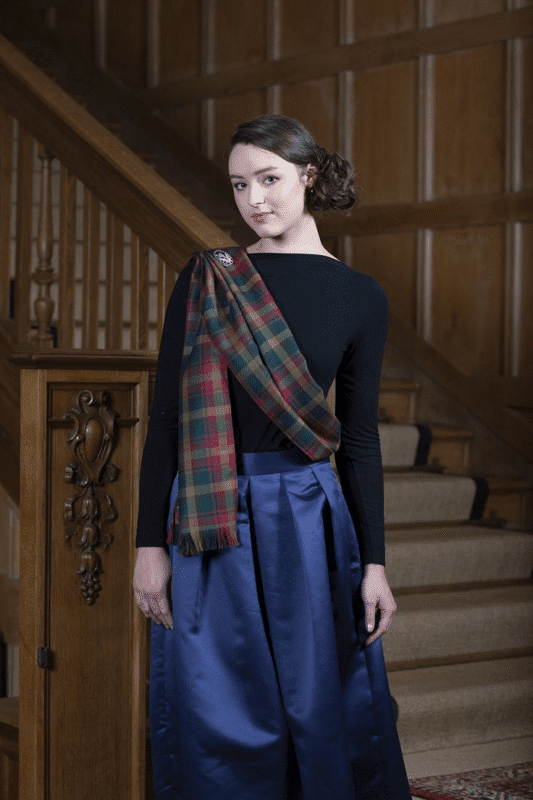
Place the sash over the right shoulder and pin it with a brooch. This nods to classic Scottish tradition and aligns perfectly with ancestral customs. - The Cross-Body Style:
Drape it over one shoulder and let it fall diagonally across the torso. It works well for evening dresses. - The Loose Loop:
A relaxed drape around the neck gives a modern twist while keeping the sash’s heritage intact.
For a step-by-step tutorial, explore our guide on How to Wear a Tartan Sash.
Where Do We See Silk Sashes Today?
Silk sashes still flourish at:
- Scottish weddings
- Ceilidhs – see our article on Ceili Bands to explore the music behind the dance
- Highland Games events
- Clan gatherings
- Cultural festivals and storytelling events—and if you love Celtic storytelling, see why Irish People Are Natural Storytellers
In each setting, they bring colour, memory, and meaning.
Why Silk Sashes Are Still Loved Around the World
Silk sashes blend heritage with comfort. Their light fabric makes them easy to pair with modern fashion, while their connection to clan identity gives them emotional significance. They honour the past while keeping Celtic culture visible in today’s celebrations and fashion.
If you’re exploring Scottish attire more deeply, guides like How Many Scottish Clans Are There? and How Long Has the Tartan Print Been Around? can help you understand the wider cultural landscape these sashes belong to.
Final Thoughts
A Scottish silk sash carries the spirit of Scotland: soft, colourful, and full of stories. Whether worn proudly at clan gatherings or elegantly at weddings, it keeps Highland identity alive in a way that feels both modern and rooted in history.
To explore more Celtic culture, fashion, and tradition, browse our full CeltGuide blog.