Celtic Jewelry: A Timeless Blend of Art and Meaning

Introduction: More Than Just Ornament
Jewelry is often dismissed as mere decoration, but in the Celtic world it was far more than that. Celtic jewelry was identity, protection, status, and spirituality woven into metal and stone. Whether worn by warriors, druids, or everyday folk, each piece carried meaning far beyond beauty.
Much like the storytelling traditions of the Irish (explored here), Celtic jewelry told its own tale through knots, spirals, and symbols that still fascinate us today.
Origins of Celtic Jewelry
The Celts, spread across ancient Europe, were renowned metalworkers. By the Iron Age, they had perfected techniques in bronze, silver, and gold. Their designs were not only artistic but symbolic spirals for eternity, knots for interconnection, and animals for strength.
Much like Celtic stone carvings, these designs carried spiritual significance, often tied to nature, mythology, and the unseen world.

Iconic Pieces of Celtic Jewelry
1. The Torc
A torc was a rigid neck ring, often made of gold or bronze, and worn by warriors and leaders. More than an ornament, it was a statement of power and prestige. The most elaborate torcs often rivaled royal crowns in significance.

2. The Claddagh Ring
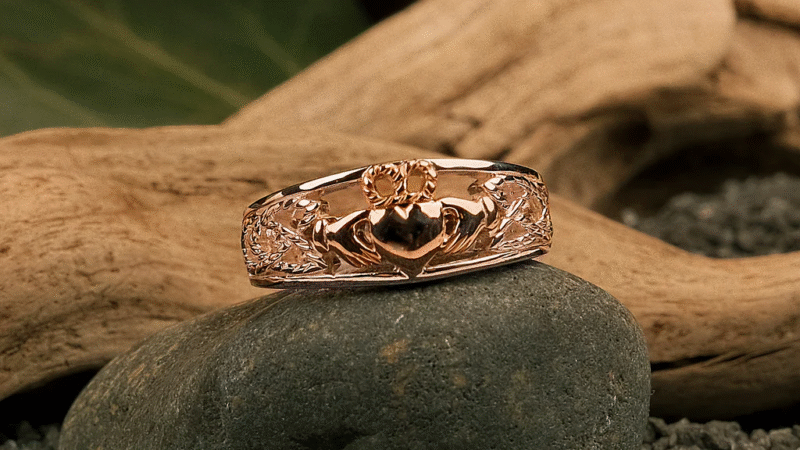
Perhaps the most famous Celtic-inspired piece, the Claddagh ring embodies love, loyalty, and friendship. Its heart, crown, and hands make it a universally recognized design still exchanged in weddings and friendships today.
3. Celtic Knots and Spirals
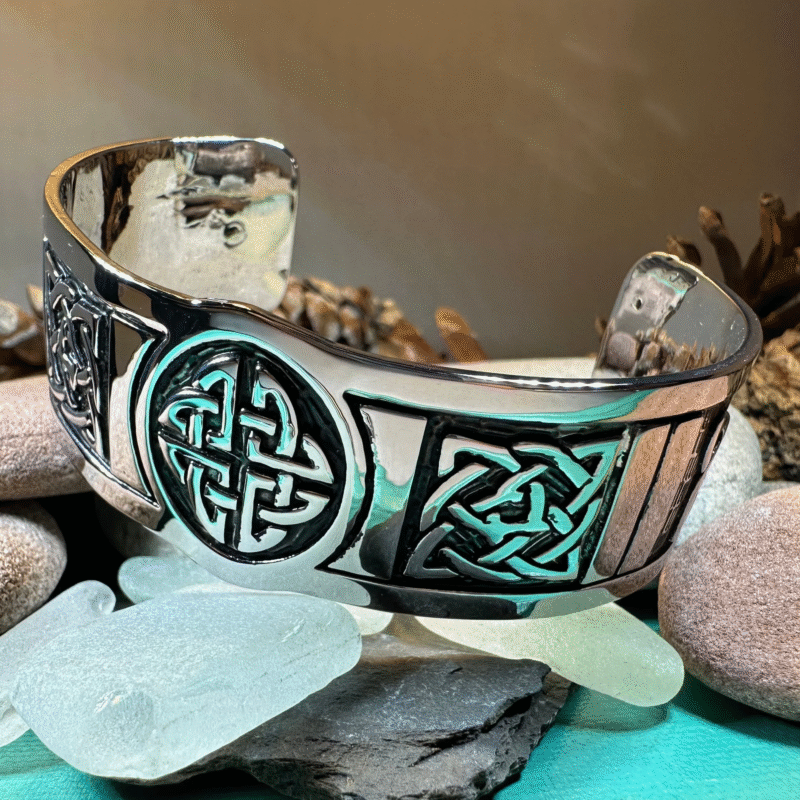
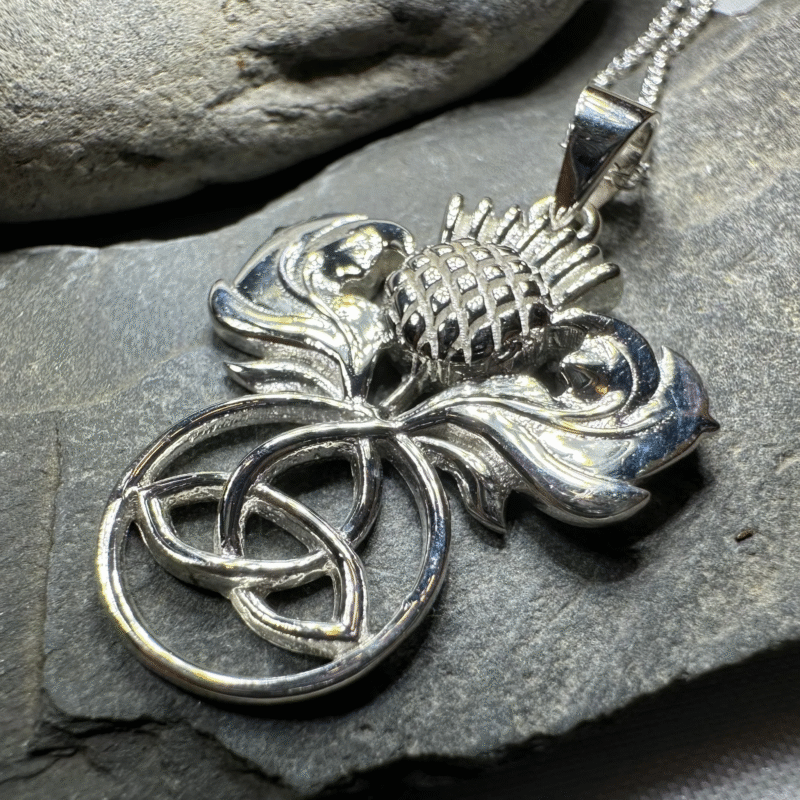
From earrings to brooches, the endless knot and triskelion spirals were dominant motifs. These designs reflected eternity, cycles of life, and balance, a philosophy echoed in Celtic myths like those surrounding the sun god Lugh.

4. Brooches and Pins
Brooches, particularly the famous Tara Brooch, were both practical (fastening cloaks) and symbolic. They often displayed intricate knotwork and zoomorphic designs where animals such as stags or birds were stylized into abstract beauty.

Symbolism in Celtic Jewelry
Celtic jewelry was never “just pretty.” It was protective, spiritual, and cultural.
- Knotwork – Eternity, interconnectedness of life
- Spirals – Growth, progress, spiritual journeys
- Zoomorphic designs – Animals as spiritual guides
- Crosses and circles – Union of earth, sky, and divine
This symbolic layering resembles how the Celts imbued their proverbs and stories with layered meaning, simple on the surface, profound underneath.

Jewelry as Identity and Heritage
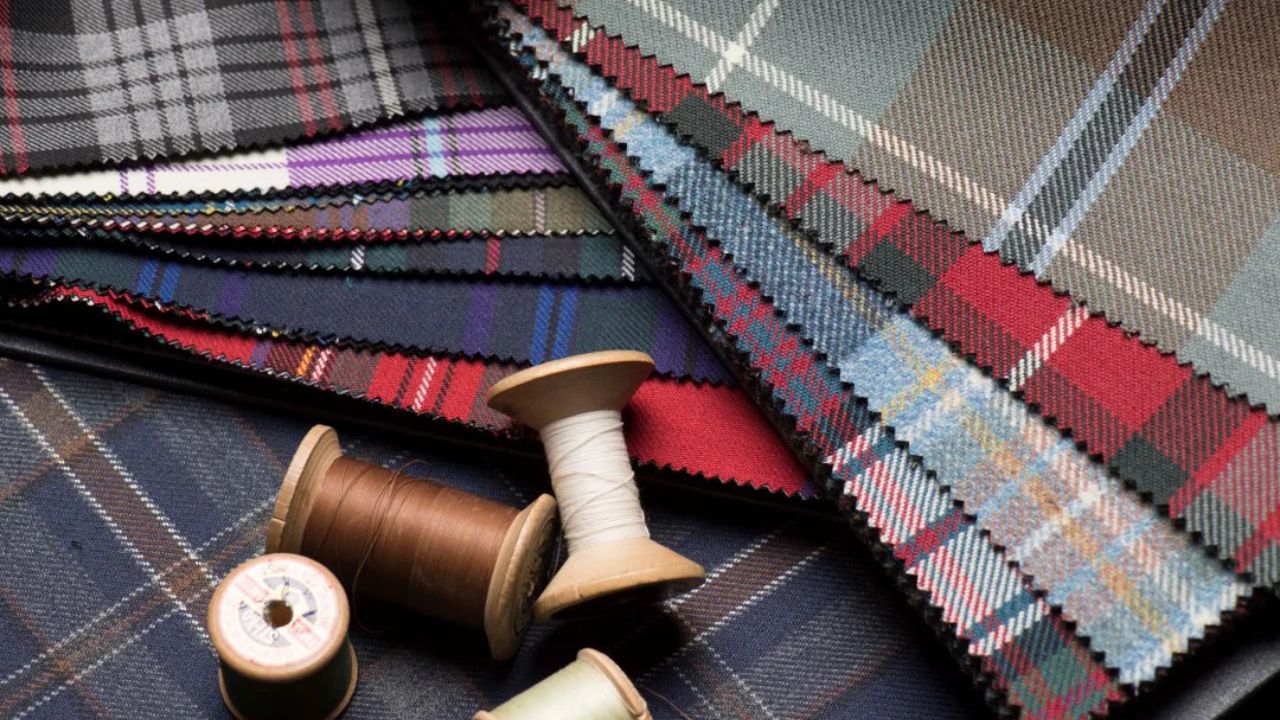
Like tartan in Scotland, jewelry was often tied to clan and regional identity. Wealth, artistry, and status were displayed in torcs, rings, and pins.
In modern times, Celtic jewelry has become both a fashion statement and a heritage symbol, connecting descendants and admirers to an ancient cultural legacy. From weddings with Claddagh rings to festivals where brooches and knot pendants are proudly worn, jewelry remains a visible thread linking past to present.
The Living Legacy of Celtic Jewelry
Today, Celtic jewelry enjoys global admiration. Modern artisans continue the traditions of intricate metalwork, ensuring the spirals, knots, and symbols live on. Just as Celtic oak trees stand as living symbols of resilience, so too does Celtic jewelry endure as a testament to artistry, spirituality, and identity.
Final Thoughts
Celtic jewelry is far more than a relic of the past. It is a living language of symbols, speaking across centuries. From the torcs of Iron Age chieftains to the Claddagh rings exchanged today, it carries stories of love, faith, power, and eternity.
For more on Celtic artistry and heritage, explore our Art & Fashion section on CeltGuide.