Celtic Illuminated Manuscripts; Where Art Meets Faith

Illuminated manuscripts are more than books; they are windows into the soul of medieval Celtic culture. These intricate works, created between the 6th and 12th centuries, combine sacred texts with breathtaking artistry, revealing a world where faith, creativity, and identity were deeply intertwined.
If you’ve ever been enchanted by Celtic knotwork, vibrant pigments, or medieval storytelling, the illuminated manuscripts of Ireland and Scotland are treasures worth exploring.
What Are Celtic Illuminated Manuscripts?
A Celtic illuminated manuscript is a handwritten book often a Gospel or religious text decorated with elaborate illustrations, ornate initials, and detailed border designs. The term illuminated comes from the use of gold and silver leaf, which made the pages literally glow in candlelight.
Unlike ordinary books of the era, these manuscripts were visual masterpieces, created by skilled monks in monastic scriptoria. They served not just as sacred objects, but as cultural expressions of Celtic identity.

Famous Examples of Celtic Illuminated Manuscripts
Some of the most famous manuscripts remain icons of world heritage:
- The Book of Kells – Perhaps the most famous, housed at Trinity College Dublin, renowned for its intricate Chi Rho page.
- The Lindisfarne Gospels – Created on the Holy Island of Lindisfarne, blending Celtic and Anglo-Saxon artistry.
- The Book of Durrow – One of the earliest surviving Gospel books from the British Isles, notable for its unique animal interlace designs.
Each of these manuscripts represents a fusion of Christian devotion and Celtic artistry—an approach similar to the way Celtic stone carvings (see our guide here) blended faith and symbolism.
Origins and Cultural Significance
The roots of Celtic illuminated manuscripts lie in the monastic communities of Ireland, Scotland, and parts of Britain from the 6th to 9th centuries. Monks painstakingly copied religious texts by hand, often on vellum, while infusing pages with the visual language of Celtic art—spirals, knotwork, zoomorphic figures, and sacred symbols.
Illuminations were more than decoration—they acted as meditative aids, helping readers reflect on the sacred meaning of the text. In this sense, they are closely tied to other Celtic artistic traditions, like stone carvings and symbolic knotwork in tartan patterns.

How Were They Made?
The creation of an illuminated manuscript was an incredibly slow, meticulous process:
- Preparing the Parchment – Animal skins (usually calf, sheep, or goat) were cleaned, stretched, and polished to form smooth writing surfaces.
- Scribing the Text – Monks carefully copied scripture using natural ink made from soot, oak galls, and other organic materials.
- Adding the Illumination – Artists applied pigments from minerals and plants, with gold leaf for divine radiance.
- Binding – The finished pages were sewn together and bound, often with decorated leather covers.
This artistry echoes the care taken in other Celtic crafts, much like the weaving of tartan patterns (explore tartan history here).
Symbolism in the Artwork
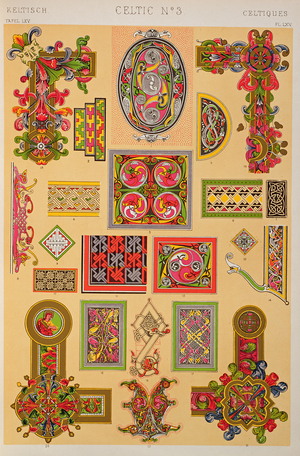
The designs were never random. Every knot, spiral, and creature had meaning:
- Interlacing Knots – Represented eternity and interconnectedness.
- Zoomorphic Designs – Animals symbolized virtues or biblical ideas (e.g., the lion for strength, the eagle for divinity).
- Geometric Patterns – Inspired contemplation and mirrored the order of God’s creation.
This symbolic richness aligns with Celtic mythology and folklore (discover the Sun God Lugh here), where imagery carried deep meaning.
Why They Matter Today
Celtic illuminated manuscripts are vital to understanding medieval Europe not just as religious artifacts, but as records of cultural exchange, artistry, and identity. They influenced later art forms, from stained glass to jewelry, and still inspire Celtic-inspired design today.
Visiting these manuscripts in person whether at Trinity College Dublin or the British Library is an unforgettable experience, similar to seeing Celtic musical traditions (explore the bodhrán drum here) come alive.
FAQs About Celtic Illuminated Manuscripts
Q: Were all illuminated manuscripts religious?
A: Most Celtic illuminated manuscripts contained Christian scripture, but some included historical or legal texts.
Q: Why are they called ‘Celtic’?
A: While influenced by broader European traditions, the style is distinctly rooted in Irish and Scottish Celtic art, visible in knotwork, animal motifs, and symbolic design.
Q: Can I see them online?
A: Yes, many museums and libraries have digitized collections, including the Book of Kells online viewer from Trinity College Dublin.
Final Thoughts
Celtic illuminated manuscripts remind us that the Celts were not only fierce warriors and skilled storytellers (learn why here), but also visionaries who could translate faith into art that still captivates over a millennium later.
They stand as bridges between the spiritual and artistic, the past and the present a shining legacy of Celtic culture.