The Irish Harp as a National Symbol
Ireland’s national identity feels incomplete without the image of the harp. It appears on coins, passports, flags, and even the government seal. Yet the harp is more than decoration. It carries centuries of memory, artistry, resilience, and pride. Today, let’s explore how this graceful instrument rose from ancient Gaelic courts to become Ireland’s most enduring emblem.
A Symbol Older Than Many Nations
The Irish harp, or cláirseach, stands among the oldest musical symbols in Europe. Early Gaelic harpers held respected positions in royal courts, where their music recorded history and honoured lineage. If you’ve explored Celtic instruments before, such as in our guide What Is a Clarsach?, you already know how deeply rooted this tradition is.
The harp represented more than entertainment. It echoed the soul of the Gaelic world—its poetry, bravery, and intellectual legacy.
Why the Harp Became Ireland’s Emblem
Many nations choose animals, plants, or shields as symbols. Ireland chose music—specifically, an instrument tied to its poetic and political life. The harp was already powerful in early medieval society, but its symbolic role strengthened later when Irish culture faced suppression.
During periods of English rule, harpers became protectors of memory. Their music preserved Ireland’s history when written Gaelic learning struggled to survive. This cultural resistance made the harp a symbol not only of artistry but of endurance.
You can see similar preservation in other cultural expressions explored on CeltGuide, such as the storytelling traditions discussed in Why Are Irish People Natural Storytellers?.
The Harp on Flags, Books, and Coins
By the 16th century, the harp was already used on Irish coinage. It became a consistent symbol of Ireland long before modern statehood. When the Irish Free State formed in 1922, the harp naturally became the official national emblem.
Today, you’ll find it on:
- Irish passports
- Government seals
- University crests
- Euro coins
- National airlines and cultural organisations
Even the famous beverage company Guinness uses a harp, though mirrored, to avoid conflicting with the state symbol.
The Ancient Harps That Shaped Ireland
Several historic harps survive, and they anchor this symbol in real craftsmanship.
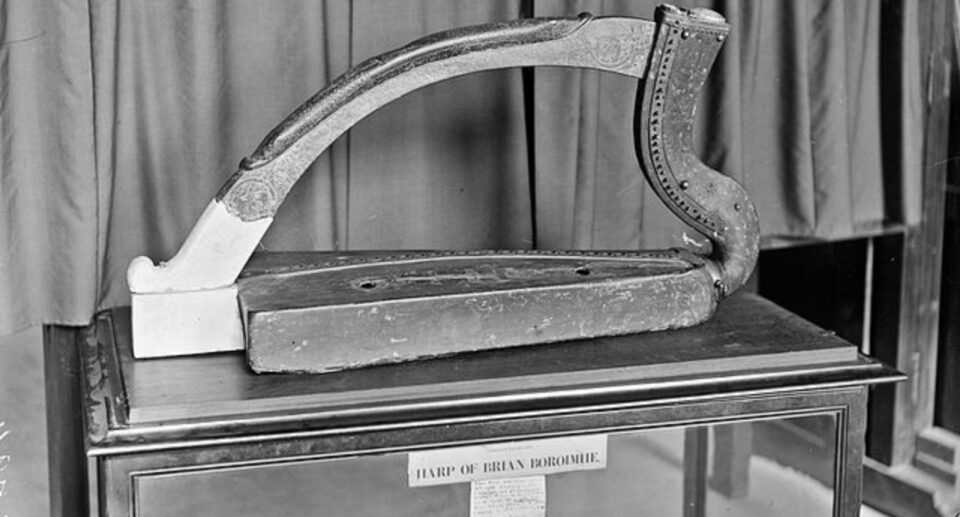
The most famous is the Trinity College Harp, also known as the Brian Boru Harp. Although it likely predates the high king himself, its presence links Ireland’s legendary leadership with its musical heritage.
Its carved frame, wire strings, and intricate Celtic knotwork reflect a blend of artistry and spirituality similar to that seen in early Celtic stone carvings.
The Harp’s Role in Modern Culture
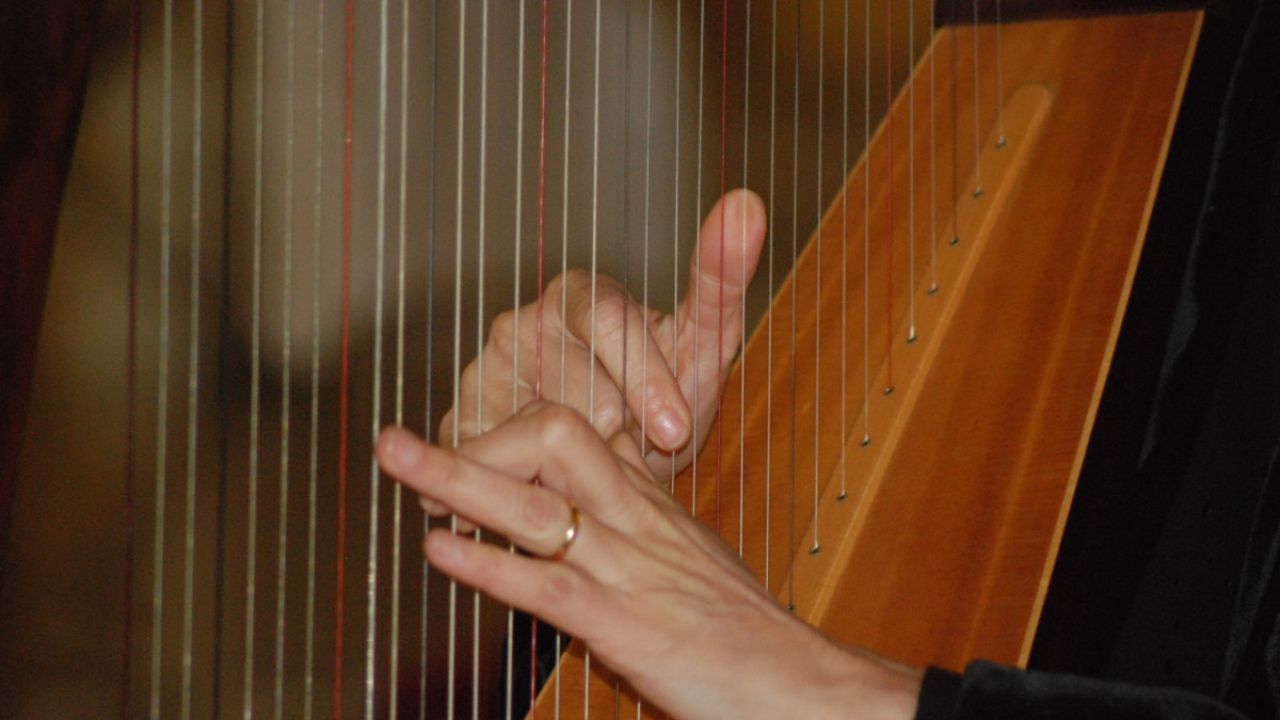
The resurgence of Irish traditional music in the 20th and 21st centuries brought the harp back into living tradition. Musicians embraced both wire-strung and modern nylon-strung versions, helping the instrument return to concerts, festivals, and homes.
This revival parallels the renewed interest in instruments like the bodhrán and the storytelling style found in Gaelic song traditions.
Today, the harp is celebrated in:
- National Harp Day
- Irish music academies
- Celtic festivals worldwide
- Tourism and cultural branding
- Modern classical and fusion genres
Its voice feels gentle, but its symbolism remains powerful.
The Harp as a Living Identity
Ireland’s harp isn’t a relic. It continues to grow, adapt, and inspire. It reminds people of Ireland’s resilience, creativity, and deep cultural memory. The harp endures because it reflects a nation that survived colonization, preserved its language, and honoured its artistry even when challenged.
If your curiosity extends to broader Celtic identity, you may enjoy exploring Gaelic expressions through Gaelic Children’s Lullabies or the heritage behind Celtic oak symbolism.
Final Thoughts
The Irish harp is more than a national emblem. It is a bridge between past and present—a reminder of storytellers, scholars, kings, and musicians who shaped Ireland’s cultural soul. When we see it today, we don’t just see strings and wood. We see centuries of memory and a people’s unbroken voice.