Celtic Bronze Torcs: Symbols of Power and Prestige
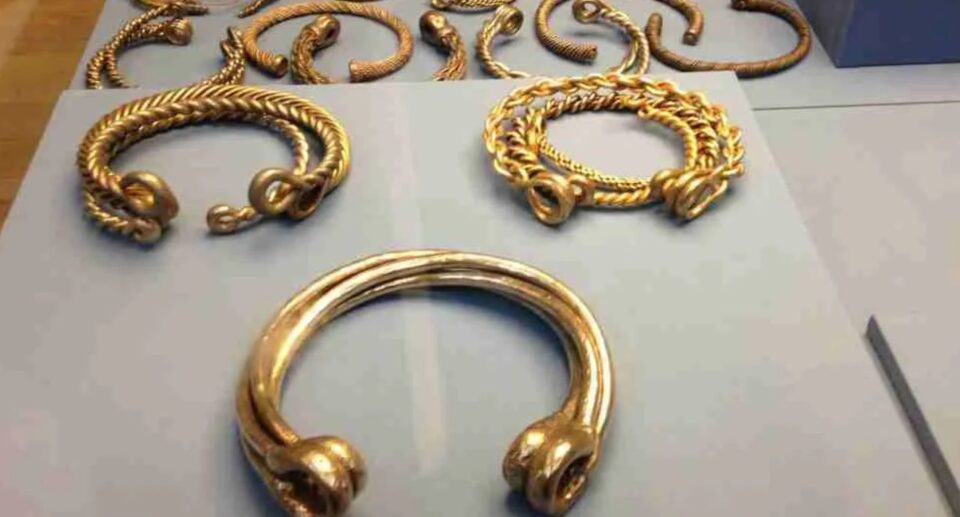
Imagine a piece of jewelry so important that warriors, nobles, and even gods were depicted wearing it, that’s the Celtic bronze torc. A torc is a rigid neck ring, often crafted from bronze, gold, or silver, and it was far more than an accessory. It was a statement of status, power, and divine protection.
A Celtic bronze torc is a neck ring worn in ancient Celtic societies, symbolizing wealth, rank, and spiritual power.
Torcs in Celtic Culture
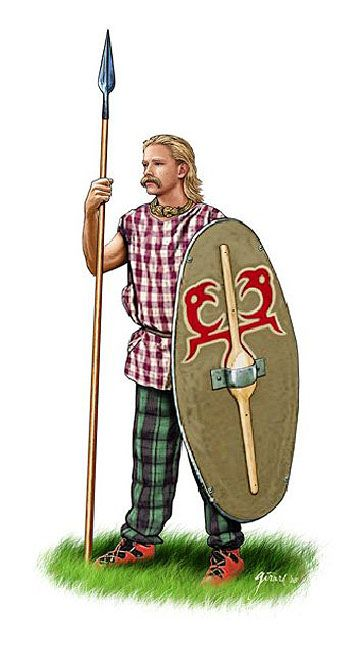
For the Celts, jewelry was never just decorative. Like Celtic stone carvings, torcs were loaded with symbolism. Worn around the neck, they represented strength, protection, and the unbroken circle of life. Warriors are often depicted wearing torcs into battle, believing they carried both courage and divine blessing.
Some scholars even compare the torc’s symbolic power to the oak tree in Celtic spirituality (Celtic oak tree) both enduring, protective, and sacred.
Bronze: The Choice of Strength and Style
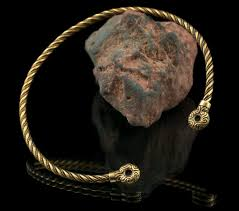
While gold torcs were reserved for the elite, bronze torcs were more widespread and practical, yet still highly prestigious. Bronze, with its warm sheen and durability, allowed intricate designs — spirals, knotwork, and even stylized animal heads.
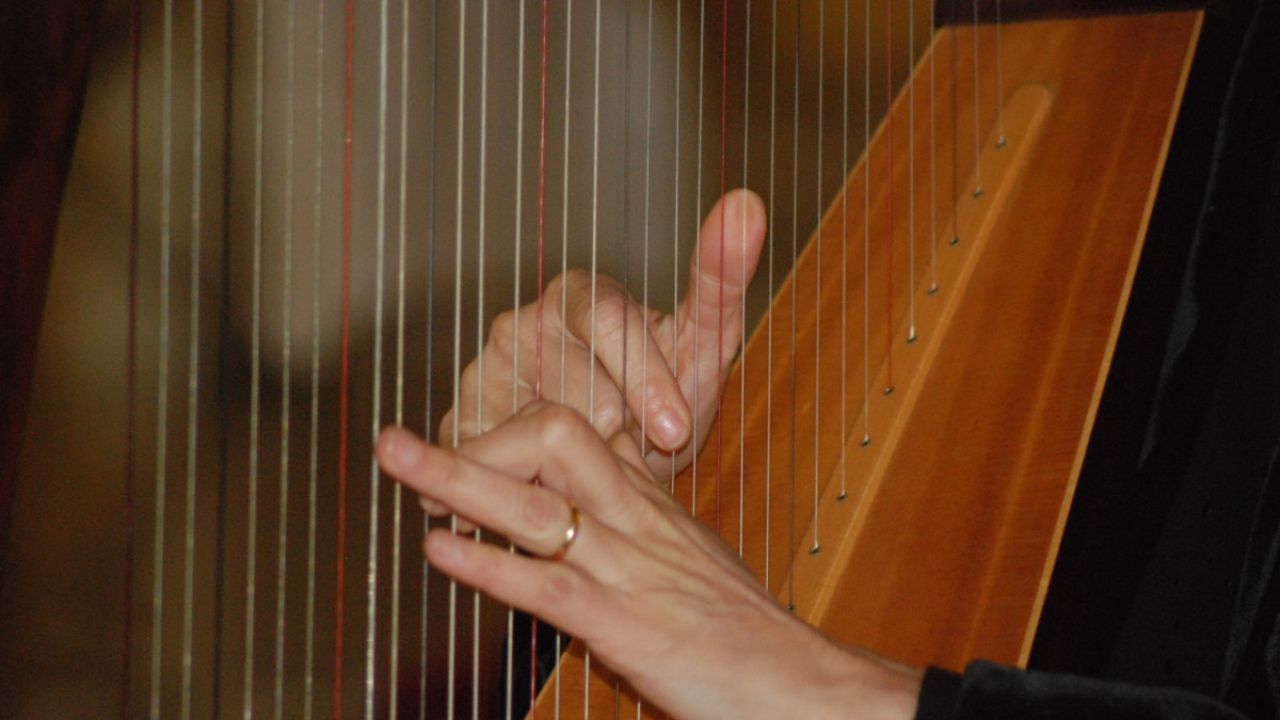
The craftsmanship recalls the artistry found in Celtic musical traditions such as the bodhrán drum and the Celtic harp (clarsach), where functionality and beauty were inseparable.
Mythology and the Torc
Torcs are not just archaeological finds, they are mythological symbols. The Celtic sun god Lugh (Celtic Sun God Lugh) is sometimes associated with golden ornaments of power, and warriors in Irish and Scottish epics often wear torcs as marks of divine favor.
In this sense, a bronze torc was more than wealth; it was a connection to the divine, much like the magical Cauldron of Dagda represented abundance and authority.

Archaeological Discoveries
Bronze torcs have been unearthed across Ireland, Scotland, and beyond. Many are displayed in national museums, reflecting not only their artistic beauty but also their role as status markers.
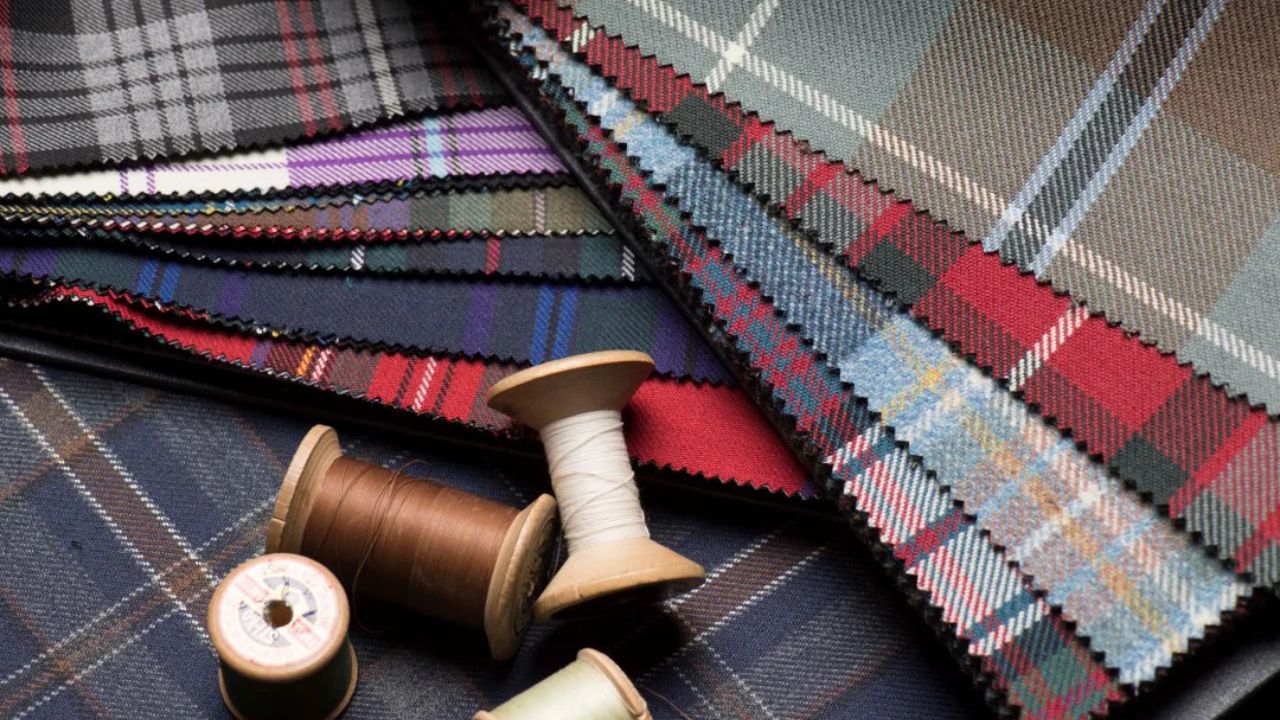
Some were found buried with warriors, echoing the way Claddagh rings later symbolized identity and belonging. Just as tartans express clan heritage (What is tartan?), torcs embodied rank and tribal pride.
The Legacy of the Torc
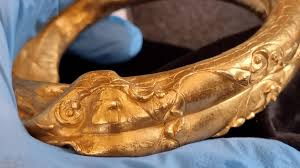
Though torcs are no longer worn in daily life, their symbolism endures in Celtic-inspired jewelry and fashion. They serve as reminders of a time when ornaments were not just decorative but statements of power and spirituality.
In modern Celtic festivals, from Highland Games (Events to watch in Highland Games 2025) to Ceili bands gatherings, echoes of ancient adornment still whisper through music, tradition, and style.
Wrap-Up: Circles of Power and Memory
The Celtic bronze torc stands as a testament to artistry, belief, and social hierarchy. It is more than an archaeological artifact, it is a window into the Celtic worldview, where objects were imbued with meaning and identity.
Much like Gaelic proverbs that carry wisdom in a single phrase, the torc conveyed volumes about its wearer without a word.