The Isle of Skye: History, Myth, and Living Highland Culture

The Isle of Skye lies off the north-western coast of Scotland, but it has never existed at the margins of Scottish history. Skye occupies a central place in the Highland imagination. Its mountains, sea lochs, and windswept peninsulas shape not only the land, but also the cultural memory of the people who lived here.
From an academic perspective, Skye functions as a living text. One can read its geology, hear its language, and trace its myths across the landscape. As someone trained within the Scottish historical tradition, I approach Skye not as a romantic abstraction, but as a site where environment, culture, and belief remain tightly bound.
Geography and the Making of Skye’s Dramatic Landscape
Skye is the largest island of the Inner Hebrides. Its physical character results from ancient volcanic activity and later glacial shaping. The Black Cuillin mountains dominate the southern part of the island. Their sharp ridges and dark rock formations create one of the most striking mountain ranges in Britain.
These landscapes did more than inspire awe. They structured daily life. Sea lochs acted as routes of travel and trade. Settlements clustered where land allowed small-scale farming and fishing. This close dependence on the land reflects broader Highland patterns, which appear clearly in the history of crofting communities (see https://celtguide.com/crofters-journey-through-time/).
Skye teaches an important lesson. Geography is never neutral. It shapes how people move, work, and imagine their place in the world.
Clan Power, Conflict, and Continuity
Clan history defines much of Skye’s past. The MacLeods of Dunvegan and the MacDonalds of Sleat dominated different regions of the island for centuries. Their authority rested on land control, kinship, and military strength. Dunvegan Castle remains a visible reminder of this continuity.
Clan society on Skye mirrors the wider Scottish clan system, where identity tied people to ancestry and territory. Readers seeking a broader overview of this system may consult https://celtguide.com/how-many-scottish-clans/.
Political upheaval disrupted this structure. The Jacobite risings and their aftermath brought repression, economic change, and displacement. These events altered Skye’s population and contributed to migration abroad. Yet clan identity never vanished. It adapted, surviving in memory, tradition, and name.
Folklore, the Fairy Glen, and the Celtic Otherworld
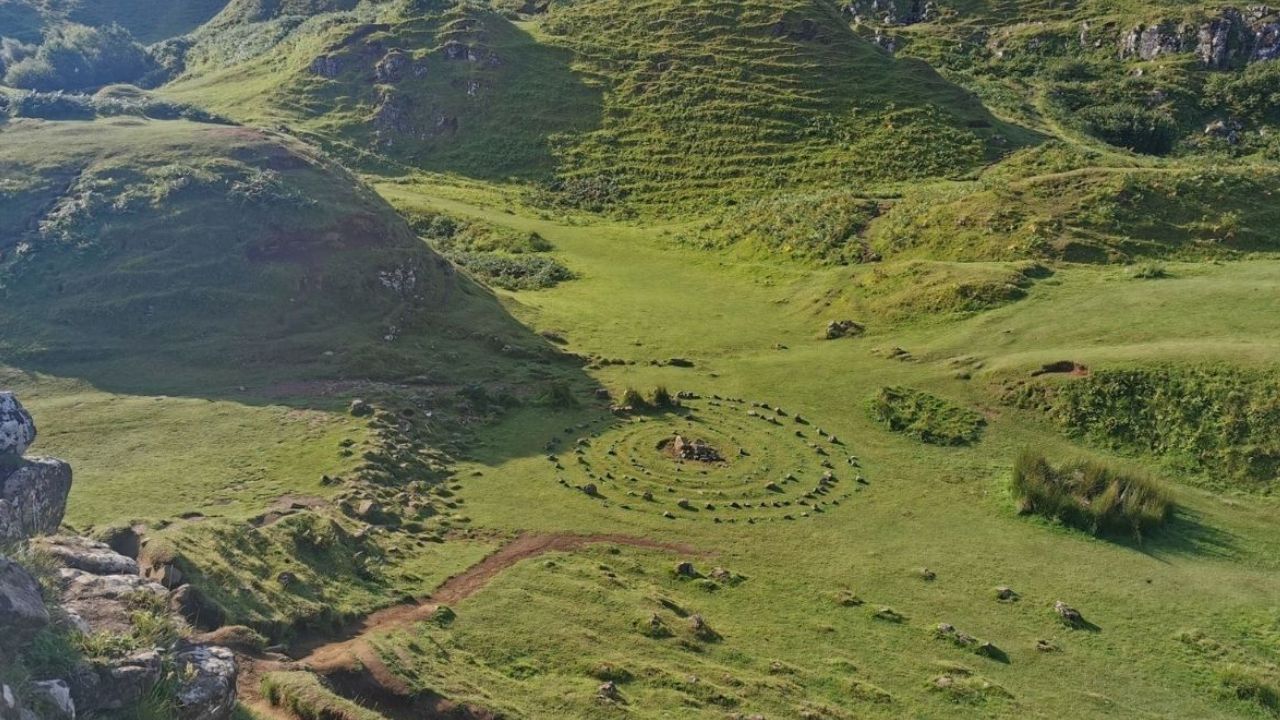
Skye’s folklore remains deeply embedded in its landscape. The Fairy Glen near Uig offers a striking example. Its conical hills, winding paths, and stone spirals feel intentionally otherworldly. Local tradition connects the area to fairy belief, not as fantasy, but as a parallel reality.
Such ideas link Skye to a wider Celtic worldview. Across the Gaelic world, people believed in thin boundaries between human space and the Otherworld. Welsh Annwn provides a close parallel to these beliefs (see https://celtguide.com/what-is-annwn/).
Coastal folklore adds another layer. Selkie stories, in which seals take human form, appear frequently along Skye’s shores. These tales reflect emotional tension between sea and land, freedom and belonging (see https://celtguide.com/selkies-in-folklore/).

Gaelic Language as Cultural Memory
Scottish Gaelic remains one of Skye’s most important cultural anchors. Place names across the island preserve ecological knowledge, historical events, and mythic associations. Language connects people directly to landscape.
For centuries, Gaelic thrived through oral tradition, song, and later scripture. The translation of religious texts into Gaelic strengthened literacy while preserving linguistic structure. Readers interested in this process may explore https://celtguide.com/scottish-gaelic-bible-translations/.
Music continues this tradition. Fiddle tunes and vocal songs carry rhythms shaped by work, weather, and community gathering. Skye’s musical heritage links it firmly to the wider Celtic world.
Skye in the Modern World: Tourism and Responsibility
Today, Skye attracts visitors from across the globe. People come seeking wild beauty, spiritual quiet, and cultural depth. Skye offers these experiences, but not without cost. Roads, housing, and services face intense seasonal pressure.
Responsible travel matters. Staying on paths, respecting private land, and supporting local businesses protect the island’s future. Learning even a few Gaelic phrases shows respect and curiosity.
For travelers interested in comparing island experiences, https://celtguide.com/isle-of-mull/ provides a useful Highland counterpoint.

Why the Isle of Skye Continues to Matter
The Isle of Skye endures because it resists simplification. It is not merely scenic. It is historical, linguistic, and mythic. Its stories grow directly from lived experience.
From an academic standpoint, Skye demonstrates how culture anchors itself in place. Landscape shapes language. Language preserves memory. Memory sustains identity. Anyone who walks Skye’s paths enters this long conversation between land and people.
Skye does not ask to be consumed quickly. It asks to be read slowly.