


Scottish Fisherman’s Knitted Garb Heritage
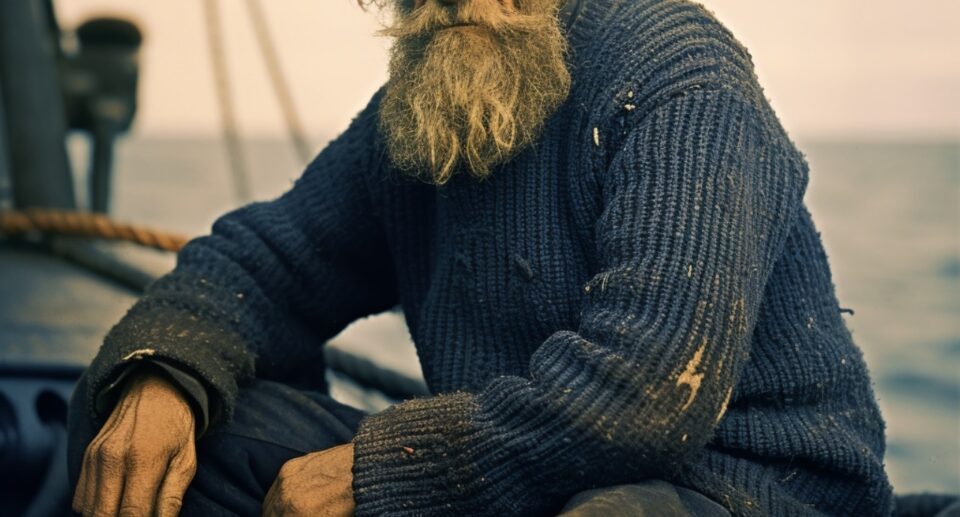
Scottish fisherman’s knitted garb stands as one of the most intellectually compelling examples of functional dress in Northern Europe. Along Scotland’s unforgiving coasts, clothing evolved not for display but for endurance. The gansey: dense, structured, and deliberate, emerged from environmental necessity. Yet over time, it acquired cultural resonance equal to that of tartan or clan insignia.
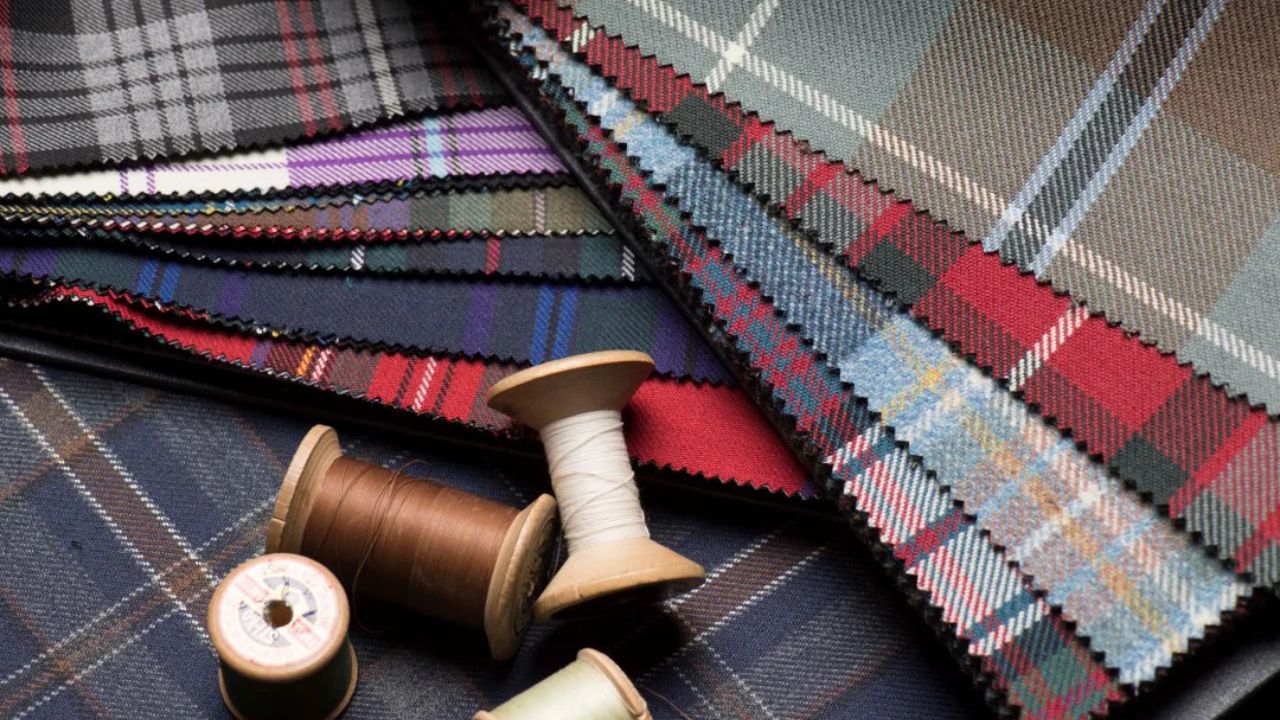
If tartan encodes lineage and identity, as explored in What Is Tartan?
https://celtguide.com/what-is-tartan/
then the fisherman’s sweater encodes labour and landscape. One textile speaks of ancestry; the other of occupation. Both reveal how cloth can become cultural language.
The Gansey and the Maritime Environment
The gansey (sometimes spelled guernsey) formed the backbone of Scottish maritime attire. Fishing communities along the east coast and islands such as the Isle of Mull
https://celtguide.com/isle-of-mull/
adapted this tightly knitted sweater to their local climate. Knitters used fine needles and firmly spun wool to create a compact fabric. The resulting garment resisted wind and sea spray while preserving warmth.
The cut remained close to the body. This reduced the risk of snagging on ropes and rigging. Many ganseys featured square neck openings and reinforced shoulders. Women typically knitted them in the round, eliminating weak seams. Every structural choice reflects applied maritime intelligence.
Unlike formal clan tartans, discussed in
https://celtguide.com/how-many-scottish-clans/
gansey patterns did not operate as official heraldry. However, families often repeated distinctive stitch combinations across generations. Subtle variation marked local belonging without rigid codification.
Wool, Crofting, and Coastal Economies
Scottish fisherman’s knitwear depended on crofting life. Rural households raised hardy sheep suited to Atlantic weather. Families sheared fleece, spun yarn, and knitted garments within a domestic economy. This integration of agriculture and craft appears vividly in A Crofter’s Journey Through Time
https://celtguide.com/crofters-journey-through-time/
Natural lanolin often remained in the wool. This oil improved water resistance and enhanced insulation. Even when damp, tightly knitted wool retained warmth. For men working long hours on cold decks, this quality could determine survival.
The sweater therefore represents more than clothing. It embodies ecological knowledge, economic adaptation, and generational skill.
Pattern, Folklore, and Coastal Consciousness
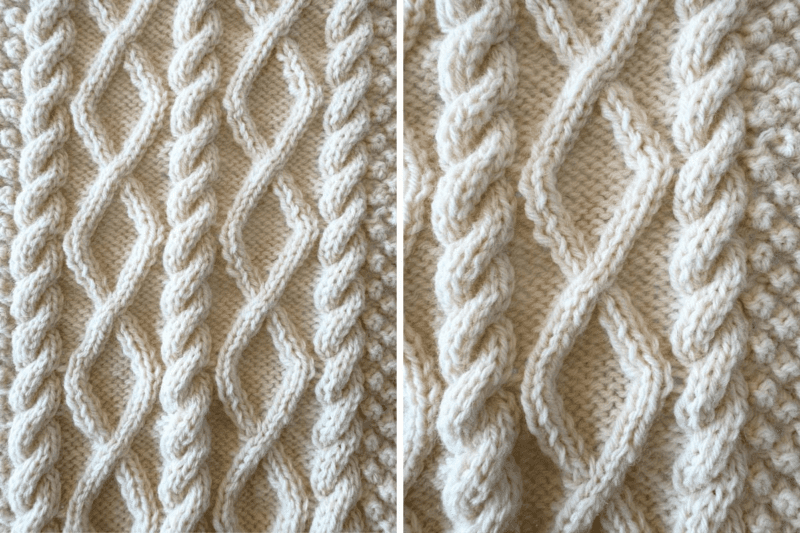
Although historians caution against romantic exaggeration, gansey patterns frequently incorporated rope cables, diamonds, and wave-like textures. These motifs mirrored maritime life without requiring explicit symbolism.
Scottish coastal imagination has long engaged with the sea as both giver and taker. Folkloric traditions such as those described in Selkies in Folklore
https://celtguide.com/selkies-in-folklore/
illustrate how communities interpreted the ocean as animate and morally complex. Within this worldview, protective clothing carried emotional weight. The gansey functioned as a quiet reassurance against unpredictable tides.
Complete Fisherman’s Dress
The sweater formed only one element of maritime attire. Fishermen paired ganseys with wool trousers, layered shirts, and sturdy boots. A knitted bonnet or cap shielded the head from wind. This headwear differed from the stylised Tam O’Shanter hat, explored here:
https://celtguide.com/tam-oshanter-hat/
Practical layering allowed adaptation to sudden weather changes. Coastal conditions around Loch Lomond and the Highlands, examined in
https://celtguide.com/is-loch-lomond-in-the-highlands/
could shift rapidly. Mobility and insulation had to coexist.
Women’s Labour and Textile Authority
While men worked at sea, women sustained the knitting tradition. They memorised complex stitch sequences and transmitted them orally. Patterns passed from mother to daughter without written charts. This process parallels oral storytelling traditions discussed in Why Are Irish People Natural Storytellers?
https://celtguide.com/why-are-irish-people-natural-storytellers/
Both storytelling and knitting rely on disciplined repetition and subtle innovation. Through wool, women enacted care and technical mastery. Each finished garment represented foresight and protection.
From Utility to Heritage Fashion
During the twentieth century, fisherman’s knitwear moved from working docks to urban boutiques. Designers reinterpreted the gansey as heritage fashion. Tourists embraced the sweater as an emblem of rugged authenticity.
This transformation mirrors the cultural journey of objects such as the Claddagh ring, explored in
https://celtguide.com/claddagh-ring-meaning-history-and-symbolism/
A local item becomes a global symbol. Yet its original context often recedes from view.
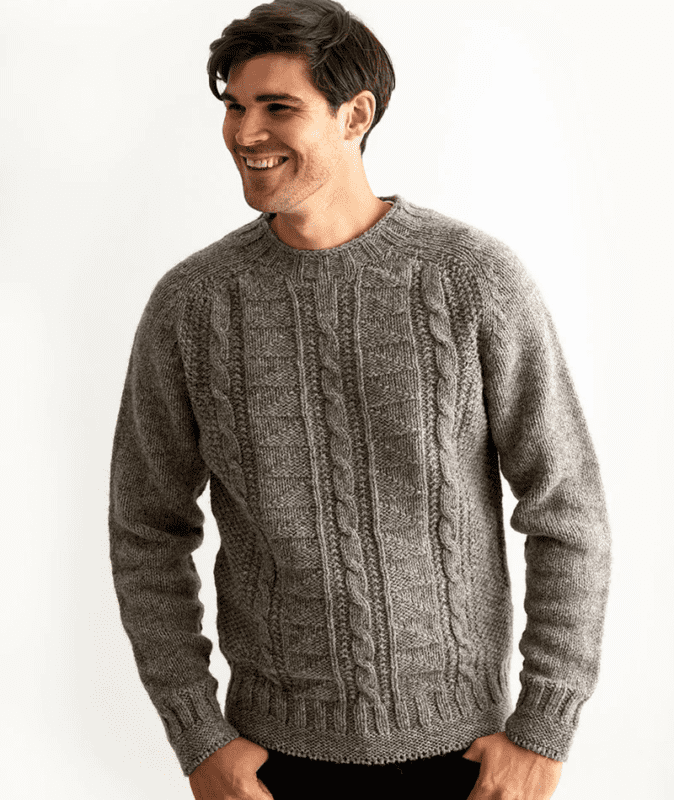
We must remember that the gansey began as survival equipment. Its elegance arose from structural necessity, not aesthetic indulgence.
Why Scottish Fisherman’s Knitted Garb Endures
Today, renewed interest in sustainable textiles invites fresh attention to maritime knitwear. Hand-knitted wool garments last for decades. They encourage repair and stewardship rather than disposal.
Scottish fisherman’s knitted garb reminds us that cultural history resides in ordinary objects. A sweater worn on a storm-lashed deck carries as much narrative force as ceremonial tartan or silver jewellery. It records labour, resilience, and communal interdependence.
In studying the gansey, we do not merely examine wool. We encounter a coastal archive. Stitch by stitch, it preserves Scotland’s maritime intellect and enduring spirit.
Explore more Celtic clothing traditions in our Art & Fashion category:
https://celtguide.com/category/art-fashion/
Continue discovering Scotland’s material culture across CeltGuide.com.