
Haggis: Scotland’s National Dish with a Story

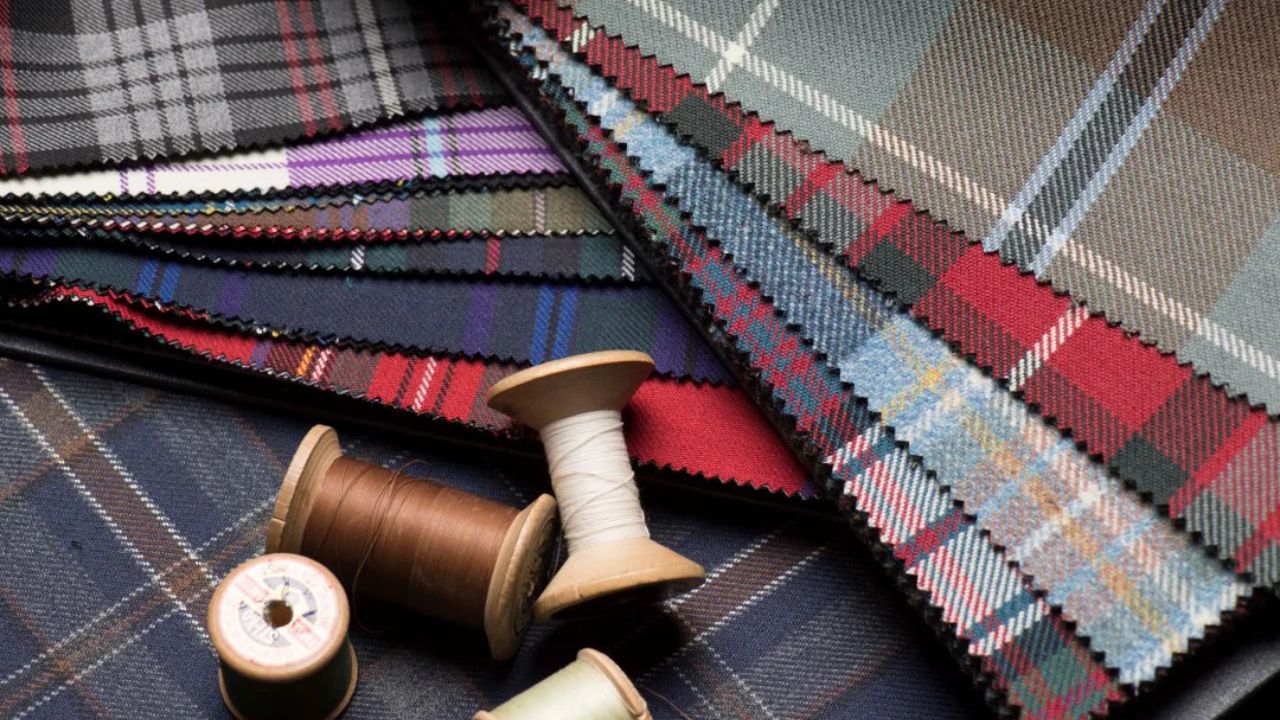
If tartan has deep roots in Scotland, then haggis is its culinary cousin, woven not in wool, but in history and taste. Often described with equal parts reverence and curiosity, haggis is more than just food; it is a symbol of Scottish identity.
What Exactly Is Haggis?
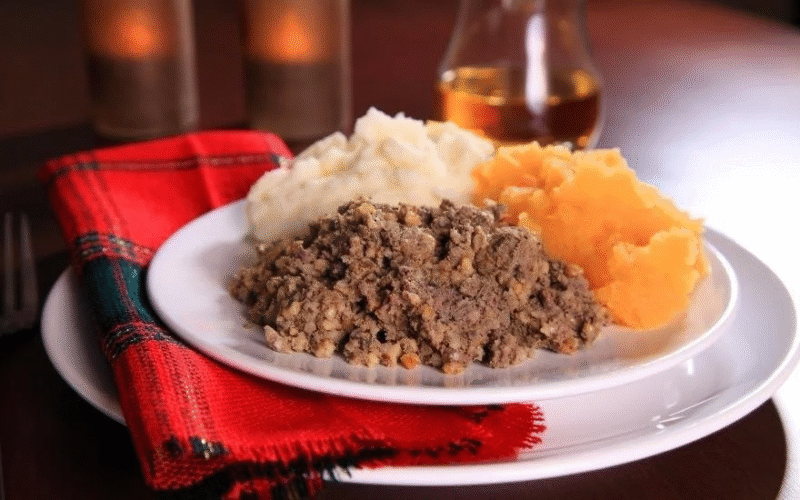
At its heart, haggis is a savoury pudding made from sheep’s pluck (heart, liver, lungs), mixed with oatmeal, suet, onions, and spices. Traditionally, it was cooked inside a sheep’s stomach, though today synthetic casings are common.
It’s hearty, rich, and surprisingly flavourful, nothing like the “dare food” stereotype many visitors expect. For Scots, it is the taste of heritage, often paired with whisky and poetry.
The History Behind the Dish
The origins of haggis stretch back centuries. While similar dishes existed across Europe, Scotland embraced it as its own. Its rise to fame owes much to poet Robert Burns, who immortalised it in his 1787 poem “Address to a Haggis.” Since then, Burns Night on January 25th has become a national celebration, where haggis takes centre stage.
Just as Irish people are famed for storytelling, Scots are known for preserving tradition through ritual, and haggis is a delicious example.
Burns Night and Haggis Rituals
On Burns Night, haggis is paraded into the room to the sound of bagpipes. A reader recites “Address to a Haggis” before dramatically slicing it open. It is then served with “neeps and tatties” (turnips and potatoes) and often accompanied by whisky.

This ceremony is not only about food but also about cultural continuity much like Highland Games events, where tradition and festivity intertwine.
Is Haggis Still Popular Today?
Absolutely. Beyond Burns Night, haggis appears on Scottish menus throughout the year. Modern variations even include vegetarian haggis, making the dish accessible to more people. From fine dining to pub grub, haggis has adapted without losing its identity.
In fact, it has become a culinary ambassador of Scotland standing alongside whisky, kilts, and Scottish clans.
Why Haggis Matters
Haggis is more than just food; it is cultural memory served on a plate. It embodies thrift, resourcefulness, and celebration values that echo through Celtic traditions.
For visitors, tasting haggis is a rite of passage. For Scots, it is a reminder that their heritage is alive, evolving, and still proudly shared with the world.
Final Thoughts
Whether you’re planning to try haggis on your next trip to Scotland or celebrating Burns Night at home, remember: it’s more than a meal, it’s a story.
Explore more about Scotland’s traditions and culture in our CeltGuide blog.