Clan Stewart and the Royal Lineage of Scotland
Few Scottish clans have shaped the course of history as profoundly as Clan Stewart. While many clans earned fame through battlefield achievements or regional influence, the Stewarts rose to the highest position in the kingdom. They became Scotland’s royal family and later ruled England and Ireland, leaving a legacy that transformed the British Isles.
The story of Clan Stewart combines political skill, strategic marriages, military leadership, and royal ambition. From their origins as royal stewards to their emergence as kings and queens, the Stewarts stand at the center of Scotland’s national story.
Today, their legacy remains visible in castles, historical records, royal traditions, and the cultural identity of Scotland itself.
Who Were Clan Stewart?
The name Stewart comes from the medieval office of High Steward of Scotland. This important position involved managing the royal household and overseeing significant administrative duties.
The family’s rise began in the twelfth century when Walter FitzAlan arrived in Scotland during the reign of King David I. Walter received extensive lands and became the first hereditary High Steward.
Over time, the office became associated with the family itself. The title “Steward” gradually evolved into the surname “Stewart.”
As Scottish society developed around powerful kinship groups, the Stewarts emerged as one of the most influential families in the kingdom.
If you are interested in the broader structure of Scottish clans, read CeltGuide’s article on how many Scottish clans existed throughout history:
https://celtguide.com/how-many-scottish-clans/
The Marriage That Changed Scottish History
The turning point for the Stewart family came through marriage rather than warfare.
Walter Stewart married Marjorie Bruce, the daughter of King Robert the Bruce. This union connected the Stewarts directly to Scotland’s royal bloodline.
When their son ascended the throne as King Robert II in 1371, the House of Stewart officially became Scotland’s ruling dynasty.
This moment marked one of the most important transitions in Scottish history. The royal line founded by Robert II would govern Scotland for more than three centuries.

The Rise of the Stewart Dynasty
The Stewart dynasty guided Scotland through periods of both stability and conflict.
Several notable monarchs emerged from the family:
James I (1406–1437)
James I sought to strengthen royal authority and reform government institutions. His reign reflected a desire to modernize Scotland’s administration and reduce the power of rival nobles.
James IV (1488–1513)

Many historians regard James IV as one of Scotland’s most successful monarchs. He encouraged learning, supported the arts, and strengthened diplomatic ties with Europe.
His court became a center of cultural achievement and intellectual activity.
James V (1513–1542)
James V continued efforts to strengthen the monarchy. His reign reinforced royal authority while navigating complex political relationships both at home and abroad.
Mary, Queen of Scots
No Stewart ruler attracts more attention than Mary, Queen of Scots. Her life involved political intrigue, imprisonment, religious conflict, and ultimately execution.
Yet her lineage proved crucial. Through her son, Scotland’s royal line would eventually inherit the English throne.
The Union of the Crowns
One of the most significant moments in British history occurred in 1603.
When Queen Elizabeth I of England died without children, Mary Queen of Scots’ son inherited the English throne as James I of England and James VI of Scotland.
For the first time, Scotland and England shared the same monarch.
This event became known as the Union of the Crowns. Although the two kingdoms remained politically separate, they now operated under one ruler.
The Stewart dynasty suddenly governed a realm far larger and more influential than Scotland alone.
The Stuart Spelling
After ascending the English throne, the royal family often used the spelling Stuart instead of Stewart.
This variation developed partly through French influence during Mary Queen of Scots’ time in France.
Both spellings refer to the same royal family and historical lineage.
Today, “Stewart” generally refers to the clan, while “Stuart” often appears in discussions of the royal dynasty.
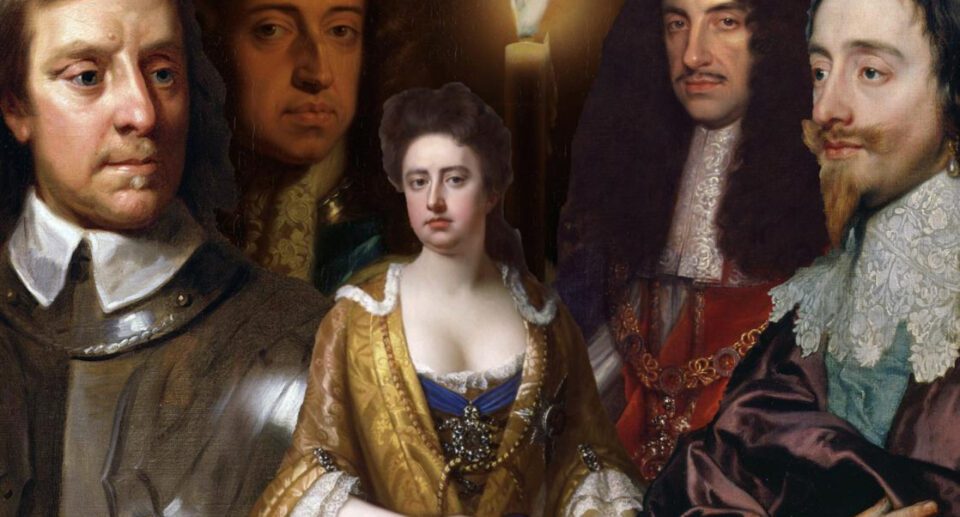
The Stewart Legacy in Britain
The Stewart monarchs played a central role in shaping modern Britain.
Their reign witnessed:
- Religious transformation
- Political upheaval
- Constitutional change
- Expansion of royal authority
- Growing parliamentary influence
The dynasty produced rulers who inspired admiration, controversy, and fierce loyalty.
Their era included civil wars, royal restorations, and dramatic shifts in governance that helped define the future of the British Isles.

Clan Stewart and Scottish Culture
Although best known for their royal connections, Clan Stewart remains part of Scotland’s broader cultural heritage.
Like many Scottish clans, the Stewarts possess distinctive traditions, tartans, heraldry, and family histories.
To better understand the importance of tartan in clan identity, explore CeltGuide’s guides:
- https://celtguide.com/what-is-tartan/
- https://celtguide.com/how-long-has-the-tartan-prints-been-around/
- https://celtguide.com/scottish-tartan-shawls-a-timeless-blend-of-heritage-and-elegance/
These traditions help preserve connections between modern descendants and their ancestral past.
Stewart Castles and Historic Sites
Several locations across Scotland reflect the influence of the Stewart dynasty.
Stirling Castle
One of Scotland’s most significant royal residences, Stirling Castle witnessed numerous Stewart coronations and royal ceremonies.
Falkland Palace
Favored by several Stewart monarchs, Falkland Palace demonstrates the family’s embrace of Renaissance culture.
Holyrood Palace
This royal residence remains closely associated with Mary, Queen of Scots and the later Stuart monarchy.
These sites continue to attract visitors interested in Scotland’s royal heritage.

Frequently Asked Questions
Was Clan Stewart a royal clan?
Yes. Clan Stewart became Scotland’s royal family when Robert II inherited the throne in 1371.
What is the difference between Stewart and Stuart?
Both names refer to the same family. “Stewart” is commonly used for the clan, while “Stuart” became associated with the royal dynasty.
Which famous monarch belonged to Clan Stewart?
Notable Stewart rulers include Robert II, James IV, James VI and I, and Mary, Queen of Scots.
Did the Stewarts rule England?
Yes. Beginning with James VI of Scotland, who became James I of England in 1603, the Stewart dynasty ruled England as well as Scotland.
Is Clan Stewart still active today?
Yes. Clan Stewart societies and organizations exist worldwide, helping descendants preserve their heritage and history.
The Enduring Legacy of Clan Stewart
Few families have left a mark on Scottish history comparable to that of Clan Stewart. Their journey from hereditary stewards to kings and queens demonstrates how political opportunity, strategic alliances, and royal ambition can reshape a nation’s destiny.
The Stewarts did more than occupy a throne. They influenced culture, governance, diplomacy, and identity across Scotland and Britain. Their story remains essential for anyone seeking to understand Scotland’s royal past and the evolution of the British monarchy.
Centuries after their rise to power, the legacy of Clan Stewart continues to inspire historians, genealogists, and descendants around the world.