
Celtic Mists in Irish Folklore Explained

Travel through Ireland at dawn and you will see it. Mist drifts across fields. It gathers along hedgerows. It wraps hills in a pale, shifting veil. For many cultures, fog remains a simple weather pattern. In Irish folklore, it carries myth, memory, and mystery.
Celtic mists do not merely obscure vision. They announce transition and signal proximity to the unseen. They remind us that Ireland’s landscape holds layers beyond the visible.
What Do Celtic Mists Mean in Irish Myth?
In Irish folklore, mist symbolizes liminality. It marks the threshold between worlds. The Irish imagination often situates revelation within obscurity. Heroes lose their path in fog before encountering wisdom. Wanderers step into haze and emerge transformed.
This pattern reflects a wider Celtic worldview. The Otherworld exists parallel to the human realm. It does not lie far away; it lies just beyond perception. The Welsh concept of Annwn, explored in What Is Annwn? (https://celtguide.com/what-is-annwn/), mirrors Irish traditions of hidden spiritual domains. Mist becomes the veil between here and there.
Ireland’s climate makes fog common. Folklore makes it sacred.
The Tuatha Dé Danann and the Cloak of Mist
Irish mythology tells of the Tuatha Dé Danann, a divine race who ruled Ireland before mortal settlers arrived. After their defeat, they retreated into the sídhe, the fairy mounds that dot the countryside.
Legend insists they did not vanish. They concealed themselves in mist. That shimmering haze allowed them to move unseen through sacred sites such as the Hill of Tara (https://celtguide.com/hill-of-tara/).
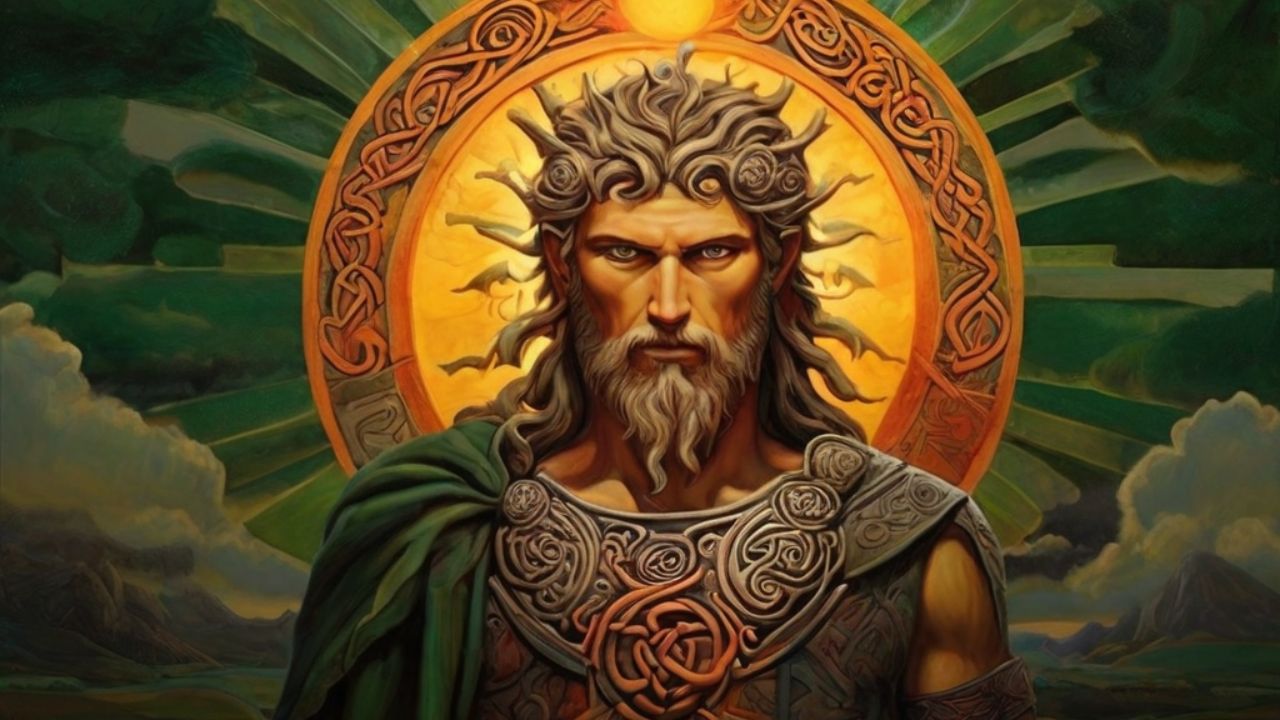
The Dagda’s great vessel of plenty, discussed in Cauldron of Dagda (https://celtguide.com/cauldron-of-dagda/), belonged to this same mythic order. Abundance, enchantment, and concealment worked together. The mist guarded sacred knowledge.
Through this lens, fog signals divine presence rather than absence.
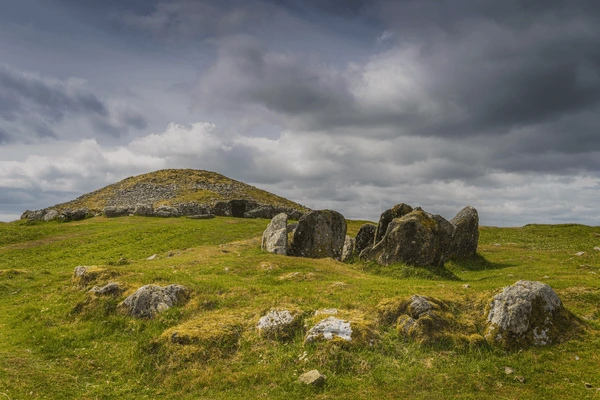
Fairy Mounds, Wells, and Enchanted Valleys
Across Ireland, mist often gathers around ringforts, holy wells, and ancient stones. Folklore interprets these vapours as signs of fairy activity.
The motif echoes in Scottish tradition as well. The atmosphere described in Legend of the Fairy Glen (https://celtguide.com/legend-of-the-fairy-glen/) resonates with Irish narratives of enchanted terrain. The landscape invites reverence when shrouded in fog.
Sacred wells, explored in Irish Holy Wells: Portals to the Past, Pathways to the Divine (https://celtguide.com/irish-holy-wells-portals-to-the-past-pathways-to-the-divine/), often appear wrapped in early morning mist. Pilgrims interpret this as blessing and mystery intertwined.
The mist does not distort the land. It deepens it.
Mist and the Art of Storytelling
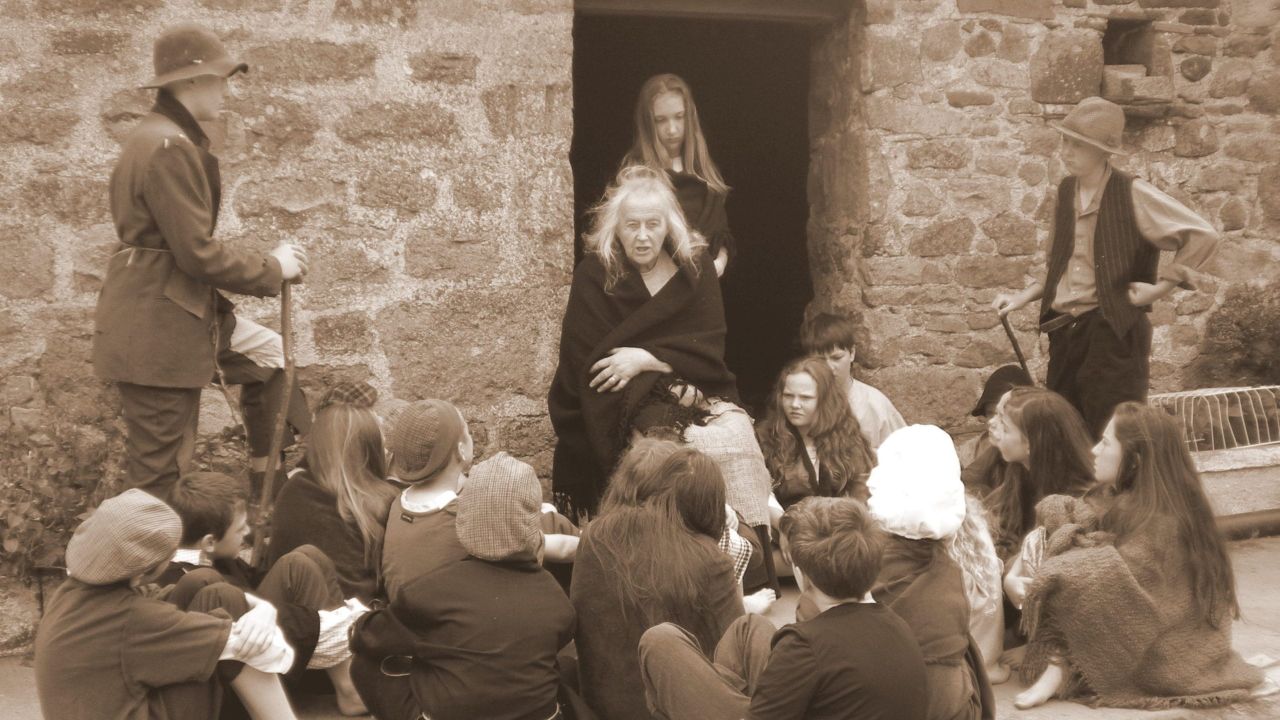
Ireland treasures oral tradition. As discussed in Why Are Irish People Natural Storytellers? (https://celtguide.com/why-are-irish-people-natural-storytellers/), narrative remains central to cultural continuity.
In countless tales, mist marks the beginning of transformation. A hero encounters a fairy host within swirling vapour. A traveller hears distant music drifting through fog. A child glimpses figures that vanish when the air clears.
Music amplifies this atmosphere. The rhythmic pulse of the bodhrán in The Bodhrán Drum (https://celtguide.com/the-bodhran-drum/) and the lyrical rise of the fiddle (https://celtguide.com/fiddle-music/) echo the rise and fall of mist across hillsides. Sound and weather collaborate in shaping myth.
Storytelling itself resembles fog. It reveals gradually, invites patience, and rewards attention.
Sacred Sound and Spiritual Veil
Christian Ireland inherited this symbolism and reinterpreted it. Bells rang through mist-covered valleys, as described in The Echo of Ancestors: How Celtic Bells Ring Through Time (https://celtguide.com/the-echo-of-ancestors-how-celtic-bells-ring-through-time/). Their sound pierced the haze, affirming faith amid uncertainty.
The translation of sacred scripture into Gaelic, explored in Scottish Gaelic Bible Translations (https://celtguide.com/scottish-gaelic-bible-translations/), reinforced the idea that language bridges worlds.
Mist here does not threaten. It humbles. It reminds believers that divine realities exceed human sight.
Landscape, Memory, and Identity
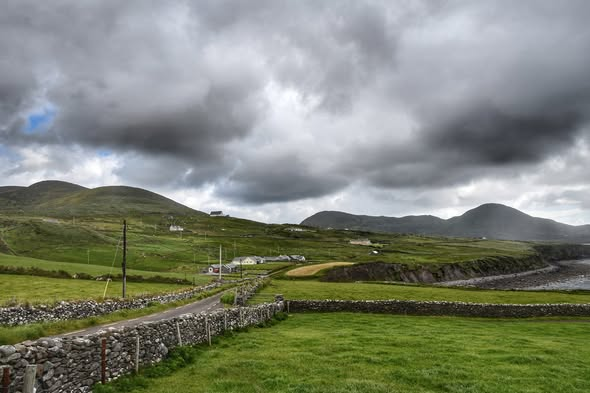
Drive along the Ring of Kerry (https://celtguide.com/ring-of-kerry/) at sunrise. Watch mountains fade into pale silhouettes. Observe how sea and sky merge. In such moments, myth feels immediate.
Even during hardship, including the era described in The Influence of the Irish Potato Famine (https://celtguide.com/the-influence-of-the-irish-potato-famine/), the landscape retained symbolic power. Mist softened grief yet preserved dignity.
Ireland’s hills, valleys, and coasts carry stories in their contours. The mist frames those stories without erasing them.
Why Celtic Mists Still Capture the Imagination
Celtic mists endure in Irish folklore because they articulate a universal truth: life unfolds at thresholds. We often move through uncertainty before clarity appears.
Irish myth does not fear the unknown. It honours it. The mist becomes teacher rather than obstacle. It invites reflection. It encourages humility.
When the fog lifts, the landscape sharpens. Yet something sacred lingers. The memory of that veil reminds us that Ireland’s beauty lies not only in what we see clearly, but also in what remains just beyond sight.
For more explorations of Celtic myth, tradition, and landscape, visit our main hub: https://celtguide.com/blog/