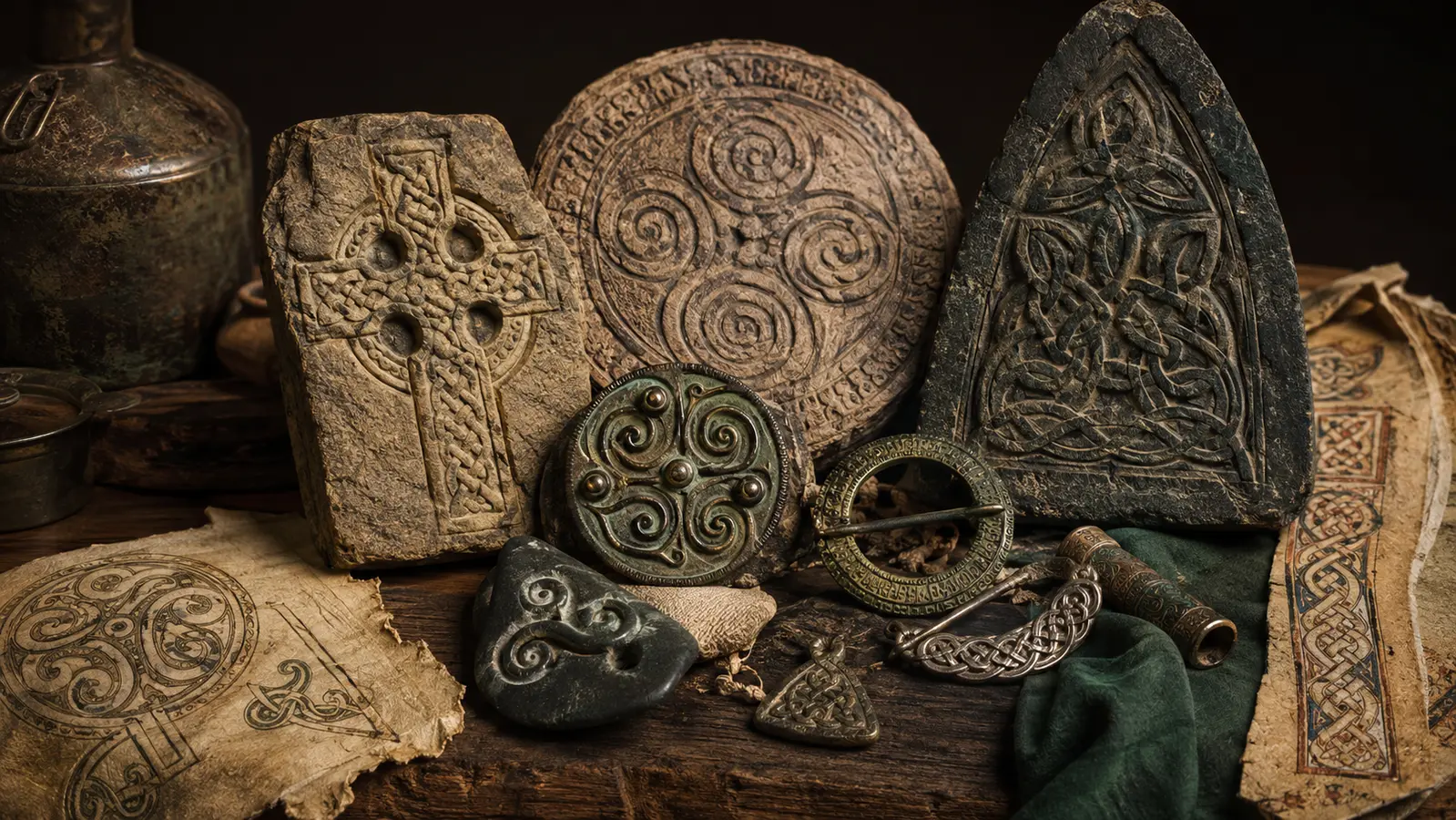
Celtic Sacred Groves and Trees Explained
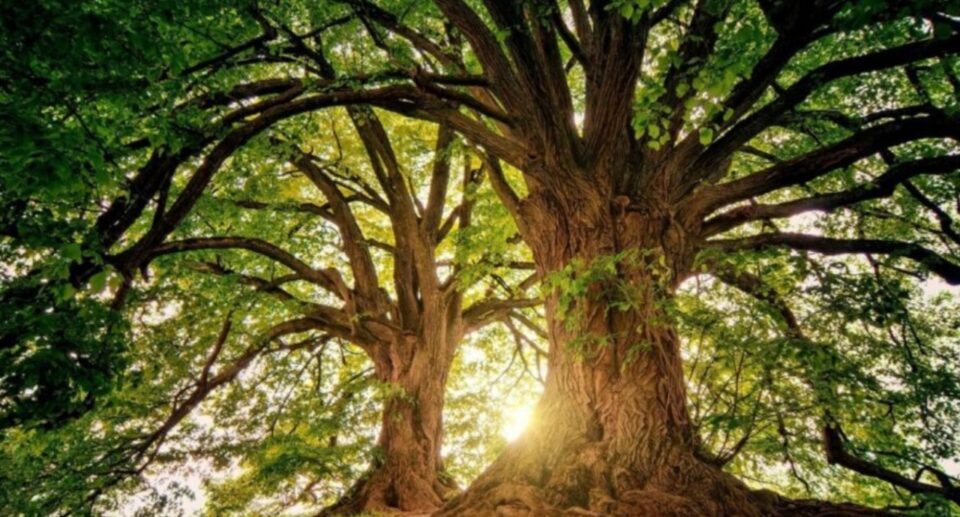
Forests once formed the beating heart of Celtic spirituality. Before stone cathedrals rose across Britain and Ireland, sacred groves defined holy space. The Celts did not build walls around the divine. They walked into it.
Sacred trees shaped ritual life, law, poetry, and kingship. Druids taught beneath their branches. Chiefs swore oaths in their shade. Communities gathered there to seek guidance from land and sky.
To understand Celtic belief, we must step into the grove.
What Were Celtic Sacred Groves?
Sacred groves were clusters of trees set apart for ritual and ceremony. The Romans called these spaces nemeton, meaning a consecrated clearing. Celtic communities treated them as thresholds between worlds.
Unlike temples, groves required no architecture. The trees themselves created the sanctuary. Their roots reached into the earth. Their branches stretched toward the heavens. They embodied connection.
These sacred spaces shaped early Irish and Scottish spirituality long before Christianity took hold. Even after conversion, many holy wells and church sites emerged near older groves. You can see that spiritual continuity in our article on Irish holy wells:
https://celtguide.com/irish-holy-wells-portals-to-the-past-pathways-to-the-divine/
The Oak: King of the Grove
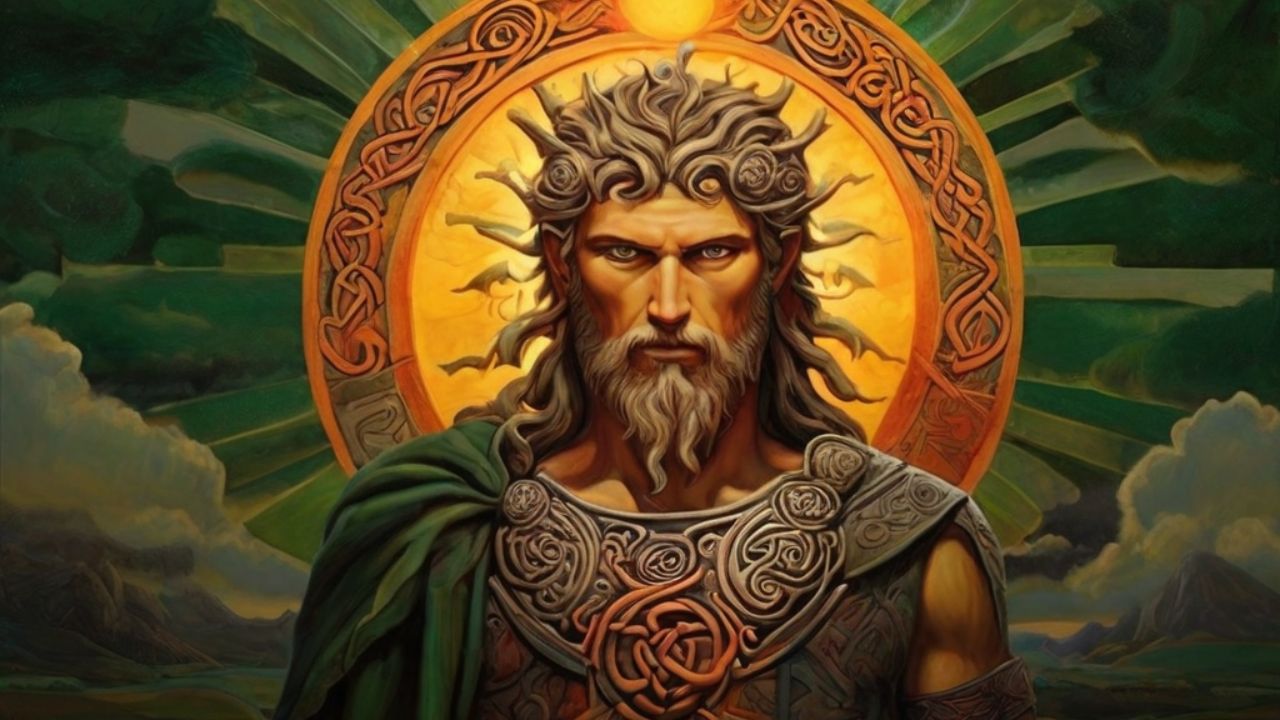
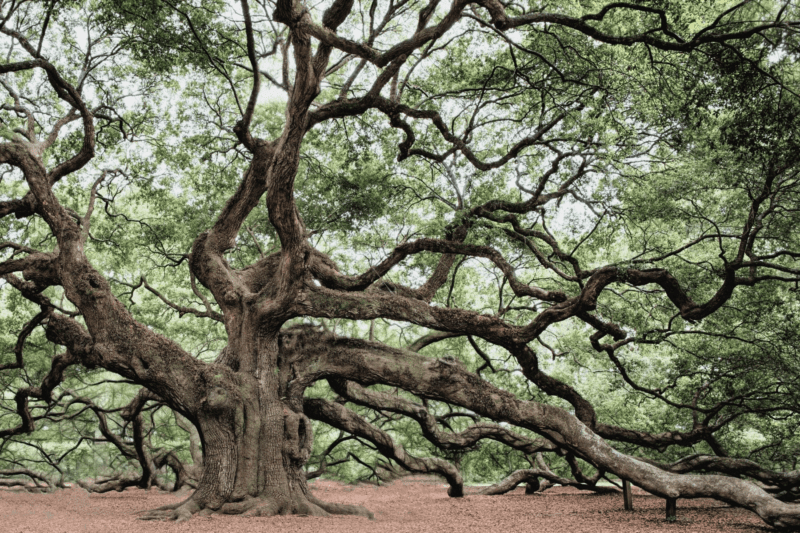
No tree carried more weight than the oak. The word Druid may derive from a root meaning “oak-knower.” The oak stood for endurance, wisdom, and sovereignty.
In Celtic tradition, lightning often struck oaks. Communities interpreted that phenomenon as divine attention. The tree thus became a conduit between gods and mortals.
We explore this symbol in depth in our guide to the Celtic oak tree:
https://celtguide.com/celtic-oak-tree/
The oak did not simply symbolize strength. It structured ritual authority. Kingship ceremonies and tribal assemblies likely occurred beneath its branches.
Other Sacred Trees in Celtic Tradition
While the oak ruled the grove, other trees held sacred roles.
The Yew
The yew symbolized death and rebirth. Its long lifespan made it a natural marker for burial grounds. Many ancient churches still feature yew trees, which suggests continuity from pre-Christian rites.
The Ash
The ash linked worlds together. In wider Indo-European myth, it supports cosmic structure. Celtic tradition treated it as a tree of protection and insight.
The Hawthorn
The hawthorn marked entrances to the Otherworld. Rural communities in Ireland and Scotland often avoided cutting lone hawthorn trees. Folklore warned of fairy displeasure. You will find similar motifs in our exploration of the Fairy Glen:
https://celtguide.com/legend-of-the-fairy-glen/
Sacred trees shaped everyday behavior. They influenced agriculture, boundaries, and storytelling.
Druids and Woodland Ritual
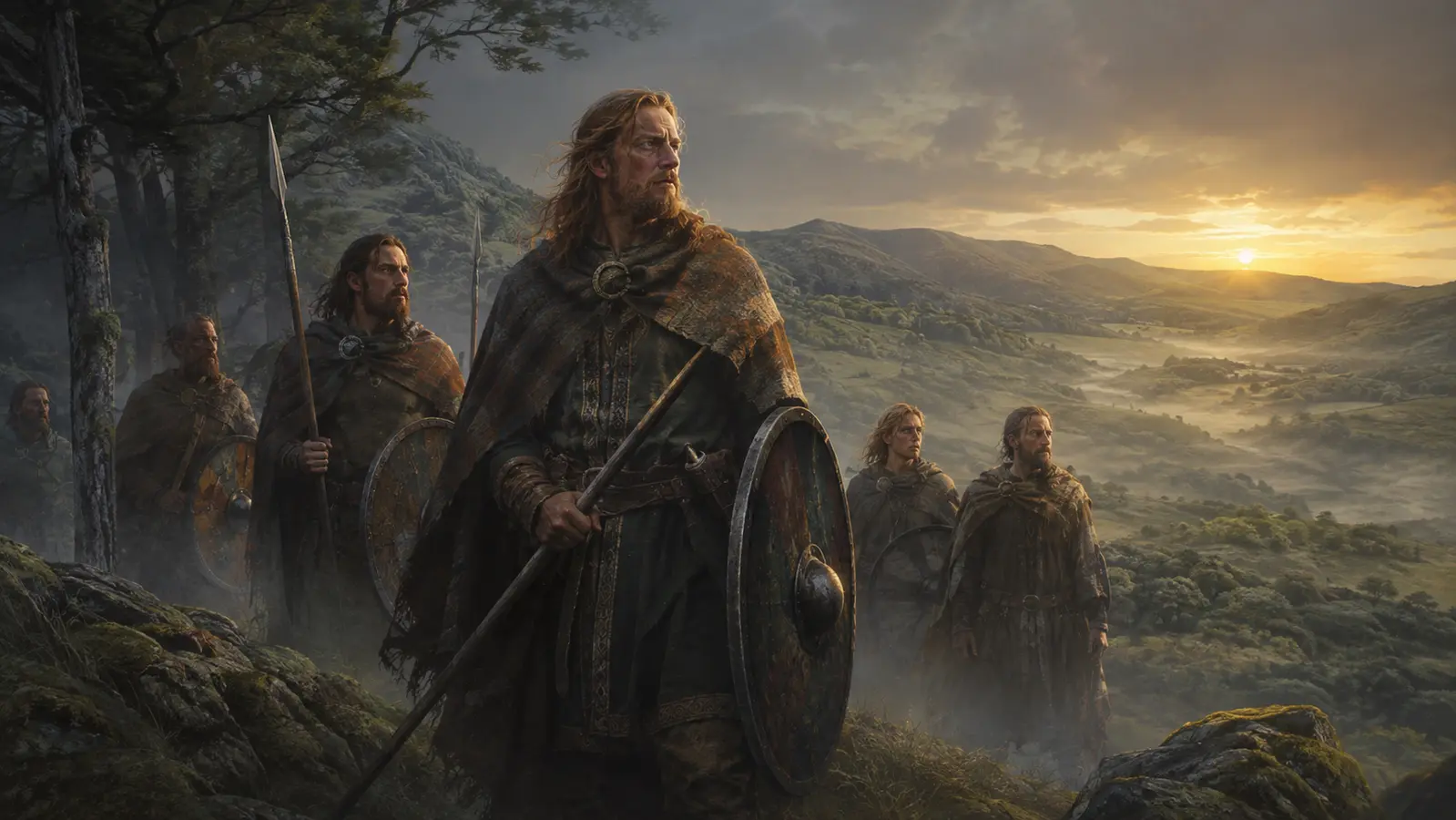
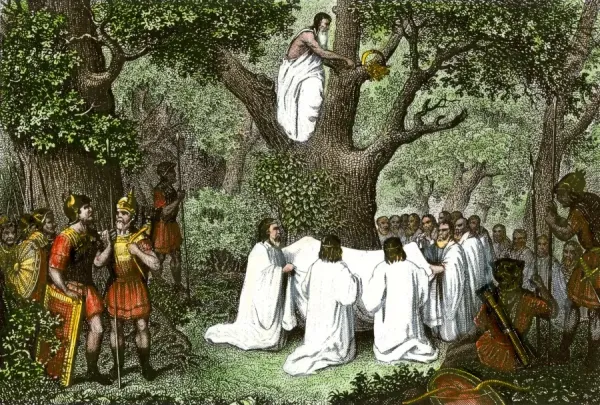
Druids conducted ceremonies within groves rather than constructed temples. Classical writers describe rituals that included offerings, divination, and oath-taking.
The grove offered acoustic beauty as well. Sound travels differently in woodland clearings. One can imagine the resonance of chant, harp, or drum beneath a canopy of leaves. For insight into Celtic musical tradition, see our article on the clarsach:
https://celtguide.com/what-is-a-clarsach-a-comprehensive-guide-to-the-celtic-harp/
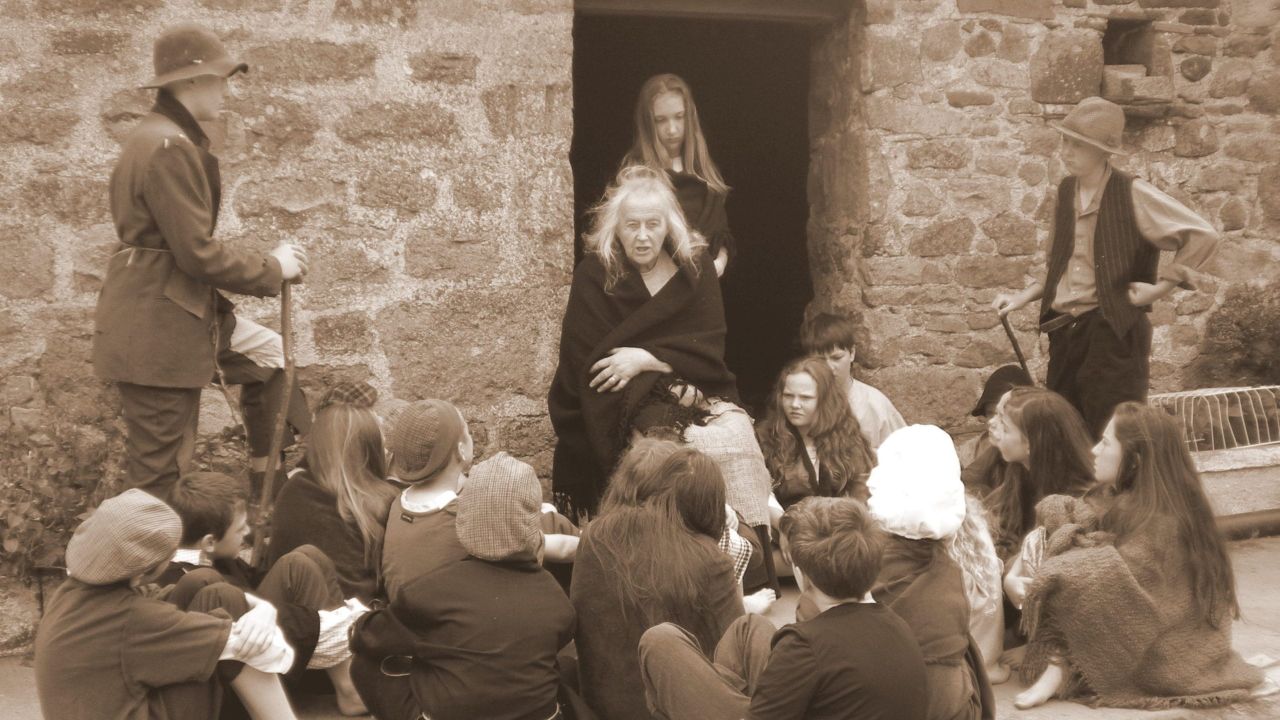
Music, memory, and nature intertwined. Storytellers preserved wisdom orally. If you wish to understand why storytelling thrives in Irish culture, read:
https://celtguide.com/why-are-irish-people-natural-storytellers/
Sacred groves nurtured not only ritual but narrative identity.
Trees as Symbols of Sovereignty and Law
Celtic law codes often referenced specific trees. Certain species marked territorial boundaries. Others indicated rank or status.
The inauguration of kings sometimes involved symbolic union with the land. Sacred landscapes such as the Hill of Tara reflect this connection between rulership and nature:
https://celtguide.com/hill-of-tara/
Trees functioned as living witnesses. They embodied continuity. When leaders gathered beneath them, they affirmed alignment with both ancestry and earth.
Sacred Groves and the Otherworld
Celtic mythology blurs the boundary between visible and invisible realms. Forest clearings often serve as portals to the Otherworld.
In Welsh tradition, Annwn represents a parallel spiritual realm:
https://celtguide.com/what-is-annwn/
Groves operate as liminal spaces. They sit at the edge of settlement yet remain close to community life. One enters them with awareness. One exits changed.
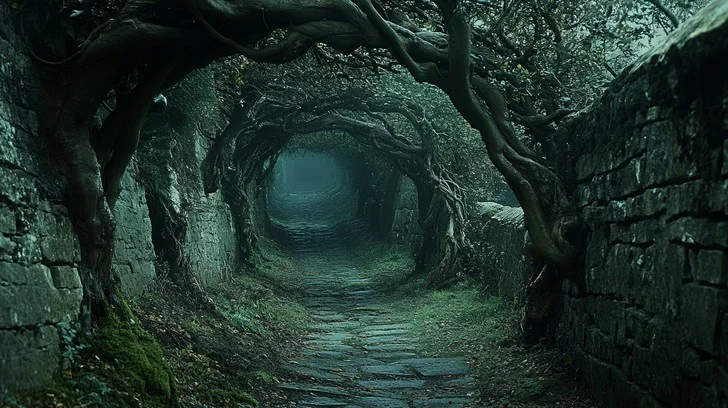
This spiritual geography reflects a worldview rooted in land rather than abstraction.
From Pagan Grove to Christian Church
Christian missionaries did not erase sacred groves overnight. They reinterpreted them. Many early chapels rose near ancient trees or springs.
Sacred bells later marked those landscapes with new soundscapes. Our article on Celtic bells explores this evolution:
https://celtguide.com/the-echo-of-ancestors-how-celtic-bells-ring-through-time/
Rather than destruction, we often find adaptation. The grove’s sanctity endured, though its theology shifted.
Why Sacred Trees Still Matter
Today, Celtic tree symbolism thrives in art, jewellery, and storytelling. Designs inspired by woodland motifs appear in carvings and textiles. Explore related symbolism in Celtic stone carvings here:
https://celtguide.com/celtic-stone-carvings/
Modern festivals and Highland gatherings continue to celebrate heritage rooted in landscape. For current traditions, see:
https://celtguide.com/events-to-watch-in-highland-games-2025/
Sacred trees remind us that identity grows from place. They anchor culture in soil and season.
A Living Legacy
As a scholar trained in the historical landscapes of Scotland, I find that sacred groves illuminate more than ancient religion. They reveal a philosophy of interdependence.
The Celts did not separate spirit from ecology. They understood reverence as relationship. The tree did not represent the sacred. The tree embodied it.
When we walk through an old woodland in Ireland or the Highlands, we step into a memory older than parchment. The grove still whispers. We simply need to listen.