The Morrígan: Celtic Goddess of War and Prophecy
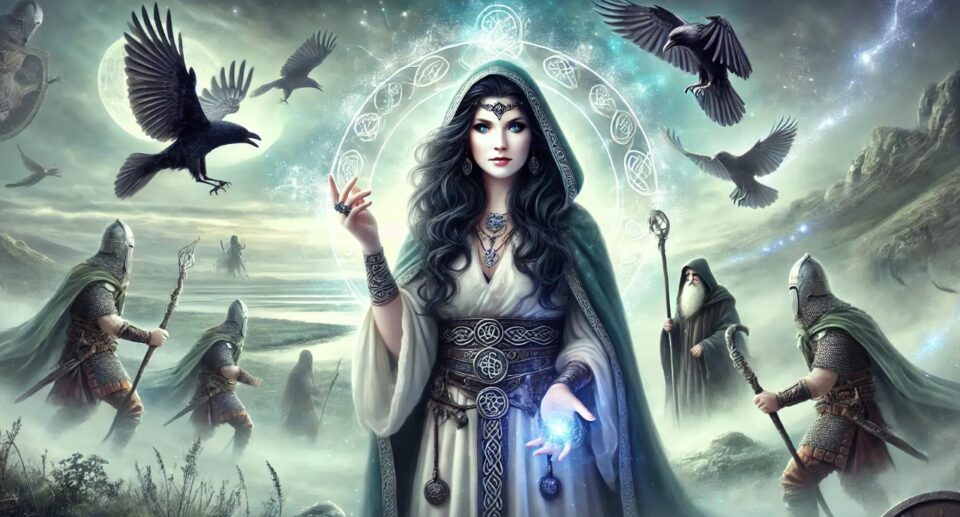
The Morrígan stands as one of the most complex and compelling figures in Celtic mythology. She moves between roles, war goddess, protector of the land, guardian of sovereignty, and harbinger of fate. Her presence feels both fierce and deeply symbolic, and she continues to shape how we understand ancient Irish spirituality today.
Who Is the Morrígan?
In the Irish mythological cycle, the Morrígan belongs to the Tuatha Dé Danann, the divine race who ruled Ireland before the arrival of humans. Many early sources describe her as a triple goddess, made up of Badb, Macha, and Nemain. Three powerful figures connected to war, prophecy, and the land’s protection.
She often appears as a raven, which makes her one of the most recognizable figures in Celtic lore. This symbolism links her to war fields, transformation, and the shifting boundaries between life and death.
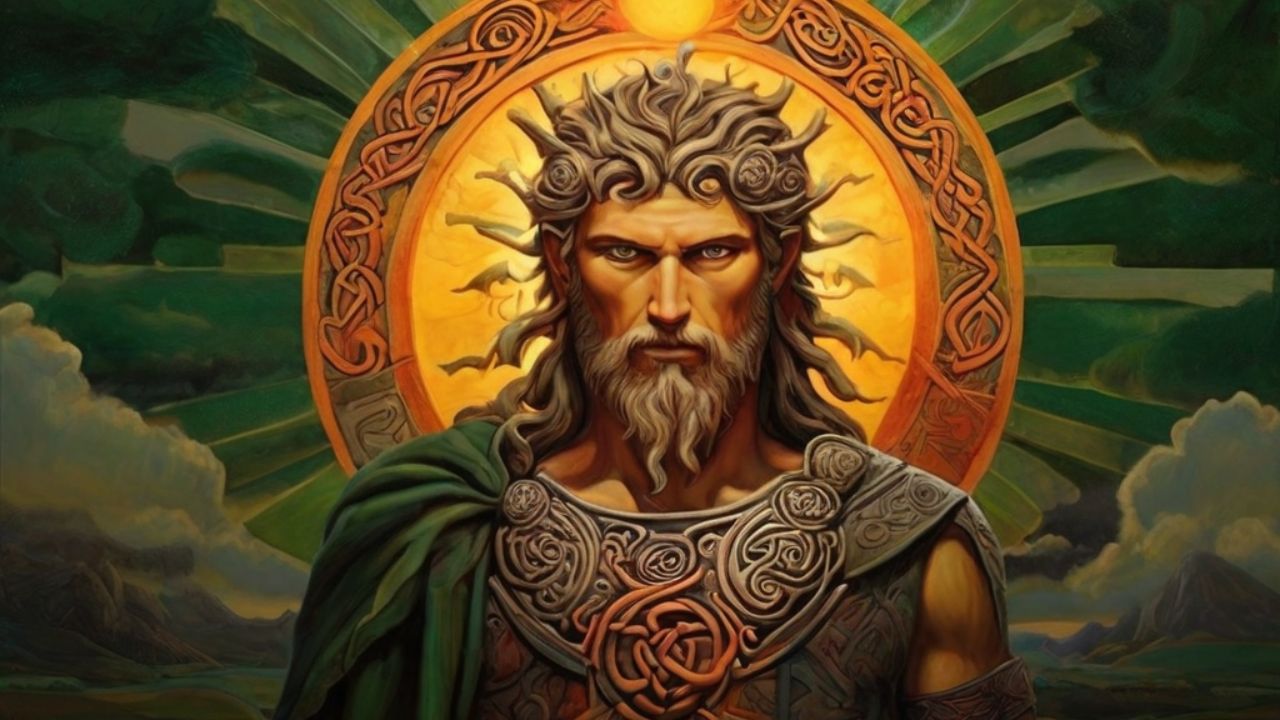
If you enjoy exploring Celtic deities, you may also appreciate our guide to the radiant God Lugh, another major figure in Irish mythology:
👉 Celtic Sun God Lugh
The Morrígan and the Power of Prophecy
More than a warrior goddess, the Morrígan guides fate. In many stories, she stands at the edge of a battlefield and predicts the outcome before the first sword drops. Her prophetic role connects her to themes of time, cycles, and the inevitable rise and fall of great leaders.
Her most famous prophecy appears in the Táin Bó Cúailnge, where she predicts the downfall of warriors and kingdoms. This ability to speak the future places her beside other powerful figures connected to mystic insight, including those who guard ancient Irish holy wells:
👉 Irish Holy Wells: Portals to the Past
Her Connection to Sovereignty and the Land
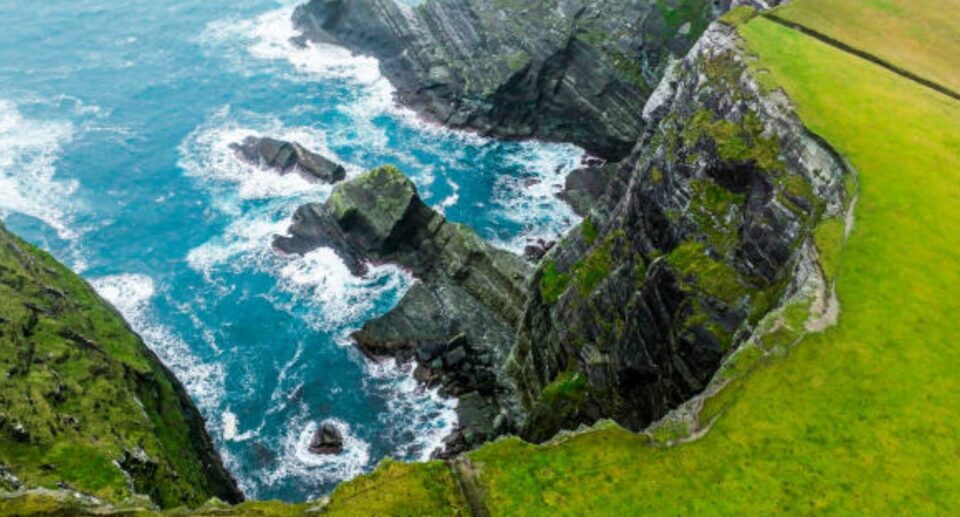
The Morrígan also embodies Ireland itself. She protects the land, watches over its prosperity, and challenges leaders who fail to act with honour. This sovereignty connection reflects an old Celtic belief: a king survives only as long as he respects the land and the goddess who guards it.
This deep bond between landscape and mythology also appears across the Celtic world, such as the sacred Hill of Tara:
👉 Hill of Tara
The Morrígan’s Most Famous Myth: Her Encounter with Cú Chulainn
One of the most powerful stories involving the Morrígan describes her encounter with the hero Cú Chulainn. She first approaches him in disguise, offering help and affection. When he rejects her, she confronts him as a warrior, then as a wolf, then as a cow. Each transformation challenges him in a new way.
Eventually, when Cú Chulainn suffers a fatal wound, the Morrígan returns in raven form and lands on his shoulder. This moment signals the end of his journey and reveals her role as the keeper of endings, not the cause of them.
Symbols Connected to the Morrígan
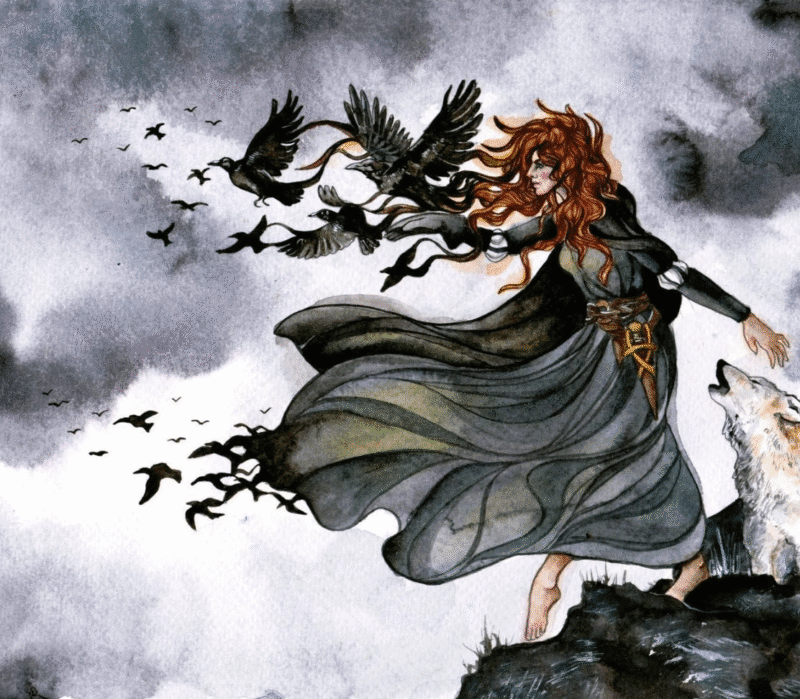
The Morrígan carries many symbols, each expressing a different side of her nature:
1. The Raven
A sign of prophecy, battle, and transformation.
2. The Washer at the Ford
In this form, she washes the armour of warriors who will soon die.
3. The Shape-Shifter
Her many forms show her control over fate and her ability to cross worlds.
4. Sacred Landscapes
Rivers, fords, and battlefields carry traces of her presence.
Her symbolic world aligns with the deep artistic traditions of the Celts. You can see similar motifs in ancient stone patterns:
👉 Celtic Stone Carvings
The Morrígan in Modern Culture
Today, the Morrígan appears in books, films, fantasy art, and Celtic spiritual practices. People admire her for her strength, her clarity, and her refusal to soften her truth. She represents power, sovereignty, and the ability to stand firm in times of conflict.
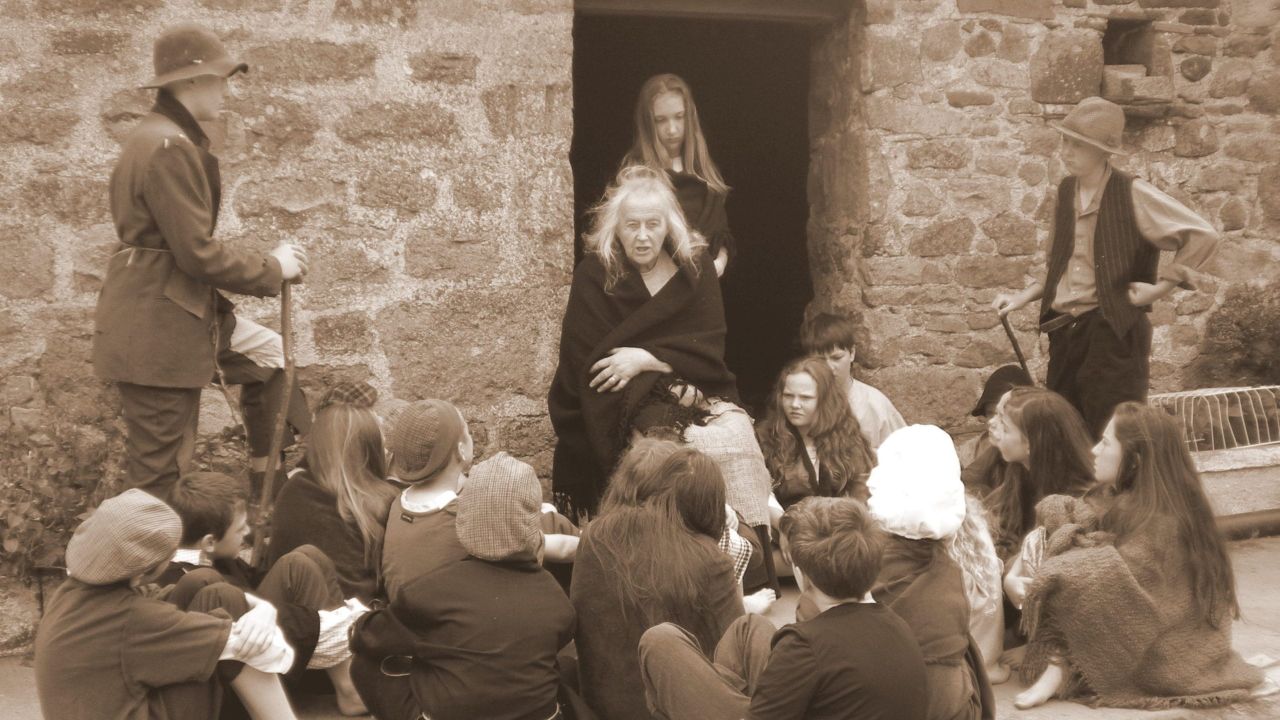
Many modern Celtic enthusiasts connect with her through storytelling, music, and exploration of ancient landscapes. You can read more about the long-standing Irish tradition of storytelling here:
👉 Why Are Irish People Natural Storytellers?
Final Thoughts
The Morrígan remains a figure of immense power—mysterious, insightful, and deeply tied to the spirit of Ireland. She asks us to face our fears, see truth clearly, and recognise the cycles of life that shape our world. From battlefields to sacred rivers, her presence reminds us of the old wisdom woven through Celtic myth.