

Celtic Foliate Designs: Nature Woven into Celtic Art
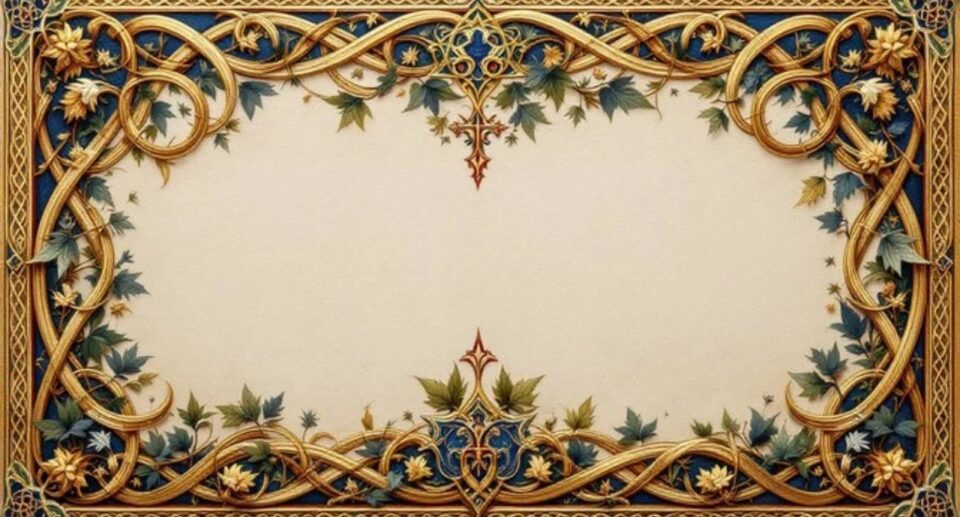
Celtic foliate designs express a worldview rooted in nature. They do not simply decorate. They grow, curl, and unfold across stone, parchment, and metal. Leaves twist into spirals. Vines interlace without end. Every line feels alive.
As a scholar trained at the University of Edinburgh, I often tell students that Celtic art does not imitate nature. It interprets it. Foliate patterns reveal how early Celtic communities understood growth, continuity, and sacred landscape.
Let us explore their meaning, history, and enduring appeal.
What Are Celtic Foliate Designs?
Celtic foliate designs feature stylised leaves, vines, tendrils, and plant forms arranged in flowing patterns. Artists integrate them into:
- Illuminated manuscripts
- Stone carvings
- Metalwork and jewellery
- Textiles and embroidery
These designs rarely appear random. Artists structure them with symmetry and rhythm. Lines loop into knots or terminate in leaf tips. Patterns expand outward like living organisms.
You can see related interlacing techniques in early Insular manuscripts such as the Book of Kells, where vegetal motifs frame sacred text.
Origins: From Sacred Groves to Scriptoria
Celtic reverence for nature predates Christianity. Sacred groves, oak trees, and springs shaped ritual life. Our article on the Celtic oak tree (https://celtguide.com/celtic-oak-tree/) explores this symbolism in detail.
When Christianity spread across Ireland and Scotland, monastic artists adapted older motifs. They carried the language of leaves and vines into Gospel books and stone crosses. This synthesis defines what scholars call Insular art.
Examine early examples in https://celtguide.com/celtic-stone-carvings/. There you will notice how foliate forms frame crosses and biblical scenes. The plant world embraces the sacred narrative.
Symbolism of Leaves and Vines in Celtic Art
Celtic foliate designs convey layered meanings:
Growth and Renewal
Leaves unfurl in cycles. They remind viewers of rebirth and seasonal return.
Eternity and Interconnection
Vines weave without visible beginning or end. This structure echoes knotwork and reflects continuity.
Sacred Landscape
In Celtic cosmology, nature holds spiritual presence. Consider mythic landscapes like https://celtguide.com/hill-of-tara/ or the otherworldly realm discussed in https://celtguide.com/what-is-annwn/. Foliate ornament mirrors these liminal spaces.
These designs do not separate art from belief. They merge them.
Foliate Motifs in Jewellery and Dress
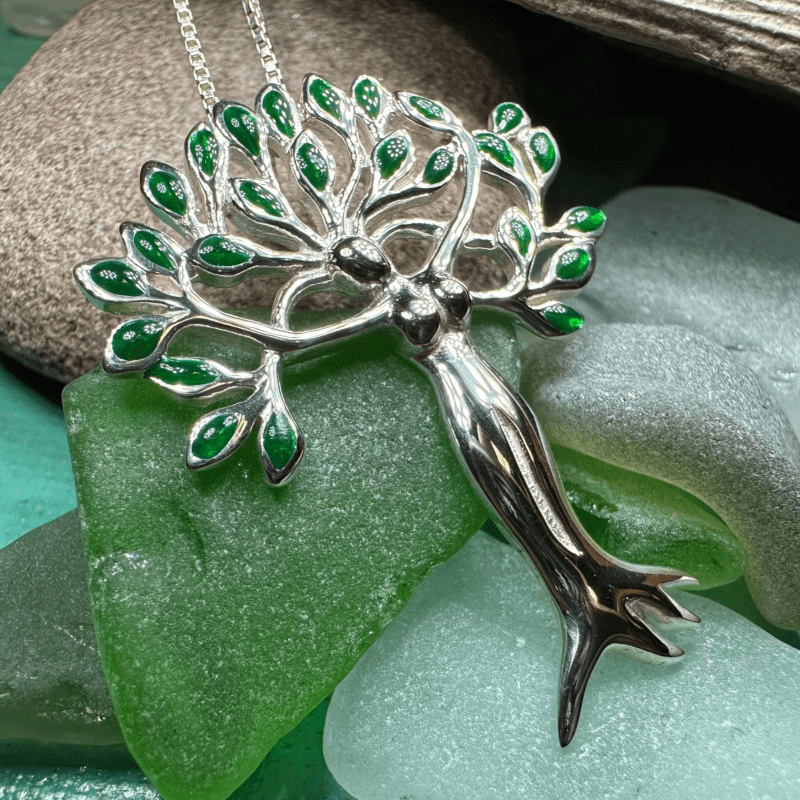
Celtic foliate patterns influence jewellery such as the Claddagh ring (explored here: https://celtguide.com/claddagh-ring-meaning-history-and-symbolism/). Goldsmiths engrave leaves along bands to symbolise loyalty and flourishing love.
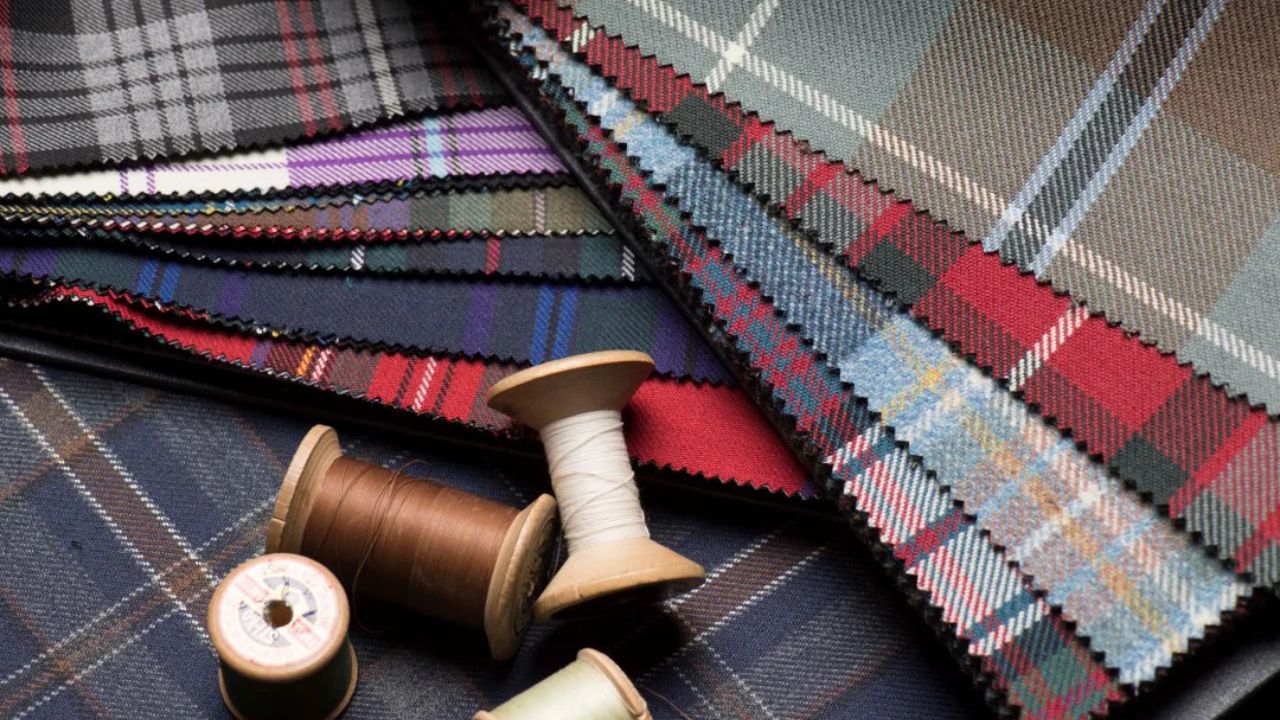
Textile traditions also incorporate vegetal motifs. Learn more about woven heritage in https://celtguide.com/what-is-tartan/ and its evolution in https://celtguide.com/how-long-has-the-tartan-prints-been-around/. While tartan relies on geometric structure, embroidery often introduces organic foliate embellishment.
Foliate Designs in Music and Material Culture
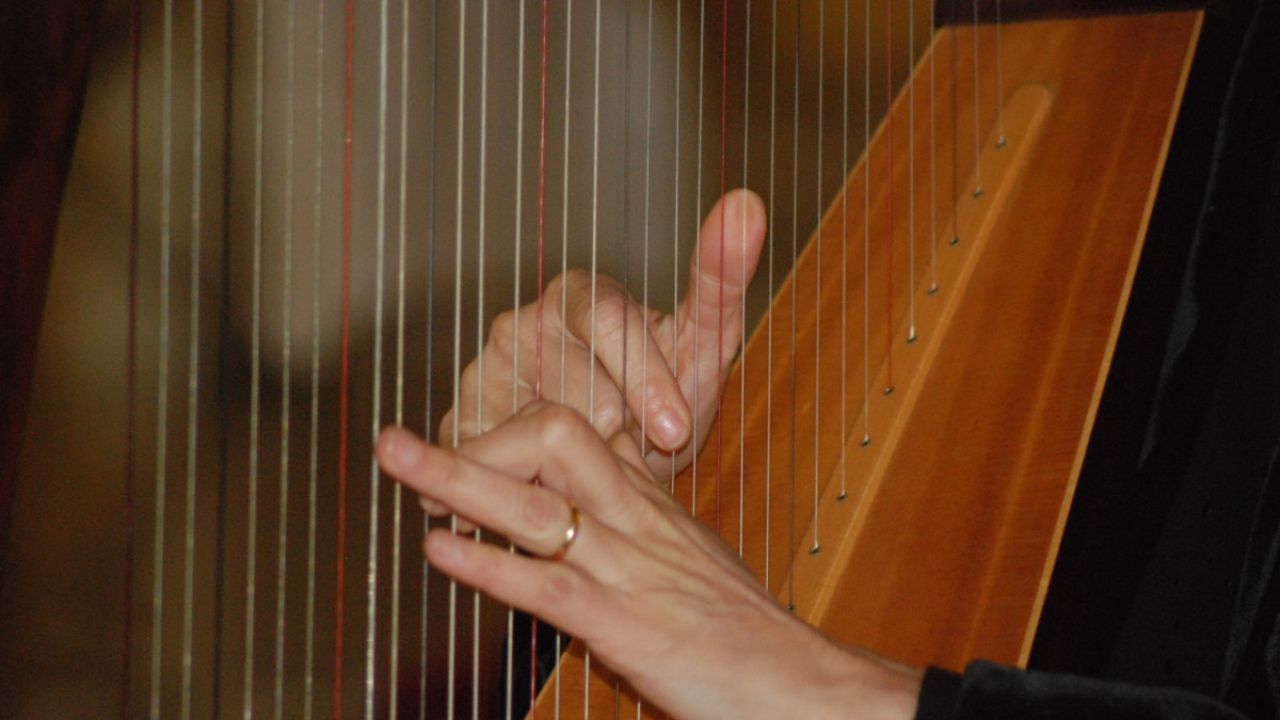
Art does not exist in isolation. Foliate carving appears on instruments such as the Celtic harp, discussed in https://celtguide.com/what-is-a-clarsach-a-comprehensive-guide-to-the-celtic-harp/. Craftsmen carve vines along wooden frames, allowing music and ornament to converse.
Similarly, ceremonial objects and even weapons, such as the dirk knife (https://celtguide.com/what-is-a-dirk-knife/), often bear engraved vegetal scrolls. These details elevate everyday objects into symbolic artefacts.
How Celtic Foliate Designs Differ from Knotwork
Many readers ask: Are foliate designs the same as Celtic knots?
No. Knotwork relies on continuous, interlacing lines with strict geometry. Foliate designs introduce organic variation. Leaves taper. Stems curve asymmetrically. Artists combine both forms, but each serves a distinct visual logic.
Why Celtic Foliate Designs Still Matter
Designers today revive Celtic foliate motifs in:
- Tattoo art
- Wedding décor
- Textile prints
- Architectural details
These patterns resonate because they feel timeless. They connect modern identity to ancestral memory. They echo the storytelling impulse explored in https://celtguide.com/why-are-irish-people-natural-storytellers/.
Celtic art speaks through pattern. Foliate design gives that speech a natural voice.
Frequently Asked Questions
What are Celtic foliate designs?
Celtic foliate designs are decorative patterns featuring stylised leaves and vines arranged in flowing, interlaced compositions.
Where did Celtic leaf patterns originate?
They developed from pre-Christian nature symbolism and evolved within early medieval Insular manuscript and stone art.
What do Celtic vine designs symbolise?
They symbolise growth, eternity, spiritual continuity, and the sacredness of nature.
Are Celtic foliate designs the same as knotwork?
No. Knotwork follows strict geometric interlacing, while foliate designs mimic organic plant growth.
Conclusion: A Living Ornament
Celtic foliate designs remind us that art grows from environment. Early Celtic communities observed forests, fields, and hedgerows. They translated that observation into line and curve. Monks refined it. Craftsmen preserved it. Modern artists reinterpret it.
If you wish to explore more on Celtic art and symbolism, visit our main blog hub at https://celtguide.com/blog/.
Nature, in Celtic tradition, never stands apart from culture. It curls through it—leaf by leaf, line by line.