The Irish Wolfhound in History: Legacy & Legend
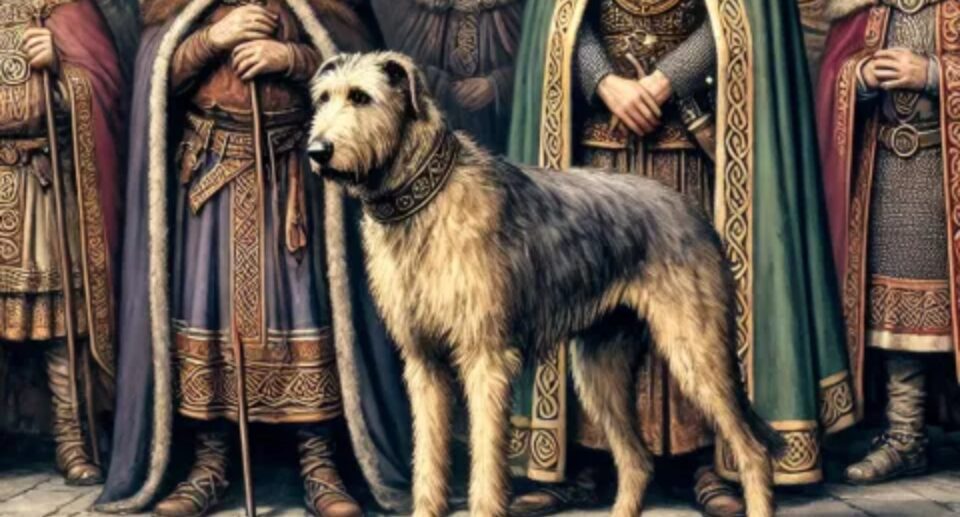
Among all the animals woven into Ireland’s ancient story, the Irish Wolfhound stands in a class of its own. Tall, noble, and deeply rooted in Irish culture, this majestic dog shaped legends, royal traditions, and even international diplomacy. Its presence in history feels as vast and striking as the Irish landscape itself.
If you enjoy exploring how storytelling shapes identity, you may also like our guide on why Irish people are natural storytellers.
A Dog Older Than Written Irish History
The Irish Wolfhound appears in records long before Ireland developed a written literary tradition. Early descriptions from Gaelic poets portray it as a symbol of prestige. By the first centuries CE, the dog had already spread beyond Ireland through trade and gifting.
Roman accounts describe “magnificent Irish dogs” used in battle and for large-game hunting. The Romans valued them so much that they transported them across Europe as gifts for high-ranking officials.
The Wolfhound as a Hunter and Protector
Historically, the Irish Wolfhound served a practical purpose: hunting wolves, elk, and other large animals. Ireland’s dense forests and open plains required a dog with both power and speed. The Wolfhound’s towering size and calm intelligence made it perfect for the task.
Although wolves eventually vanished from Ireland by the 18th century, the Wolfhound’s reputation endured. Its hunting skill contributed to Ireland’s cultural identity, much like the significance of landscapes explored in the Ring of Kerry.

Royal Status and Noble Symbolism
For centuries, only nobles and kings owned Irish Wolfhounds. Their presence signaled wealth and social standing. Many Irish kings sent these dogs abroad as diplomatic gifts, strengthening alliances and spreading Irish cultural influence.
They appear often in early medieval texts. Sometimes as companions of warriors, sometimes as guardians of sacred sites, and sometimes as symbols of loyalty. Their regal presence echoes the pride found in other Irish cultural symbols, such as the meaning behind the Claddagh Ring.

Wolfhounds in Celtic Myth and Literature
No discussion of their history feels complete without turning to Celtic mythology. The Wolfhound often appears as the loyal companion of heroes:
- Cú Chulainn, one of Ireland’s greatest warriors, took his name from killing the guard dog of Culann and becoming his replacement, the Hound of Culann.
- Wolfhounds also appear in sagas connected with the Hill of Tara, the seat of ancient Irish high kings.
- Poems describe them as “gentle giants” in peace yet fearsome protectors in war.
This duality, strength and gentleness, still defines the breed today.
Decline and Revival of the Wolfhound
By the 1700s, wolves had disappeared from Ireland, and the Wolfhound’s role faded. Without their primary purpose, their numbers declined sharply. Some feared they might vanish entirely.
A revival began in the 19th century when Captain George Augustus Graham gathered the remaining bloodlines and rebuilt the breed. He preserved its physical grandeur and calm temperament, giving it renewed cultural importance. This revival reflects the same spirit of cultural preservation found in Ireland’s art, such as Celtic stone carvings.

The Wolfhound in Modern Ireland
Today, the Irish Wolfhound plays the role of cultural ambassador. It stands proudly at parades, historical reenactments, and heritage events. People admire it not only for its size but for its gentle, affectionate nature.
Its symbolism aligns with the deep-rooted respect the Irish hold for tradition, similar to how sacred places like Irish Holy Wells preserve spiritual memory across generations.
Some families choose the breed to honour Irish heritage, while others simply fall in love with its dignity and calm personality.
Why the Irish Wolfhound Still Inspires Us
The Irish Wolfhound embodies the essence of Ireland: strength shaped by landscape, loyalty anchored in ancient stories, and resilience that carried it through centuries of change. When you stand beside one, you feel connected to something older than any monument or manuscript, a living echo of Celtic history.
If you wish to explore more cultural roots, our guide on Gaelic Irish proverbs offers a similar journey into Ireland’s wisdom traditions.