
Scottish Medieval Castles: Power, Stone, and Survival
Scottish medieval castles still dominate hills, lochs, and coastal cliffs. They do more than please the eye. They tell stories of power, warfare, kinship, and survival. When I teach medieval material culture, I often remind students that castles functioned as homes, symbols, and weapons at the same time. In Scotland, this truth appears with remarkable clarity.
Why Castles Mattered in Medieval Scotland
Medieval Scotland never enjoyed long periods of peace. Rival clans, Norse incursions, and pressure from England shaped daily life. Castles rose as answers to instability. Lords used them to control land, protect people, and display authority. Much like oral tradition preserved memory, as explored in our discussion of storytelling traditions, stone preserved power in physical form (Why Are Irish People Natural Storytellers).
Unlike continental Europe, Scotland relied heavily on natural landscapes. Builders placed castles on rocky outcrops, islands, and narrow passes. Geography worked as a defensive ally.
Early Timber Forts to Stone Strongholds
The earliest Scottish castles appeared in the 12th century. Norman influence introduced motte-and-bailey designs. Timber towers sat atop earth mounds. These structures evolved quickly. Stone replaced wood as threats increased and wealth grew.
By the 13th century, stone keeps and curtain walls dominated. Builders used local materials, which explains why castles blend so seamlessly into their surroundings. This same respect for natural material echoes in Celtic stone art traditions (Celtic Stone Carvings).
Castles and Clan Power
Castles served as clan headquarters. They anchored family identity and territorial claims. Control of a castle often meant control of surrounding land. Understanding Scottish castles requires understanding clans themselves (How Many Scottish Clans).
Unlike royal castles in England, many Scottish strongholds remained relatively small. Tower houses dominated from the 14th century onward. These vertical residences balanced defense with domestic life. Chiefs ruled from great halls while storing weapons below.
Famous Scottish Medieval Castles
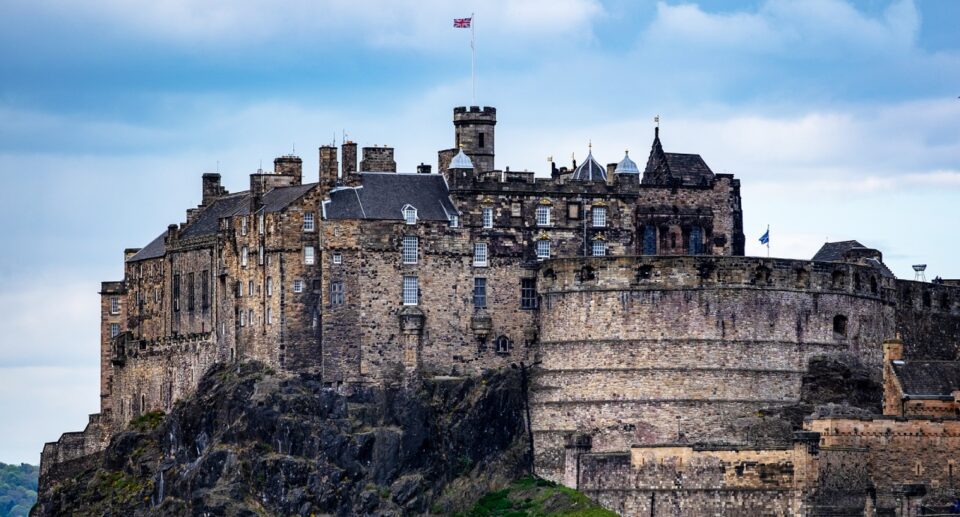
Some castles achieved legendary status. Edinburgh Castle guarded the capital and royal regalia. Stirling Castle controlled access between Highlands and Lowlands. Eilean Donan protected western sea routes and clan interests.
Each site reflects political anxiety. Their repeated destruction and rebuilding show how fragile power remained. Travel writers still trace these landscapes today, much like journeys through places such as the Isle of Mull (Isle of Mull).

Daily Life Inside the Walls
Castles were not silent stone shells. They rang with music, prayer, and work. Harpers played the clàrsach in great halls (What Is a Clarsach). Servants cooked, cleaned, and repaired weapons. Lords administered justice and collected rents.
Religious life also mattered. Many castles included chapels. Gaelic scripture later strengthened spiritual identity across Scotland (Scottish Gaelic Bible Translations).
Warfare and Castle Design
Scottish castles adapted to constant threat. Thick walls resisted siege engines. Narrow windows limited arrow fire. Spiral staircases turned clockwise, giving defenders an advantage.
Yet castles also symbolized deterrence. Their visibility sent a message before any battle began. This blend of fear and symbolism mirrors how dress and weapons communicated status, much like tartan or the dirk knife (What Is Tartan, What Is a Dirk Knife).
Decline and Legacy
By the 17th century, artillery made medieval castles obsolete. Many fell into ruin or transformed into manor houses. Still, their cultural power endured. They anchor tourism, scholarship, and national identity today.
Modern Scotland continues to celebrate medieval heritage through festivals, Highland Games, and storytelling landscapes (Events to Watch in Highland Games 2025). Castles remain central to that story.

Why Scottish Medieval Castles Still Matter
Scottish medieval castles matter because they connect land, memory, and identity. They reveal how people adapted to harsh conditions with ingenuity and resilience. As physical texts, they deserve the same careful reading as manuscripts or myths.
To walk among these stones is to read Scotland’s past in its original language.