Ancient Tribes of Scotland: What the Romans Recorded
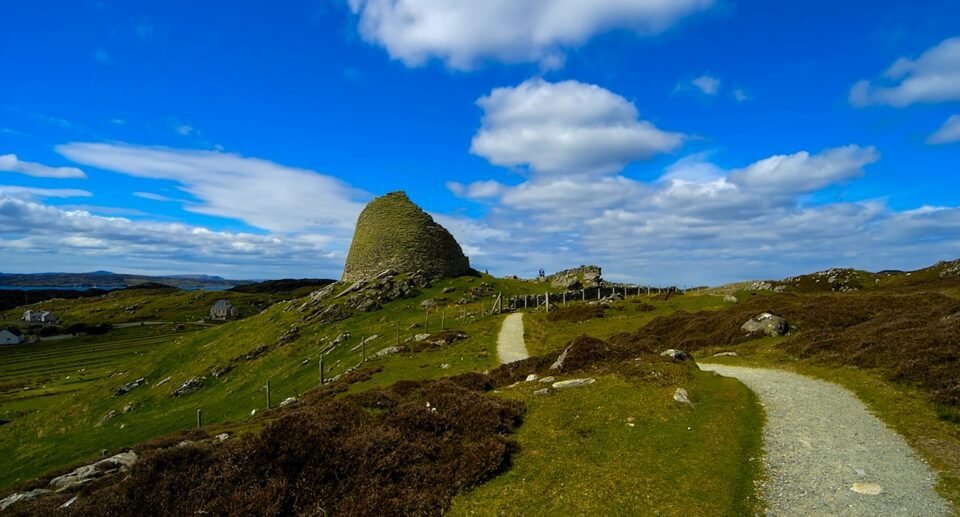
Ancient Scotland was home to many communities long before there was a kingdom called Scotland. Roman authors named peoples such as the Votadini, Selgovae, Novantae, Damnonii, Epidii and Caledonii. Those names are useful clues, but they are mostly outsiders’ labels. Their boundaries, languages and political structures cannot be mapped as confidently as modern counties. Archaeology offers another view of their lives through settlements, brochs, forts, farms and objects exchanged across the Roman frontier.
Where do the tribal names come from?
The most familiar lists come from Greco-Roman writers. The geographer Ptolemy described peoples and places in northern Britain in the second century AD; Tacitus wrote about Agricola’s campaigns toward the end of the first century. Neither walked every district of what is now Scotland, and neither wrote from the viewpoint of those communities. Their accounts combine second-hand information with Roman strategic interests. A scholarly study of Ptolemy’s tribes in north Britain shows why locations are proposals rather than exact borders.
“Tribe” is a convenient modern shorthand. It should not suggest that each named group had a single king, fixed territory or unchanging identity. Alliances, kinship and local leadership could shift. The Roman tendency to group many opponents under a broad term is especially important when we read about the Caledonians.
Which peoples lived in the south?
Ptolemy placed the Votadini in the east, in a region that included parts of today’s southeast Scotland and northern England. The Selgovae are usually associated with the southern uplands, while the Novantae are linked with the southwest. The Damnonii are generally placed around the Clyde and central western area. These are approximate reconstructions from ancient geography, later names and archaeology, not addresses anyone can pin to a modern map.
People in the south had varied relationships with Rome. The great hilltop settlement at Traprain Law in East Lothian, for instance, was connected to Roman trade and frontier politics. National Museums Scotland’s survey of Roman sites describes continued links with the people at Traprain after Roman forces withdrew to Hadrian’s Wall. A community could exchange goods or information with Rome without becoming simply “Roman.”
Who were the Caledonians and other northern groups?
The Caledonii appear in Roman geography in the north. Tacitus also used “Caledonians” for the forces opposing Agricola’s advance, but the name may cover a coalition rather than one unified nation. Other names associated with the north and west include the Epidii around Kintyre and the Taexali in the northeast. The exact placements remain debated because the written descriptions are sparse and the map tradition is imperfect.
In a famous passage about the battle now called Mons Graupius, Tacitus presents a speech by a leader named Calgacus. It is a Roman author’s literary reconstruction, not a recorded transcript. We can learn about how Romans portrayed their enemies without treating every sentence as direct evidence of what a northern leader said. Read our account of Mons Graupius for the campaign and the uncertainty over its location.
What can archaeology tell us?
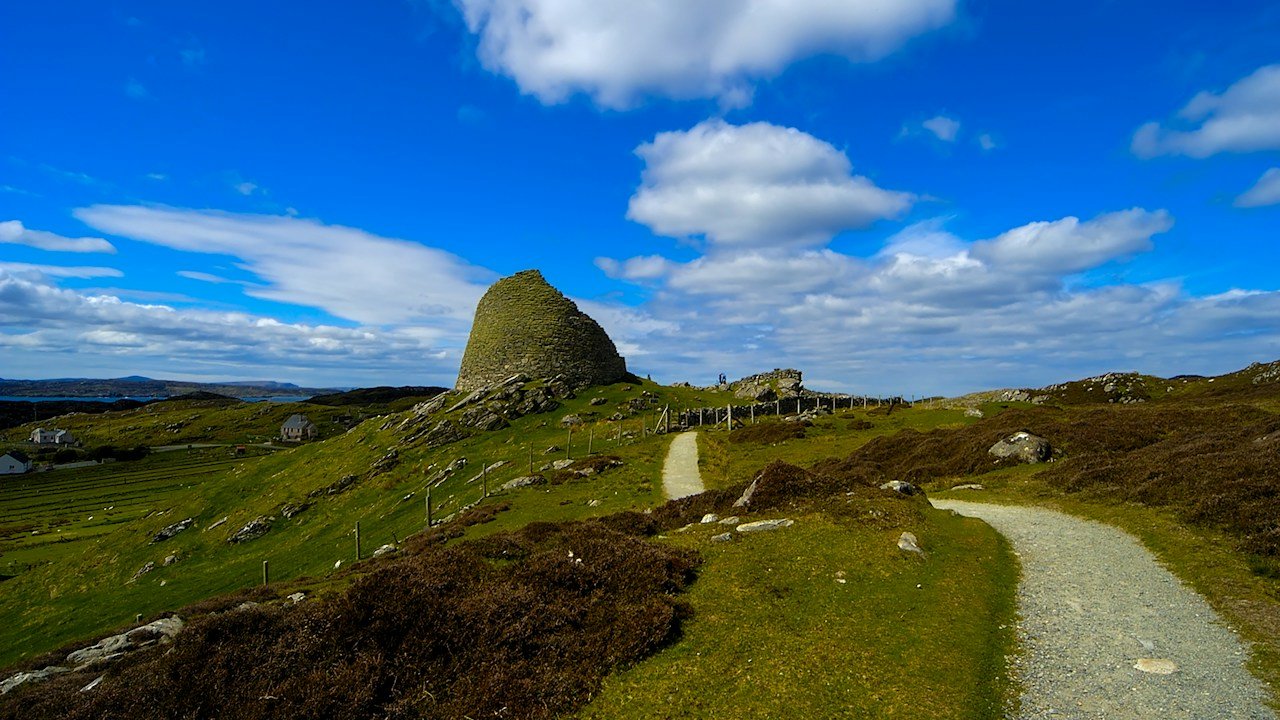
Archaeology shows that there was no single way to live across ancient Scotland. People farmed, raised animals, made metalwork and occupied different kinds of houses and defended places. Iron Age brochs, the imposing circular stone buildings concentrated especially in the north and west, are one striking example. Historic Environment Scotland’s account of Dun Carloway explains how such buildings could signal status and wealth as well as shelter inhabitants.
That evidence is not a simple key matching a named Roman tribe to a particular broch. A building form could spread across communities; objects could travel through exchange; and not every ancient site can be dated to the years a Roman author described. At Traprain Law and other frontier areas, finds reveal contact across lines that maps make look rigid. National Museums Scotland’s history of Roman Scotland sets that contact alongside repeated invasion and withdrawal.
Were these people Picts or Scots?
“Picts” became a widely used name for peoples in northern and eastern Scotland in the later Roman and early medieval periods. It is misleading to stamp that later label on every group Ptolemy named centuries earlier. The name “Scots” has its own changing history, associated with Gaelic-speaking people and kingdoms before Alba emerged. Ancient communities contributed to later societies through migration, cultural change and new political groupings; the transition was not a neat replacement of one list by another.
The National Museums Scotland research on early medieval Scotland examines the creative and political period from Pictish societies toward the later kingdom. Its work is a reminder that new names and kingdoms came from centuries of interaction, not from a sudden moment when the earlier inhabitants vanished.
Questions readers often ask
How many ancient tribes were there? Roman sources name many groups, but their lists are incomplete and do not prove that each name describes a stable, separate people.
Did Rome conquer all of Scotland? No. Roman armies campaigned far north, but control varied and never became a lasting conquest of the whole area.
Are the ancient tribes the same as Scottish clans? No. The familiar clan system belongs to a much later period, although both involve kinship and local authority in different historical settings.
Read the evidence with care
Names from Ptolemy and Tacitus give us a starting point; archaeology makes the picture richer and less tidy. Together they show many communities living in the land that would become Scotland, adapting to neighbours, terrain and Roman pressure. For a much later comparison, read about Highland chiefs and clan leadership, while keeping the centuries between these different societies in view.
Featured photograph: Dun Carloway broch, Lewis, by Maxwell Andrews via Unsplash.