

Captain William Kidd: Scotland’s Privateer and Pirate
Captain William Kidd was a Scottish-born mariner who sailed with a royal commission to hunt pirates and French shipping, then was convicted of piracy and murder in London in 1701. His story sits on an uneasy boundary: a state-backed privateer could take some ships lawfully, yet that authority did not cover every prize a crew wanted. Kidd’s most famous capture, the Quedagh Merchant, exposed the gap between what he claimed his papers allowed and how others understood the seizure.
The familiar tale of buried treasure grew after his death. The historical Kidd is more revealing than the legend because his case shows how war, investment and Indian Ocean commerce shaped the meaning of piracy.
A Scottish mariner in the Atlantic world
Kidd’s Scottish birth is clear, but accounts of his precise birthplace and early years conflict. By the late seventeenth century he had made a career in the Atlantic and settled in New York. He was an established seaman and privateer rather than a man who began his life under a black flag. His later fame should not erase those earlier connections to merchants and colonial officials.
A privateer sailed with government authority to attack specified enemy ships, usually in wartime, and to seek a share of a lawful prize. A pirate attacked without that authority. The distinction mattered on paper, but at sea the crew, the ship’s documents, its ownership and the interests of rival governments could all complicate a decision. The Royal Museums Greenwich catalogue of a study of Kidd describes his 1696 royal commission to take pirate and French ships.
That mission attracted powerful backers who expected returns. The Adventure Galley sailed toward the Indian Ocean to find pirates and enemy shipping. A long voyage with few profitable captures strained the venture. This does not excuse unlawful violence; it explains why the financial terms of privateering and the captain’s authority came under pressure.
The Quedagh Merchant and the disputed French pass
In 1698 Kidd seized the Quedagh Merchant, a richly laden vessel trading in the Indian Ocean. Its cargo belonged to Armenian merchants, and its captain was English. The ship also carried a French pass. Kidd argued that this document brought the vessel within his authority to capture enemy property. Critics saw an attack on a merchant ship connected to English and Asian trade. The pass became central to the later dispute, but the existence of paperwork did not settle what a court would accept as a lawful prize.
The seizure had consequences far beyond Kidd’s crew. Merchant property and shipping relationships in the Indian Ocean were at stake, and English authorities had strong reasons to protect their trade in the region. The voyage made Kidd notorious while his sponsors faced political embarrassment. Accounts that ask only whether he was a hero or villain miss the merchants whose goods were taken.
A contemporary sailor’s manuscript in the Royal Museums Greenwich archive describes an encounter with the Adventure Galley near Surat. It is a reminder that Kidd’s activities were observed within a busy network of Indian Ocean shipping, not an empty sea waiting for a dramatic pirate tale.
Arrest, trial and execution
Kidd returned to North America hoping to defend his actions. He was arrested in Boston in 1699 and eventually sent to London. His case included the death of a crewman, William Moore, whom Kidd had struck during a quarrel, as well as charges connected to captured ships. A modern reader should distinguish the separate accusations instead of collapsing the entire trial into a verdict on one prize.
The Library of Congress holds the printed 1701 trial proceedings. Such a document records the legal case and contemporary claims; it should be read as a source produced by a prosecution and its time, not as a complete, neutral account of everything that happened at sea. Kidd insisted that he had acted under commission, but he was convicted of murder and piracy. He was hanged at Execution Dock in Wapping on 23 May 1701.
Historians continue to debate whether his treatment was unusually harsh or politically useful to former backers. Neither interpretation makes every capture lawful or the trial record worthless. The evidence supports a more precise question: where did Kidd’s commission end, and who benefited from treating his voyage as criminal after the fact?
Was Captain Kidd’s treasure real?
A limited piece of the treasure story has a documentary basis. Kidd hid goods on Gardiner’s Island near Long Island in 1699. Some were recovered and sent to London as evidence. Royal Museums Greenwich’s account of pirate myths notes that this is the only confirmed instance of his burying treasure. Repeated searches for a vast secret hoard have produced no comparable proof.
The distinction matters because folklore often expands a small, traceable event into a much larger promise. Kidd’s trial, the recovered goods and later popular writing gave the story a memorable shape. That afterlife says as much about readers’ appetite for lost wealth as it does about the captain.
Why Kidd’s case still matters
Kidd’s life reveals the instability of state-approved maritime violence. His commissions came from a world in which war at sea could enrich private investors. A ship’s identity could involve owners, charterers, cargo interests and papers from different political powers. A captain could call an action legitimate while the people deprived of goods, and the court later judging it, disagreed.
His Scottish origin is part of the story, but he operated across an Atlantic and Indian Ocean network rather than as an agent of a uniquely Scottish pirate tradition. Other Scottish ventures of the era also looked outward, though for different reasons. The Border Reivers belonged to a different frontier and century; their story likewise warns us that a celebrated raider is only one side of a community’s history.
For the historical Kidd, the strongest starting points remain documents that can be examined and questioned: his commission, merchant claims, trial proceedings and the records of what was recovered. Folklore gives him a dramatic silhouette; those records give him a life in its political and commercial setting.
Common questions about Captain Kidd
Was Captain Kidd a pirate or privateer? He began his final venture with royal authority to attack specified targets. He was later convicted of piracy. Whether particular seizures fell within his commission has remained a matter of historical argument.
Where was he born? He was Scottish-born, but accounts of his exact birthplace differ. A precise town should not be stated as settled fact without stronger evidence.
Did he really bury treasure? Goods hidden on Gardiner’s Island were recovered. A vast undiscovered Kidd hoard has not been substantiated.
When did he die? Kidd was executed in London on 23 May 1701 after his piracy and murder convictions.
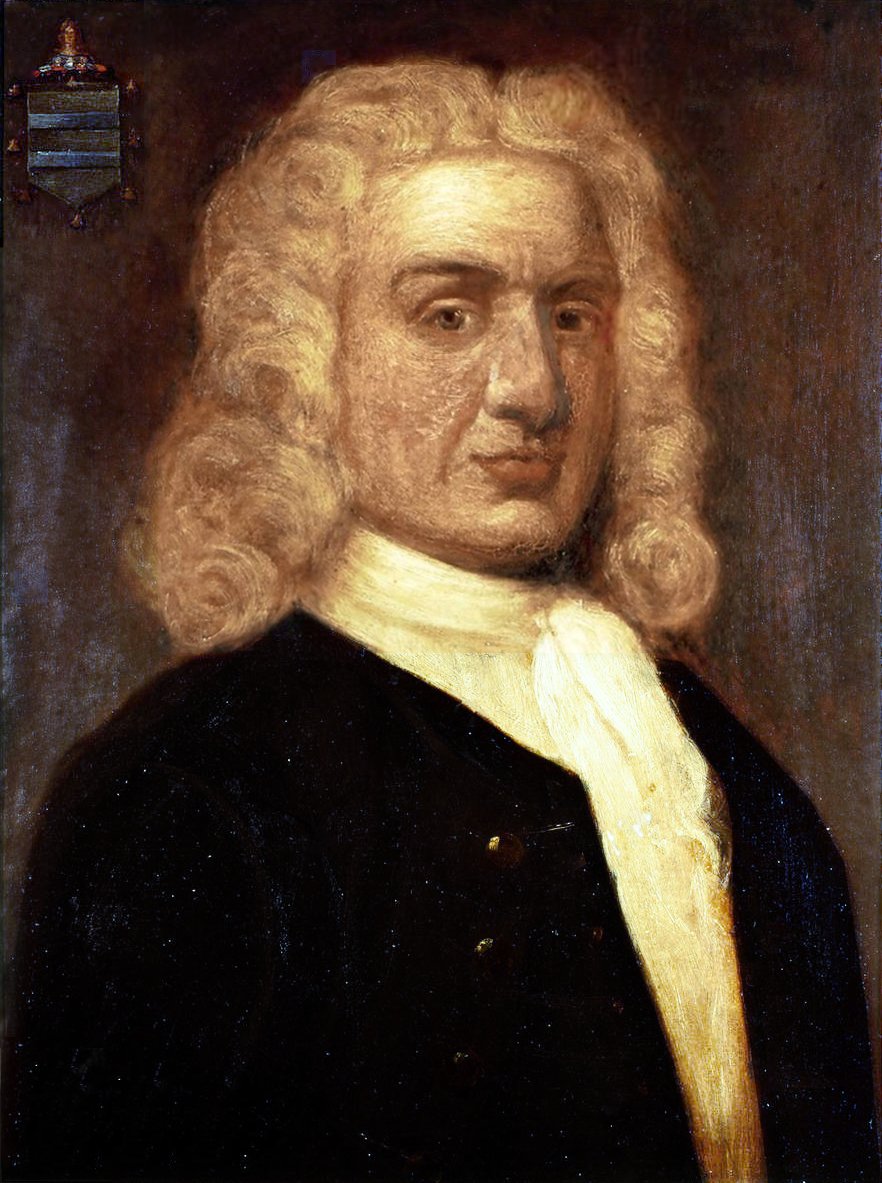
Image credit: Portrait of William Kidd attributed to Sir James Thornhill, via Wikimedia Commons. The eighteenth-century artwork is in the public domain.