The Celtic Horned God Cernunnos: Meaning and Myth

Celtic mythology speaks in symbols rather than sermons. Its gods often reflect the natural world rather than rule over it. Among them, Cernunnos, the Celtic Horned God, stands as a powerful figure of balance, abundance, and the untamed wild.
Unlike later religious traditions that separate humanity from nature, Cernunnos exists within it. He does not command the forest. He belongs to it.
Who Is Cernunnos?
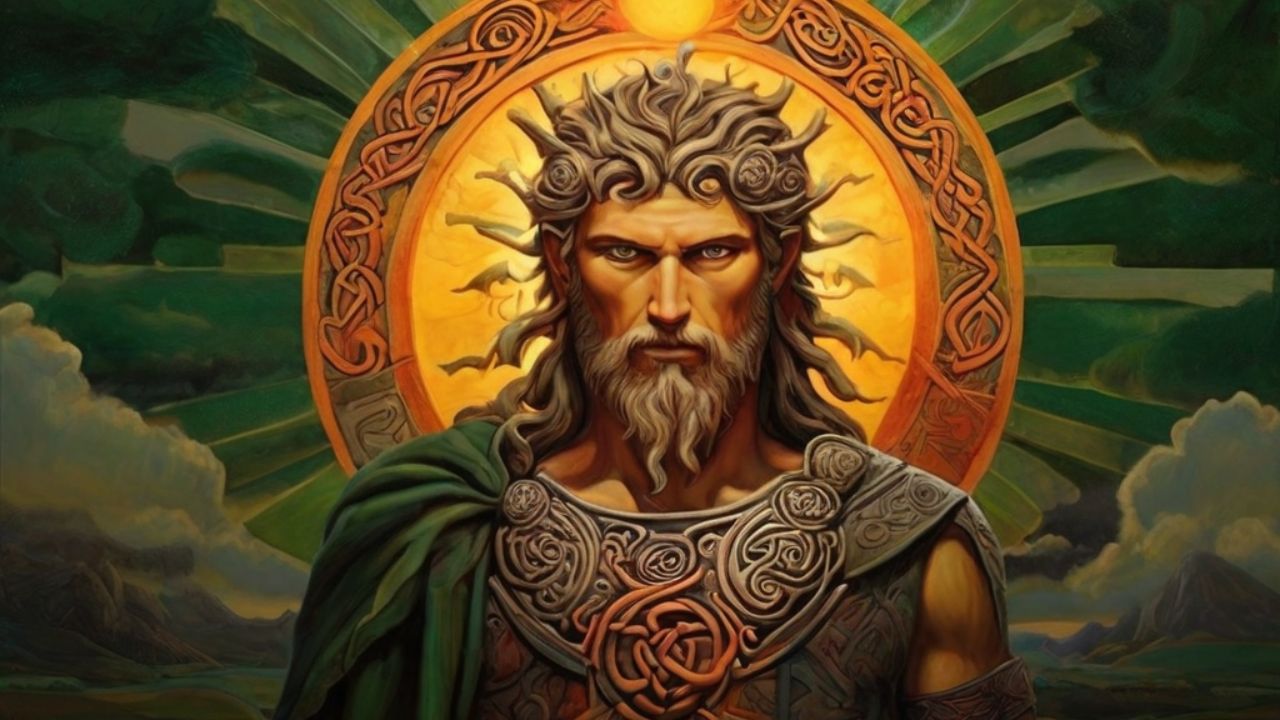
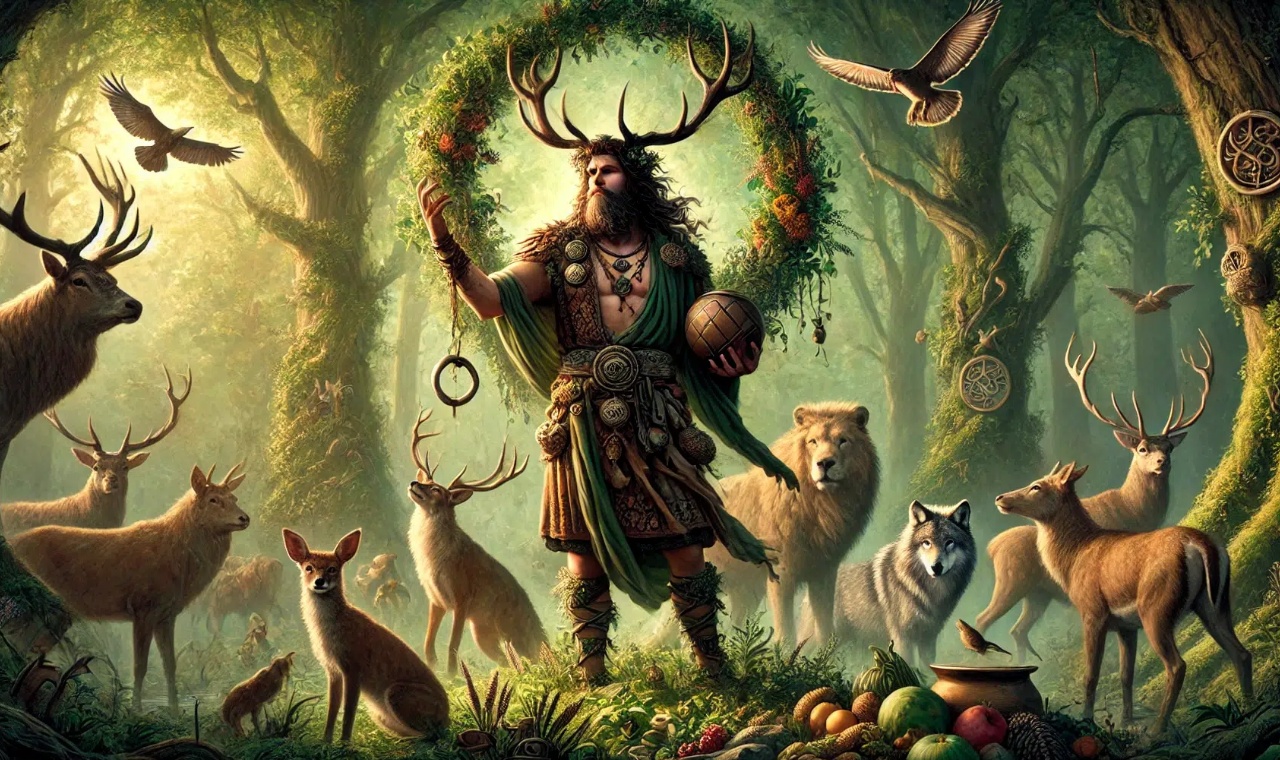
Cernunnos appears most clearly in archaeological evidence rather than written myth. The most famous image comes from the Pillar of the Boatmen, discovered in Paris and dated to the first century CE. He sits cross-legged, wears antlers, and holds a torc, the sacred neck ring of Celtic nobility.
His name likely derives from the Proto-Celtic word for “horn.” Horns symbolise strength, fertility, and renewal across ancient cultures. In Celtic thought, they also suggest harmony between the human and animal worlds.
This visual storytelling aligns with the broader Celtic tradition of meaning embedded in image and place, a theme explored in Celtic Stone Carvings.
Cernunnos and Nature’s Balance
Cernunnos governs wild animals, forests, and natural cycles. He does not represent chaos. Instead, he represents balance without control. Predators and prey exist together under his gaze.
His association with stags links him to the Celtic Oak Tree, long seen as a symbol of endurance and sacred wisdom. You can explore this symbolism further in Celtic Oak Tree.
For the ancient Celts, nature was neither cruel nor kind. It was honest. Cernunnos reflects that truth.

Wealth, Fertility, and the Sacred Torc
Cernunnos often appears with coins, grain, or a ram-horned serpent. These objects link him to prosperity and fertility. Yet his wealth does not imply greed. It represents circulation, not accumulation.
The torc in his hand symbolises authority earned through harmony rather than domination. This concept echoes the ritual importance of sacred objects like the Cauldron of Dagda, which also represents abundance without excess.
Cernunnos teaches that prosperity flows when balance remains intact.
Cernunnos and the Celtic Otherworld
Some scholars associate Cernunnos with liminal spaces—the borders between worlds. Forest edges, river crossings, and seasonal thresholds all fall under his influence.
This connection aligns him loosely with the Celtic Otherworld, often described as Annwn in Welsh tradition. To explore this realm further, see What Is Annwn?.
Cernunnos does not rule the Otherworld. He guards the threshold.
Relationship to Other Celtic Deities
Cernunnos contrasts strongly with solar figures such as Lugh, the Celtic god of skill and light. Where Lugh represents mastery and order, Cernunnos represents instinct and continuity.
Together, they form a complete worldview. Civilization thrives, but nature endures. Readers interested in this contrast may explore Celtic Sun God Lugh.
Why Cernunnos Still Matters
In a modern world shaped by extraction and speed, Cernunnos feels increasingly relevant. He reminds us that survival depends on respect for natural systems. Control without understanding leads to collapse.
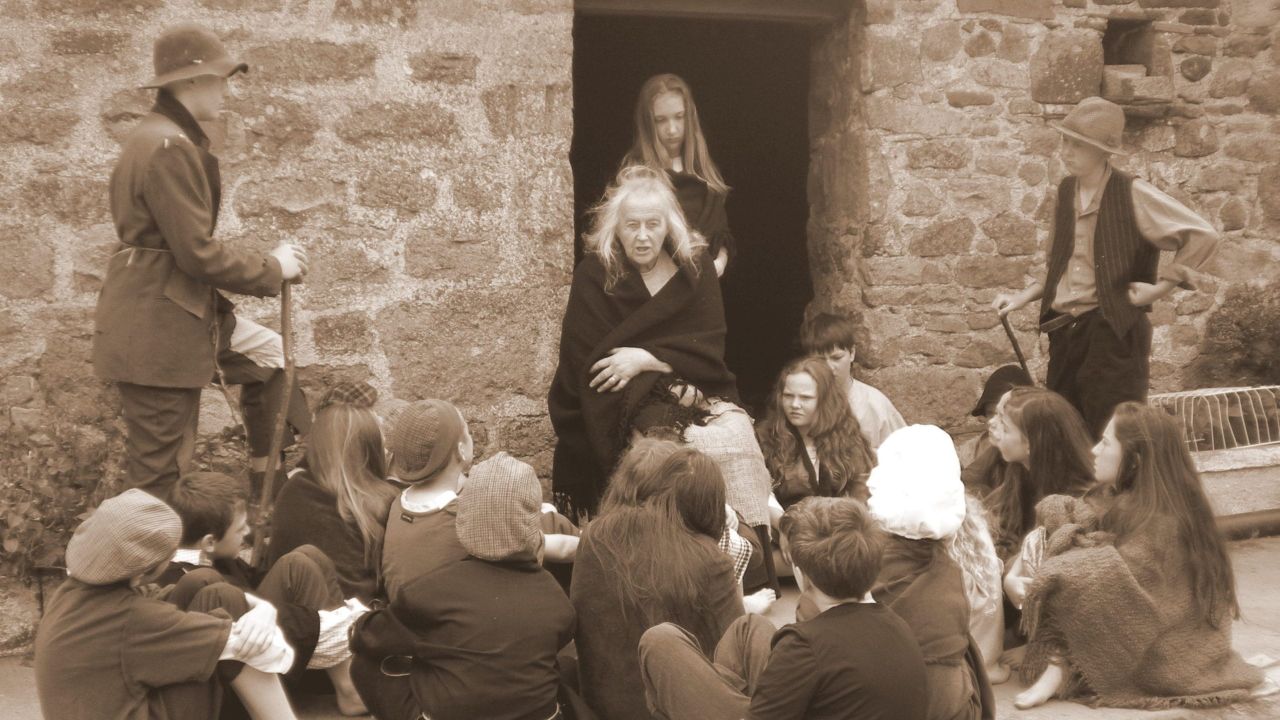
Celtic myths endure because they never pretended humans stood above nature. As discussed in Why Are Irish People Natural Storytellers?, these stories preserve wisdom rather than doctrine.
Cernunnos does not demand worship. He demands awareness.
Final Thoughts
Cernunnos remains one of the most enigmatic Celtic gods precisely because he resists simplification. He embodies life that renews itself without permission and wealth that flows without hoarding.
To know Cernunnos is to accept that nature does not need us but we need it.