Battle of Moytura: A Defining War in Celtic Myth

The Battle of Moytura stands at the heart of Irish Celtic mythology. Known in Old Irish as Cath Maige Tuired, this conflict does more than describe war. It explains how order replaces chaos. It also defines rightful kingship, balance, and sacrifice.
Unlike heroic epics that glorify conquest, Moytura asks deeper questions. Who deserves to rule? What makes a leader whole? And what happens when power lacks wisdom?
What Is the Battle of Moytura?
The Battle of Moytura refers to two mythological battles recorded in medieval Irish texts. The most famous battle pits the Tuatha Dé Danann, a divine race, against the Fomorians, beings linked with chaos, blight, and imbalance.
The conflict takes place on the plains of Moytura, often associated with modern County Sligo and County Mayo. These locations mattered deeply in Irish tradition, much like the Hill of Tara, which symbolized sovereignty and sacred rule:
https://celtguide.com/hill-of-tara/
The Tuatha Dé Danann and the Burden of Kingship
The Tuatha Dé Danann represent skill, wisdom, and craft. Yet they begin the story flawed. Their king, Nuada, loses an arm in battle. Under Celtic law, a king must be physically whole. His injury forces him to step aside.
This rule may seem harsh, but it reflects an ancient belief. The king embodied the land. A broken body meant a broken realm.
Nuada later regains his kingship with a magical silver arm. Even so, the story reminds us that power alone never guarantees legitimacy.

Balor and the Fomorians: Chaos Given Form
The Fomorians oppose everything the Tuatha Dé Danann represent. They embody destruction, tyranny, and imbalance. Their leader, Balor of the Evil Eye, kills with a single glance. His eye scorches land and life.
Balor does not rule through wisdom. He rules through fear.

Celtic myth often frames conflict as a moral struggle rather than a political one. You can see this narrative instinct explored further in our article on why Irish people are natural storytellers:
https://celtguide.com/why-are-irish-people-natural-storytellers/
Lugh: The Hero Who Changes the War
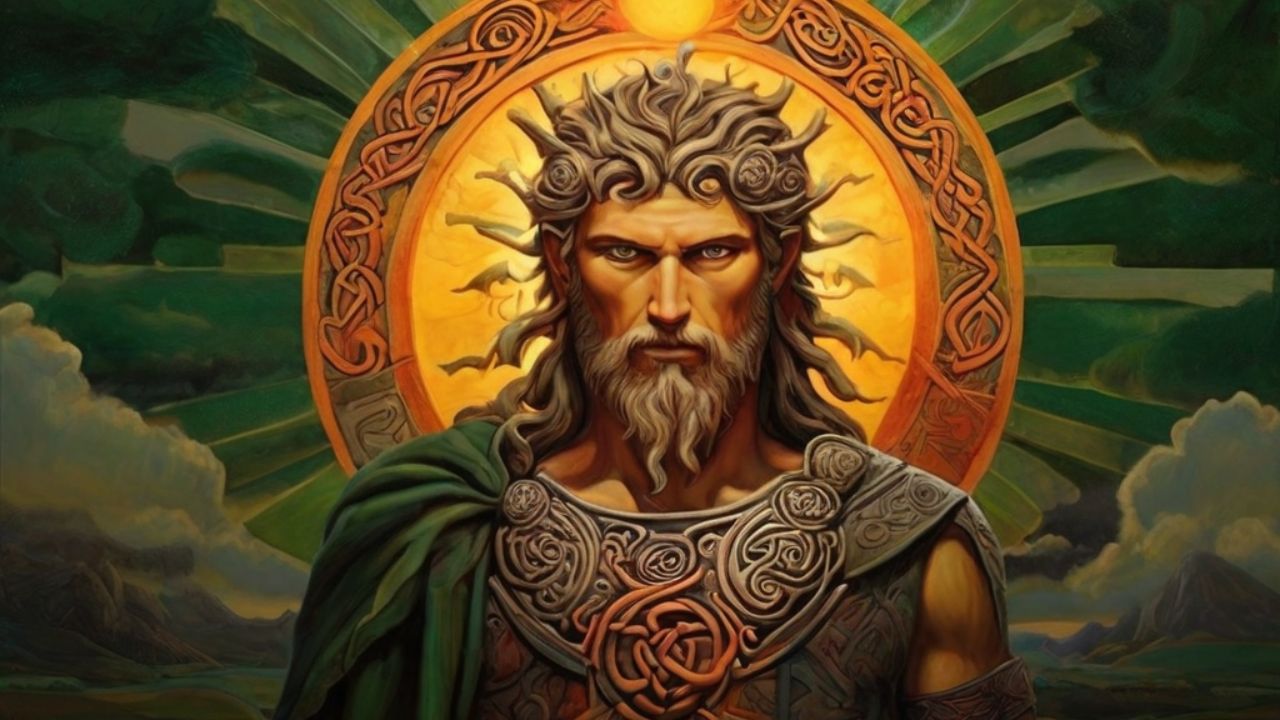
The battle turns with the arrival of Lugh Lámhfhada, the many-skilled god. Lugh unites every craft. He fights, heals, and strategizes.
Unlike Balor, Lugh leads through balance. He ultimately defeats his own grandfather, striking down Balor and ending the Fomorian threat.

Lugh’s role echoes solar symbolism and renewal, which we explore in depth in our guide to the Celtic sun god Lugh:
https://celtguide.com/celtic-sun-god-lugh/
This victory does not celebrate domination. It restores harmony.
Sacred Objects and Ritual Meaning
The Battle of Moytura features powerful sacred objects. These include the Spear of Lugh and the Cauldron of Dagda, which never runs empty.
Such objects reflect Celtic ritual thinking. Tools carried spiritual weight. They sustained community and continuity. You can explore this symbolism further in our article on the Cauldron of Dagda:
https://celtguide.com/cauldron-of-dagda/
Victory in Moytura depends as much on ritual order as on strength.

Why the Battle of Moytura Still Matters
The Battle of Moytura remains relevant because it mirrors human societies. It warns against leadership rooted in fear. It values wholeness, skill, and cooperation.
Rather than glorifying endless war, the myth insists on balance. When chaos dominates, the land suffers. When wisdom leads, harmony returns.
This idea runs through Celtic mythology like a steady current. It explains why these stories continue to resonate across centuries.
Final Thoughts
The Battle of Moytura does not end with triumph alone. It ends with responsibility. Power must serve the land. Leadership must remain whole.
That message still speaks clearly today.