
Scottish Wedding Kilts with Sporrans: Tradition, Elegance, and Meaning
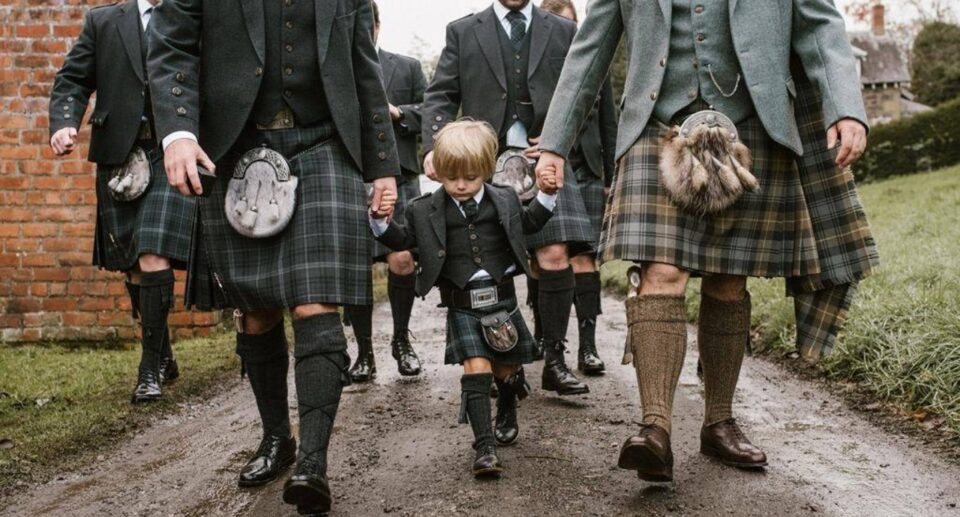
Few wedding outfits feel as striking as a groom in a Scottish kilt. The fabric carries history. The details show pride. And the sporran that elegant pouch worn at the waist, ties the look together with purpose and symbolism.
During my research years at the University of Edinburgh, I saw how wedding attire reveals identity. A kilt doesn’t simply decorate a ceremony. It tells a story about ancestry, place, and belonging.
If you’re new to tartans, you may enjoy our guide to what tartan really is, which explains how these patterns develop and why they matter.
What Role Does the Sporran Play?
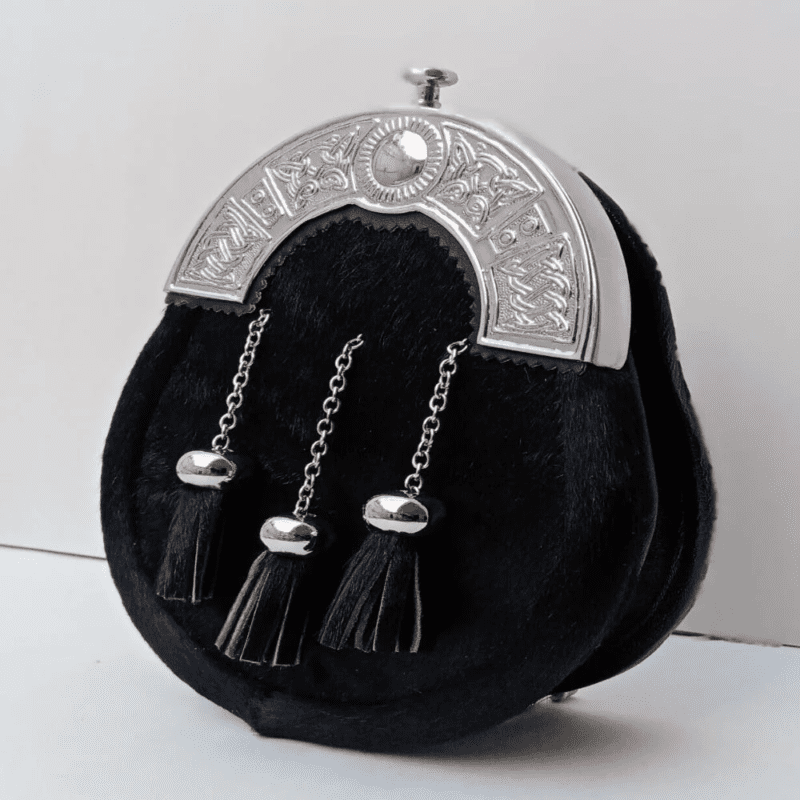
The word sporran comes from Scottish Gaelic and means “purse.” Kilts have no pockets, so sporrans originally carried essentials. Over time, they also became decorative.
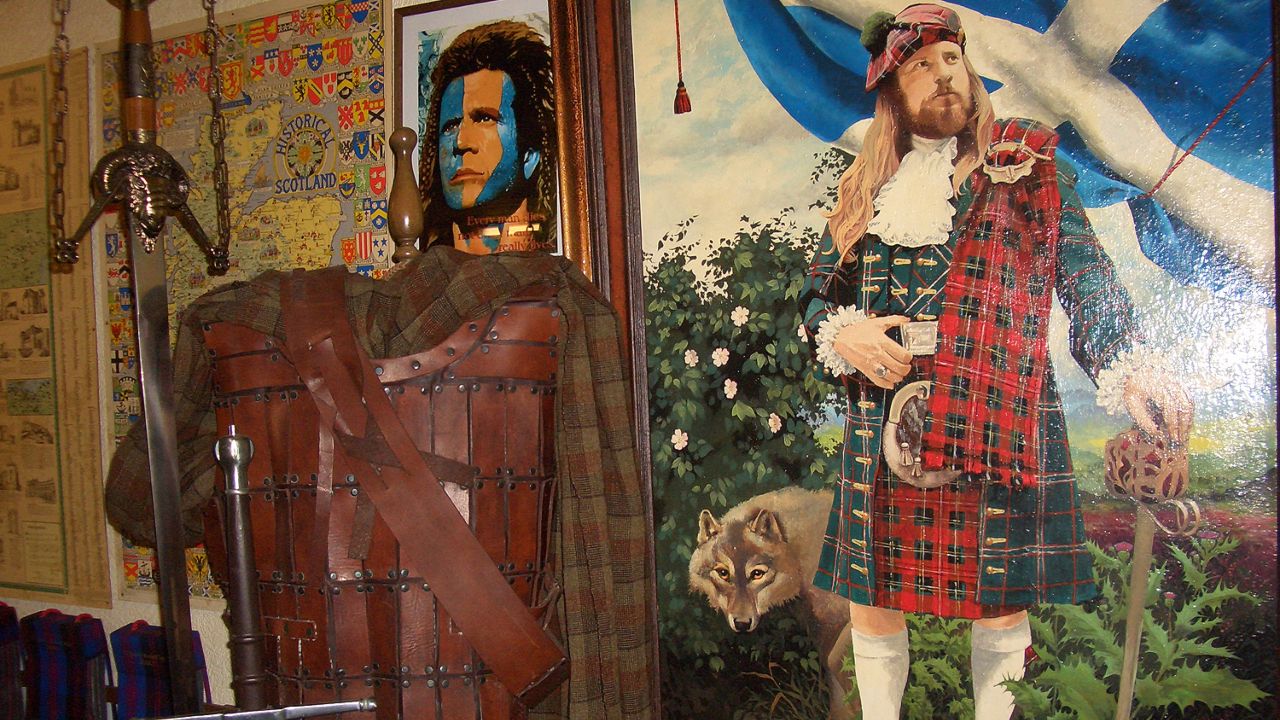
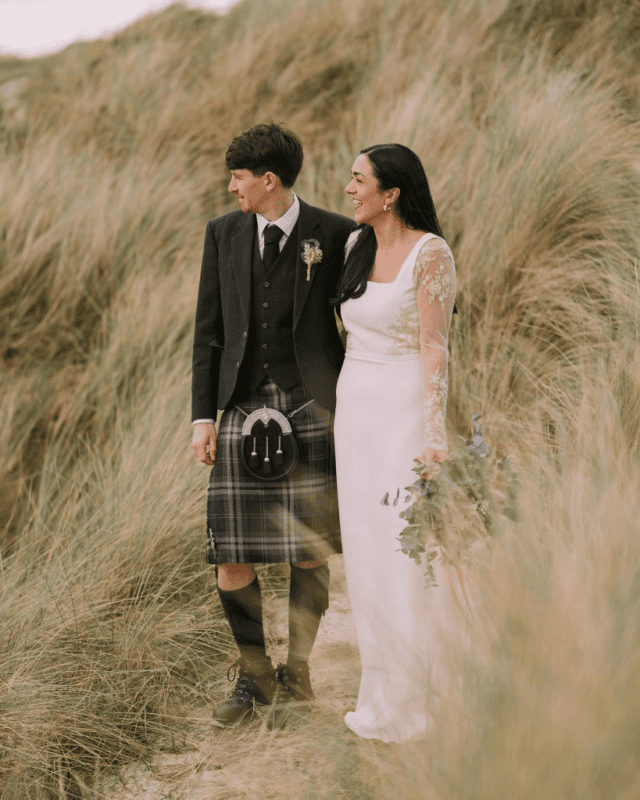
At weddings, a sporran signals dignity. It balances the outfit visually and grounds the kilt with beautiful craftsmanship. Leather, fur, and detailed metalwork often appear on formal sporrans. They usually hang from a chain strap and sit neatly at the front of the kilt.
Different styles suit different ceremonies:
- Day sporrans: simple and understated.
- Semi-dress sporrans: a blend of casual and formal.
- Full-dress sporrans: ornate and ceremonial, often perfect for weddings.
Choosing the Right Wedding Kilt
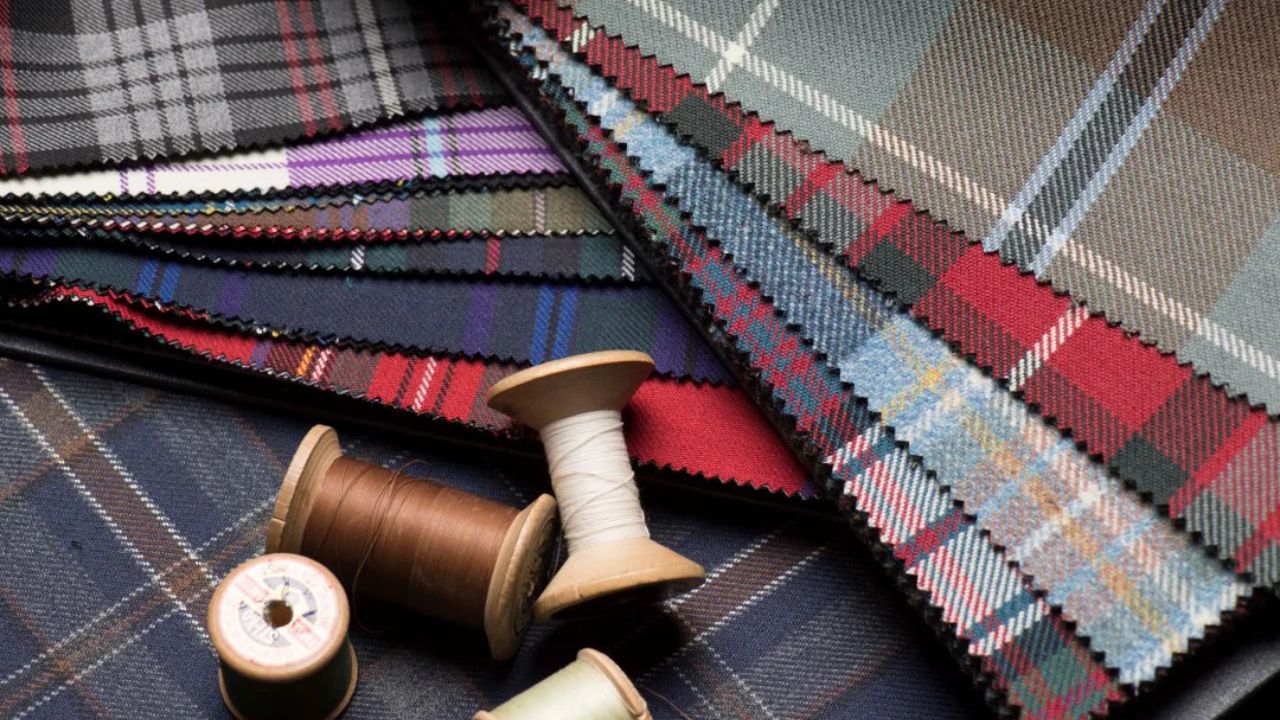
A wedding kilt reflects personal heritage, but it also respects setting and tone. Many couples choose a tartan connected to family lineage. Others select colors that fit the venue or season.
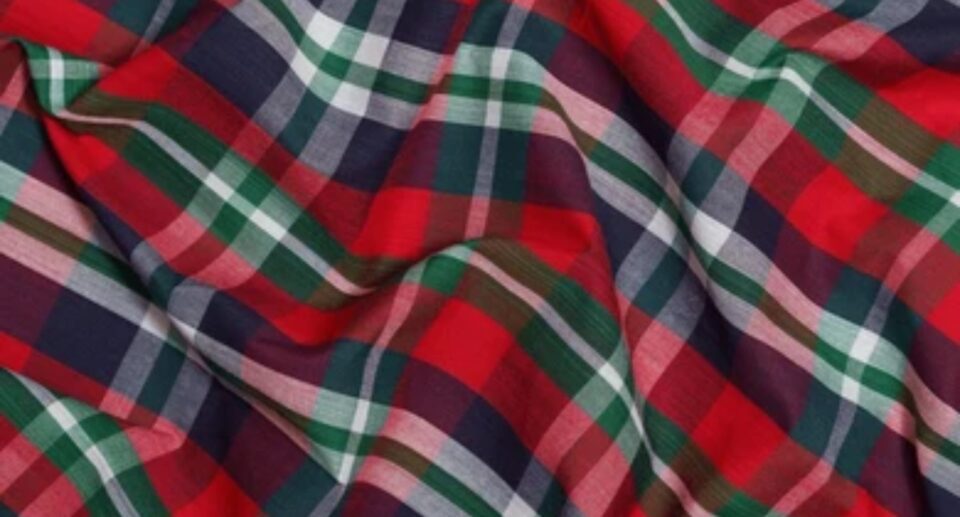
Green and blue work beautifully in Highland scenery. Deep red feels bold and celebratory. Some grooms choose a muted tartan to create an elegant, refined look. Our overview of how tartan prints developed helps explain why these choices carry meaning.
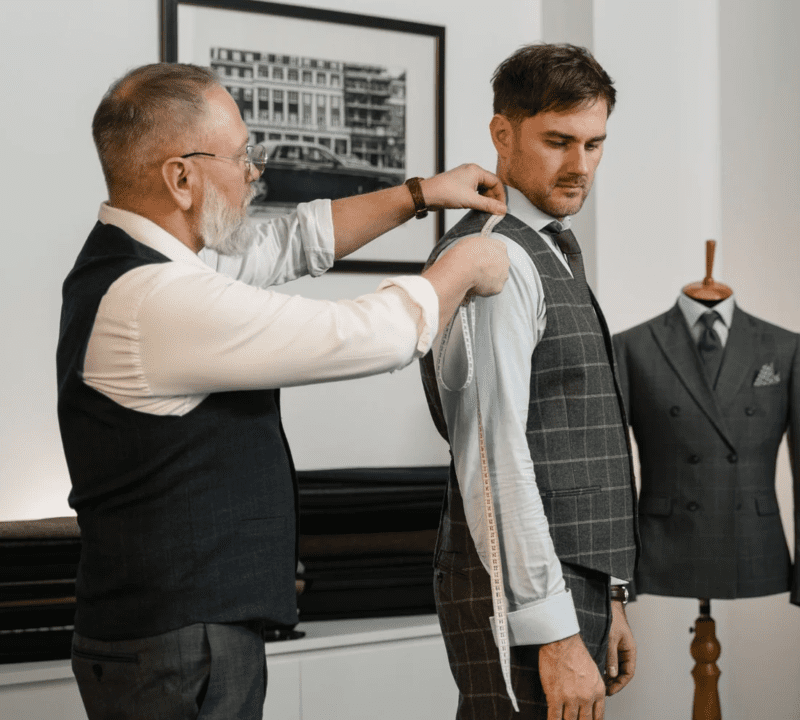
If you want more support choosing a kilt style, our practical guide on how to measure for a kilt keeps the process simple and prevents last-minute tailoring stress.
Accessories That Complete the Look
A traditional wedding outfit works as a set. Each element supports the others:
- Prince Charlie jacket or Argyll jacket for formality.
- Kilt hose and flashes that echo the tartan colors.
- Ghillie brogues laced elegantly around the ankle.
- Kilt pin to add weight and style.
- And, of course, the sporran, the visual centerpiece.
Kilts take part in stories far beyond weddings as well. If that fascinates you, see how they appear on screen in kilts in movies and shows, popular culture keeps this tradition alive.
Symbolism on a Wedding Day
A wedding celebrates union, not only between two people, but between families and communities. Wearing a kilt honors that connection.
The sporran sits at the heart of the outfit, close to the center of the body. Many Highland historians interpret that placement as symbolic. It suggests guardianship, responsibility, and care. The groom carries tradition forward, quite literally.
You will see similar layers of symbolism throughout Scottish heritage. Our stories on landscape, ritual, and folklore such as the reflections across our blog collection show how deeply these meanings run.
Practical Tips for First-Time Wearers
If you plan to wear a kilt and sporran at your wedding, a few simple choices make everything easier:
- Try on the full outfit weeks ahead.
- Keep the sporran centered and at mid-torso height.
- Match metals; sporran cantle, buttons, and cuff links.
- Choose comfort. You will stand, walk, greet, and dance.
For weather questions (yes, Scotland likes surprises), our guide on kilts and Scottish weather offers realistic advice.
Closing Thoughts
Scottish wedding kilts with sporrans bring heritage into the present. They carry memory, artistry, and ceremony all at once. When a groom steps forward in full Highland dress, the moment feels grounded, not only in love, but in history.
If you want to explore more Celtic traditions, language, and culture, wander through our main blog hub, each article opens another door into the past and present of the Celtic world.