Highlander’s Sgian Dubh: History, Meaning & Tradition
Few elements of Highland dress spark more curiosity than the small knife tucked neatly into the kilt hose. This knife, known as the Sgian Dubh, sits at the intersection of symbolism, etiquette, and Highland identity. Its story blends practicality with cultural pride, and it helps us understand how the Highlander balanced daily life, ceremony, and self-presentation.
Where the Sgian Dubh Comes From
The term Sgian Dubh comes from Scottish Gaelic and translates to “black knife,” referring either to its dark handle or the sense of formality associated with concealed blades. Its origins link closely with Scotland’s long tradition of carrying small utility knives. Highlanders needed tools for food, travel, and protection. The Sgian Dubh evolved from these essential day-to-day blades.
Understanding Highland culture often requires stepping into its deep historical layers, just as we explore in our guide on Scottish clans and their extended kinship networks. The Sgian Dubh is another expression of that heritage.
From Hidden Knife to Visible Courtesy
Originally, Highlanders carried a small blade hidden under clothing. When they entered someone’s home, Highland etiquette encouraged transparency. Any concealed weapon had to be revealed as a gesture of goodwill. So, the blade moved from the underarm or belt to the outside of the stocking.
Over time, this polite gesture transformed into tradition. The Sgian Dubh became a fixed part of Highland dress, especially when paired with a kilt—another garment with centuries of evolution, explored in our pieces on what tartan is and the history of tartan prints.

How the Sgian Dubh Fits into Highland Dress Today
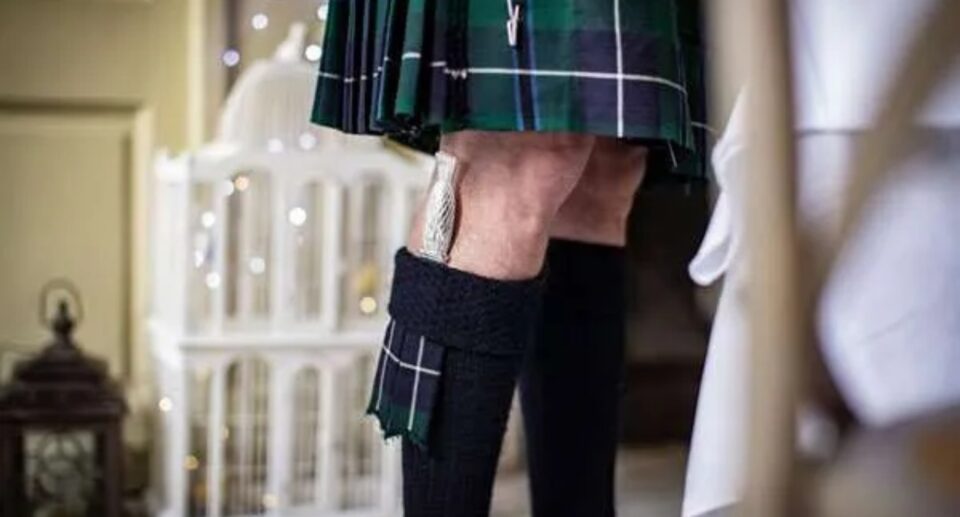
In modern Highland attire, the Sgian Dubh sits tucked into the right sock for a right-handed wearer (and the left for left-handed wearers). Only the decorative handle remains visible. This placement keeps the blade accessible, but it also signals respect, since the weapon stays within plain sight.
It becomes especially significant during formal Highland gatherings, weddings, and cultural festivals. In these settings, the Sgian Dubh works alongside other iconic accessories such as the sporran and the kilt itself. Those curious about related weaponry can explore our article on the Scottish dirk knife, which offers context on how Highland knives differ in size and purpose.
Craftsmanship and Cultural Identity
Many Sgian Dubhs feature carved wooden handles, stone tops, or metal work inspired by Celtic knot symbolism. These artistic details link the knife to the wider artistic tradition of Scotland, much like the carvings discussed in Celtic stone art.
Some families even pass Sgian Dubhs down through generations. The knife becomes a quiet archive of clan loyalty, personal history, and Scottish pride. For many, wearing it feels like carrying a small piece of ancestral identity.
Symbolism Behind the Tradition
The Sgian Dubh does more than complete an outfit. It represents the Highlander’s values—honesty, readiness, and self-reliance. Its presence reflects a culture shaped by rugged landscapes, kinship structures, and the constant need for practical skills. Themes like resilience and resourcefulness also appear in other stories across the Celtic world, such as the survival narratives explored in the Irish Potato Famine’s cultural influence.
While the Sgian Dubh once served practical needs, today it stands as a symbol of heritage. It keeps Highland customs alive, much like the storytelling traditions we explore in why the Irish are natural storytellers.
Modern Etiquette Around the Sgian Dubh
Though the blade carries tradition, modern rules require sensitivity. At public venues or official events, people sometimes use a dress Sgian Dubh, a version with no blade or a blunted insert. This keeps the visual tradition intact while respecting safety regulations.
Kilt wearers learning Highland dress often study accessory placement carefully. Our guide on how to wear a tartan sash and how to measure for a kilt helps readers build a full outfit with confidence, including where the Sgian Dubh should sit.
Why the Tradition Still Matters
The Sgian Dubh reminds us that Highland dress is more than fabric and ornament. It expresses shared memory. It celebrates continuity. And it connects everyday people to a lineage of craftsmanship, storytelling, and cultural meaning.
If you want to explore more traditions, landscapes, and Celtic heritage, visit our full blog archive or browse the Culture & Tradition category.