
Handfasting: An Ancient Celtic Marriage Tradition

Marriage has taken many forms throughout history, but few are as symbolic and poetic as handfasting. This Celtic ritual, once a trial marriage and now a beloved wedding. Tradition binds two lovers not just in law but in spirit. Today, it is embraced across cultures as a deeply meaningful way to celebrate union.
What Is Handfasting?
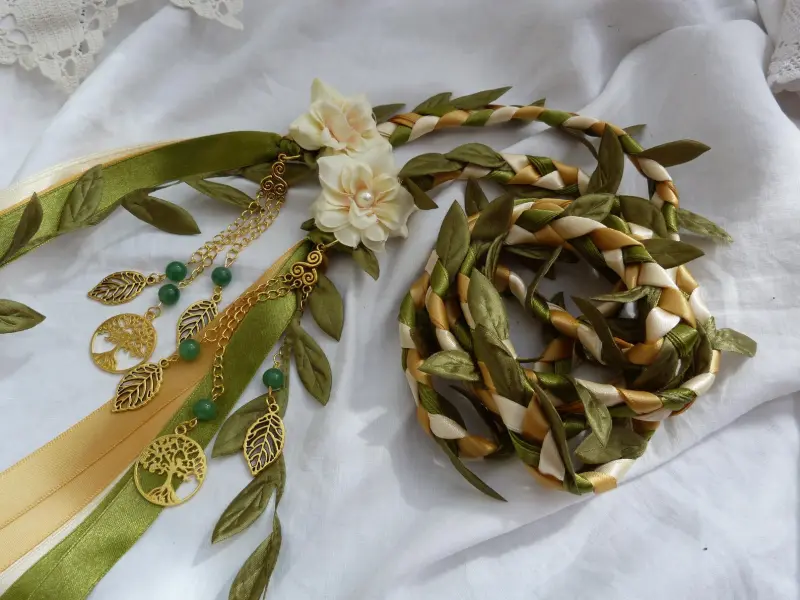
At its heart, handfasting is the binding of two hands with cords, ribbons, or cloth to symbolize unity. The phrase “tying the knot” actually originates from this ritual. In medieval Celtic societies, handfasting was a form of betrothal or trial marriage, typically lasting a year and a day. If the couple remained committed, it was formalized into lifelong marriage.
For more on how Celts embedded symbolism into daily life, see our exploration of Celtic stone carvings.
The Ceremony: Symbols and Rituals
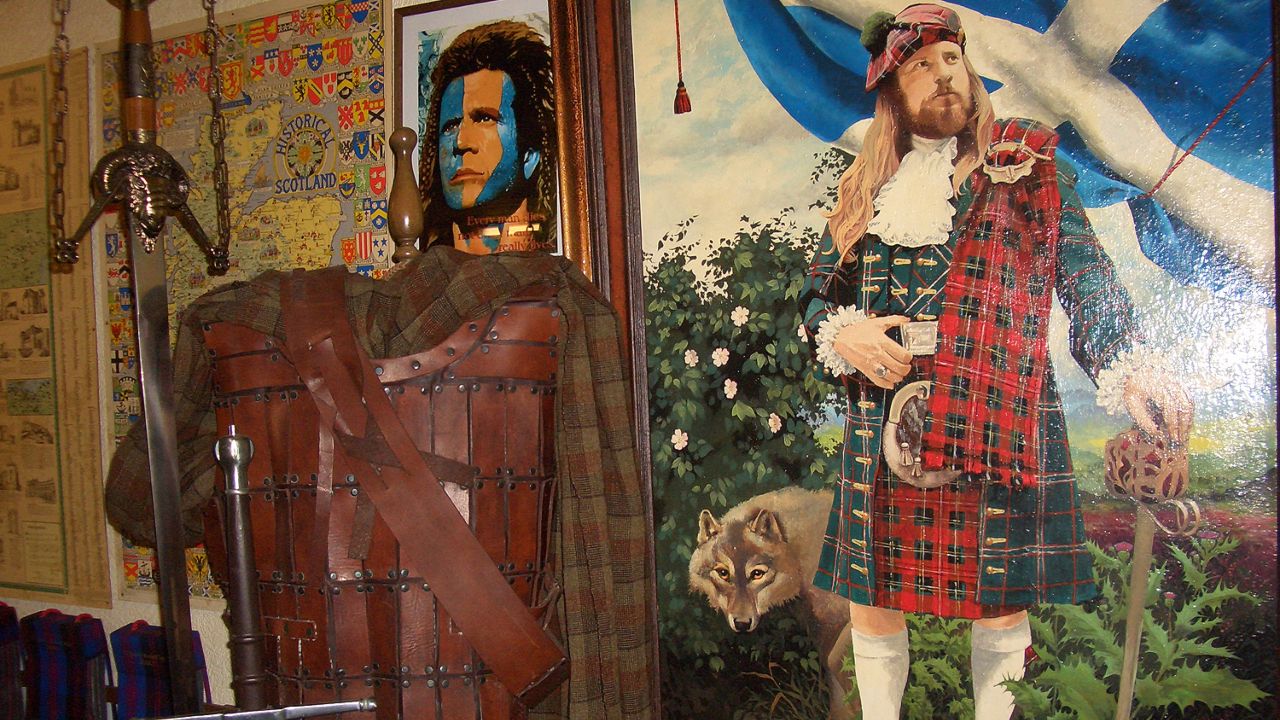
While handfasting varied across Ireland, Scotland, and Wales, its central theme remained: unity through symbolic binding.
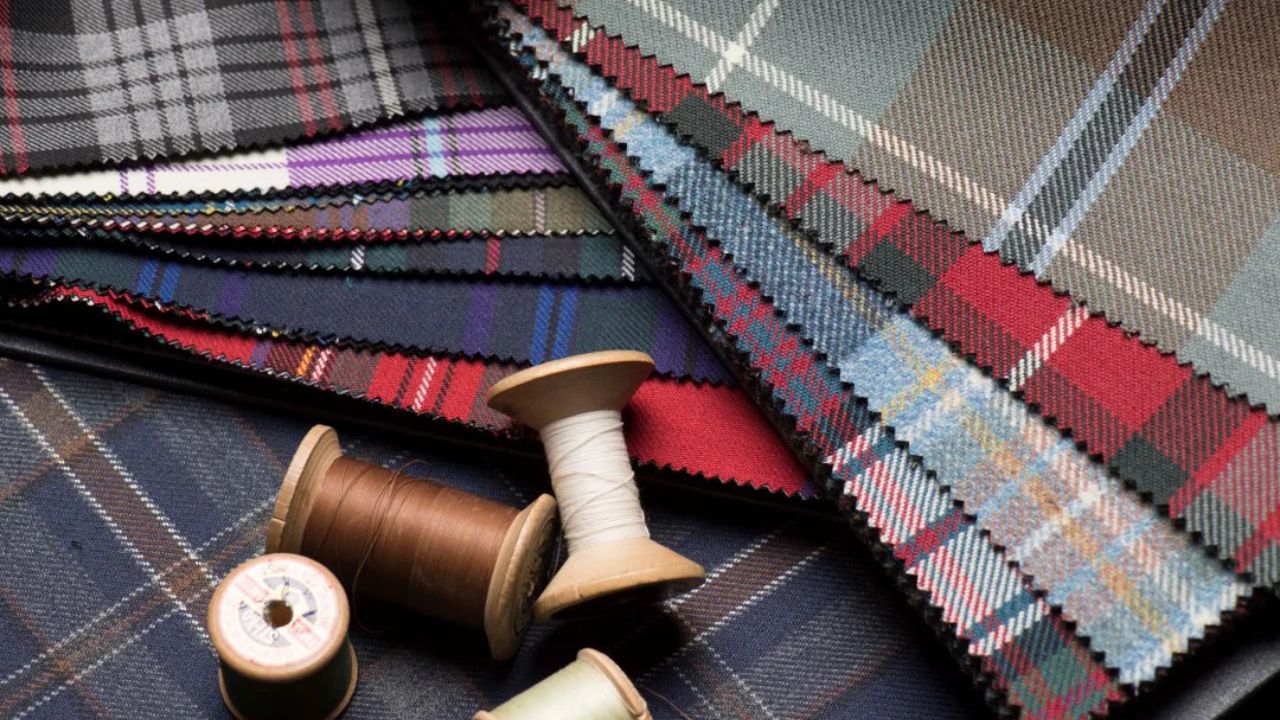
- The Binding Material – Often tartan, rope, or braided cords. Each color symbolized aspects of love—red for passion, green for fertility, blue for loyalty. (For more on patterns, explore what is tartan?).
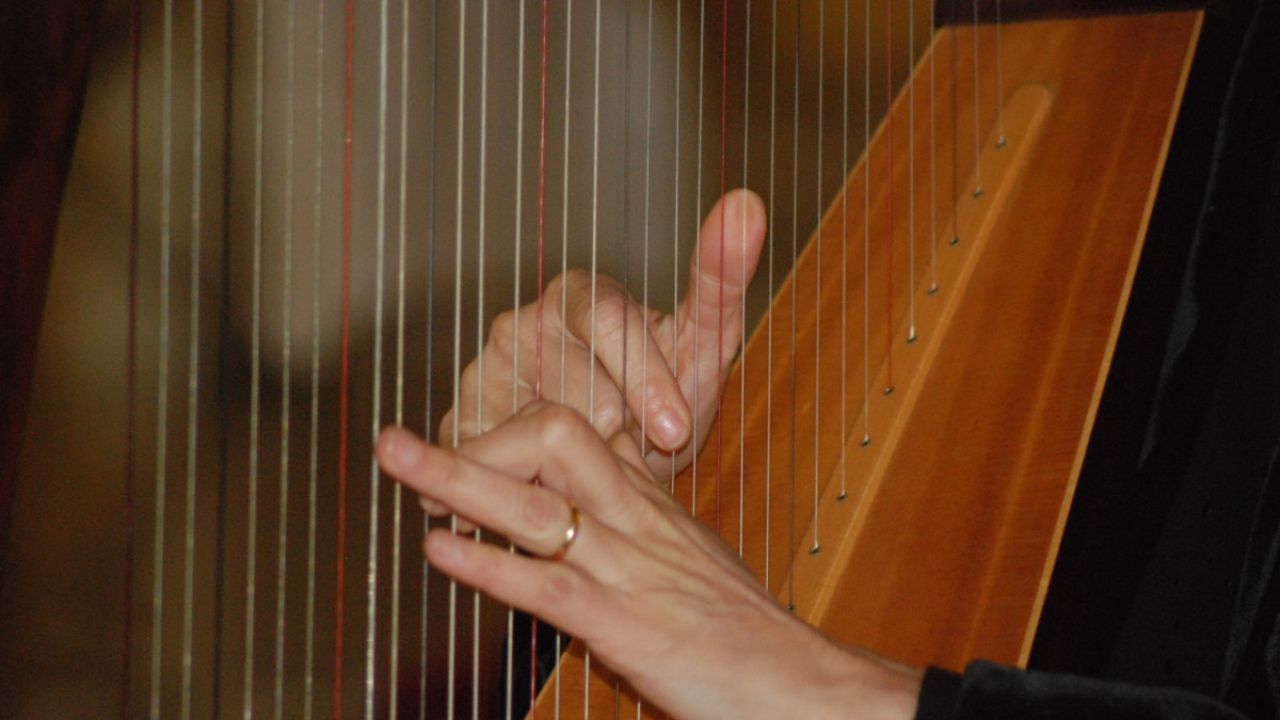
- Witnesses and Bards – Just as the clarsach harp elevated ceremony with music, bards often sang blessings during handfasting.
- The Words – Vows exchanged were often simple promises of love and fidelity, spoken in Gaelic or the couple’s native tongue.
Spiritual and Cultural Meaning
To the Celts, marriage was not only a legal contract but a sacred union tied to nature and the divine. The ritual often invoked deities like Lugh, the Celtic sun god, ensuring blessings of prosperity and light upon the marriage.
Handfasting reflected Celtic beliefs in cycles and harmony, much like the symbolism of the oak tree in Celtic culture, which represented strength and endurance.
Handfasting in Modern Weddings
Today, handfasting is enjoying a renaissance. Couples across the world, whether Celtic descendants or simply drawn to meaningful rituals, incorporate it into weddings. Some choose to use family tartans, linking the practice with clan heritage (see how many Scottish clans exist).
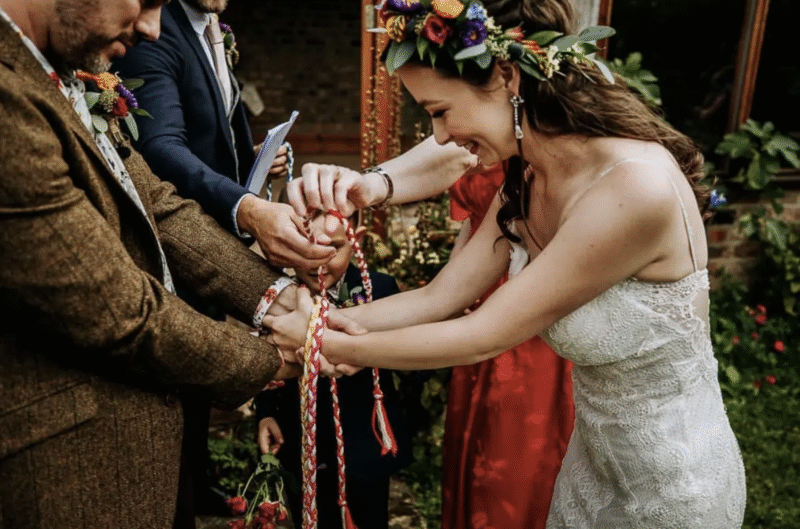
It blends seamlessly with both religious and non-religious ceremonies, offering a tangible, beautiful way to symbolize unity.
Related Traditions
Handfasting shares deep connections with other Celtic symbols of love:
- The Claddagh ring with its heart, hands, and crown.
- Gaelic proverbs that celebrate loyalty and love.
- Children’s lullabies sung to bless families.
Together, these traditions form a cultural tapestry that has carried Celtic values of love, unity, and storytelling into the modern age.
Conclusion: A Knot That Binds Beyond Time
Handfasting is more than a quaint tradition. It is a ritual of love, equality, and connection to heritage. Whether you choose to incorporate it into your wedding or simply admire its history, it offers a reminder that love is both personal and universal.
For more explorations into Celtic traditions, visit our Celtguide Blog.