
Ghillie Brogues: Iconic Scottish Shoes

Ghillie Brogues are more than traditional Scottish shoes. They are a distinctive symbol of Highland dress, blending practicality, cultural heritage, and elegant design. Understanding Ghillie Brogues reveals much about Scotland’s history, the evolution of fashion, and the interplay between function and style in Celtic culture.
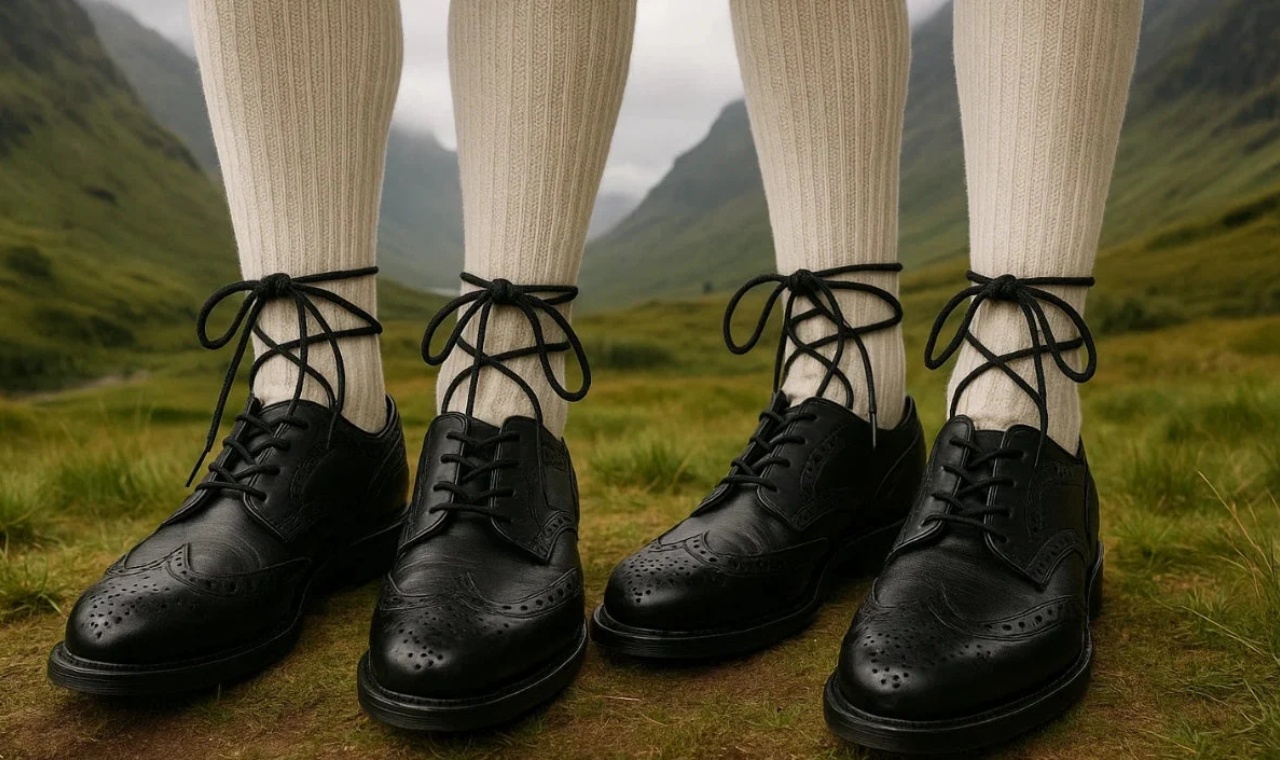
These shoes are instantly recognizable by their open lacing and long laces that wrap around the ankle. They originated to meet the practical needs of Highland terrain, allowing water to escape during wet conditions. Over time, they became ceremonial, completing the classic kilt outfit for weddings, dances, and Highland games.
For insight into Highland dress and kilt history, see:
https://celtguide.com/do-irish-wear-kilts/
Origins and Evolution
Ghillie Brogues trace their roots back to the 18th century. The word “ghillie” comes from the Gaelic for a servant who assisted in hunting and fishing, reflecting the shoes’ practical beginnings. Designed for rugged landscapes, early Ghillie Brogues featured minimal leather, open sides, and long laces to secure the foot and allow water drainage.
As Scottish culture evolved, these shoes transitioned from utility to formal wear. Today, they maintain their open-laced style but feature polished leather, decorative broguing, and more structured soles. They reflect Scotland’s ability to blend tradition with refinement.
Distinctive Design Features
Ghillie Brogues stand out for several reasons:
- Open Lacing: Long laces cross over the top of the foot and wrap around the ankle, preventing the shoes from slipping during Highland dances.
- Decorative Broguing: Small perforations along the edges add both style and tradition.
- Low Cut & Flexible Sole: Designed for mobility, perfect for outdoor terrain and dancing.
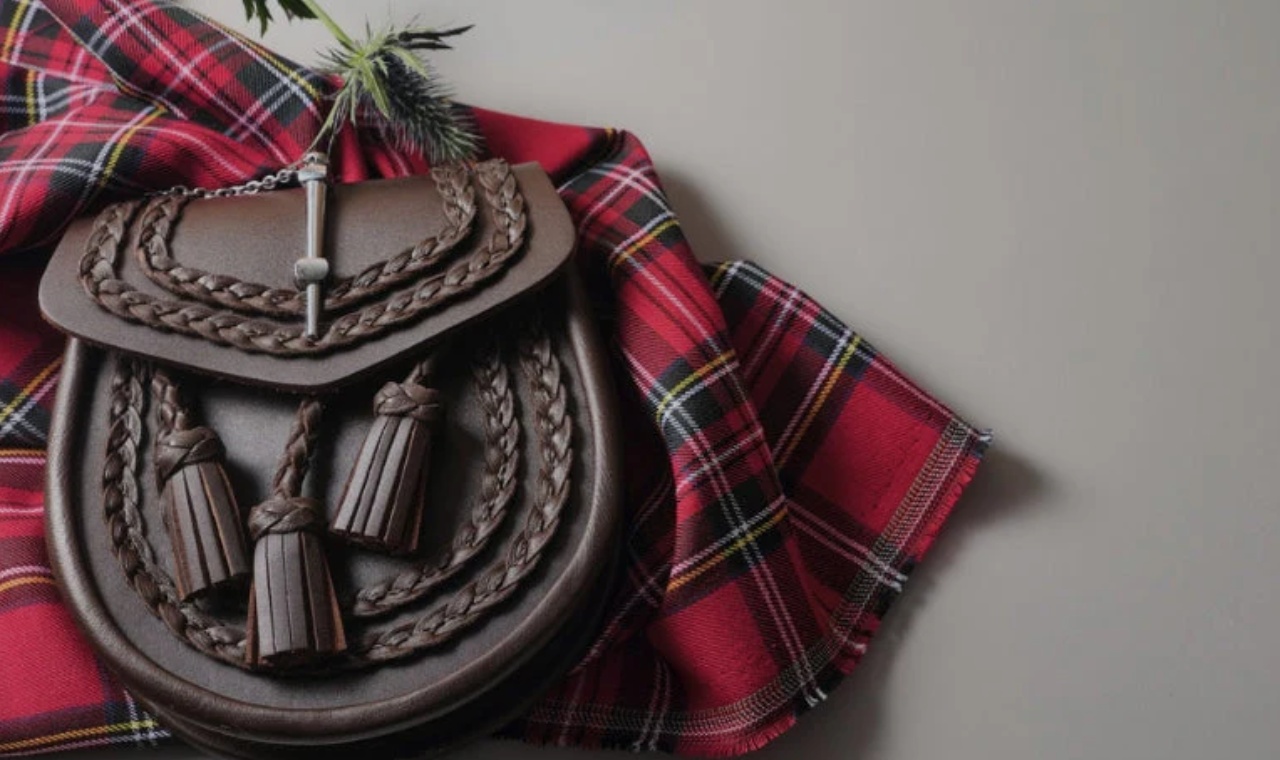
These design elements make Ghillie Brogues unique among footwear, combining both form and function. They pair perfectly with kilts, sporrans, and other traditional Highland attire. Learn more about sporrans here:
https://celtguide.com/what-is-an-irish-kilt/
https://celtguide.com/how-to-wear-a-tartan-sash/

Cultural Significance
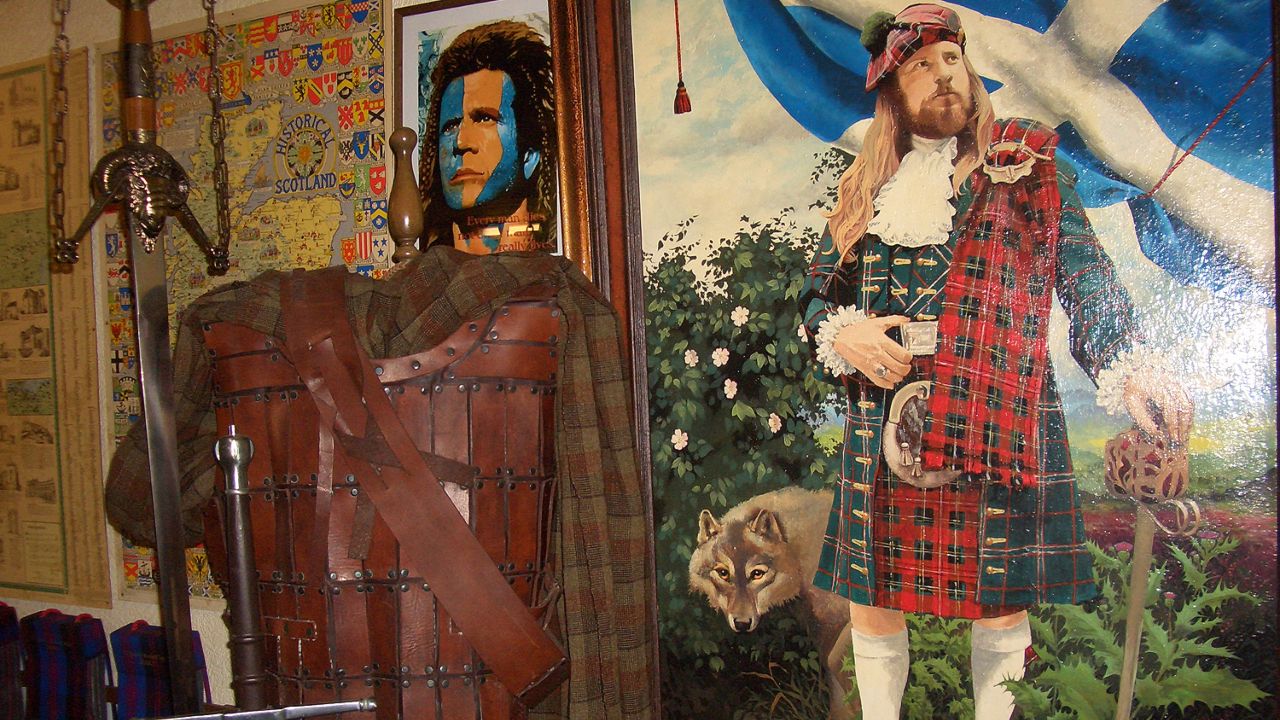
Ghillie Brogues are more than shoes. They carry cultural identity. Wearing them signals respect for Scottish heritage and tradition. At weddings, ceilí dances, or Highland games, these shoes complete the ensemble, visually connecting the wearer to centuries of history.
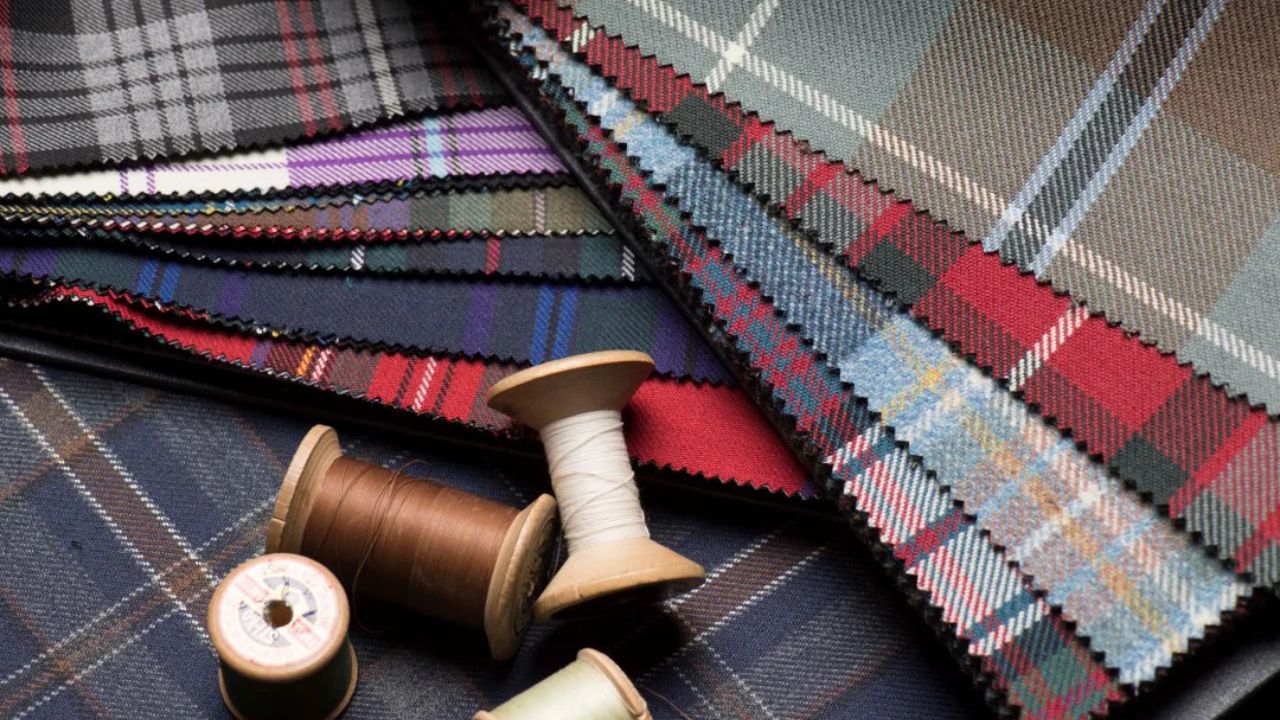
The style and finish of Ghillie Brogues can also communicate formality. Simpler leather models suit casual events, while polished, ornate versions accompany full dress for ceremonial occasions. They embody the same thoughtful symbolism seen in tartan choices and sporrans, linking clothing to story, identity, and community.

Explore tartan traditions here:
https://celtguide.com/what-is-tartan/
https://celtguide.com/how-to-wear-a-tartan-sash/
Ghillie Brogues in Modern Times
Modern craftsmanship keeps Ghillie Brogues relevant. Skilled shoemakers preserve traditional patterns, while integrating contemporary comfort features. Leather quality, precise lacing, and proper soles remain central to authenticity.
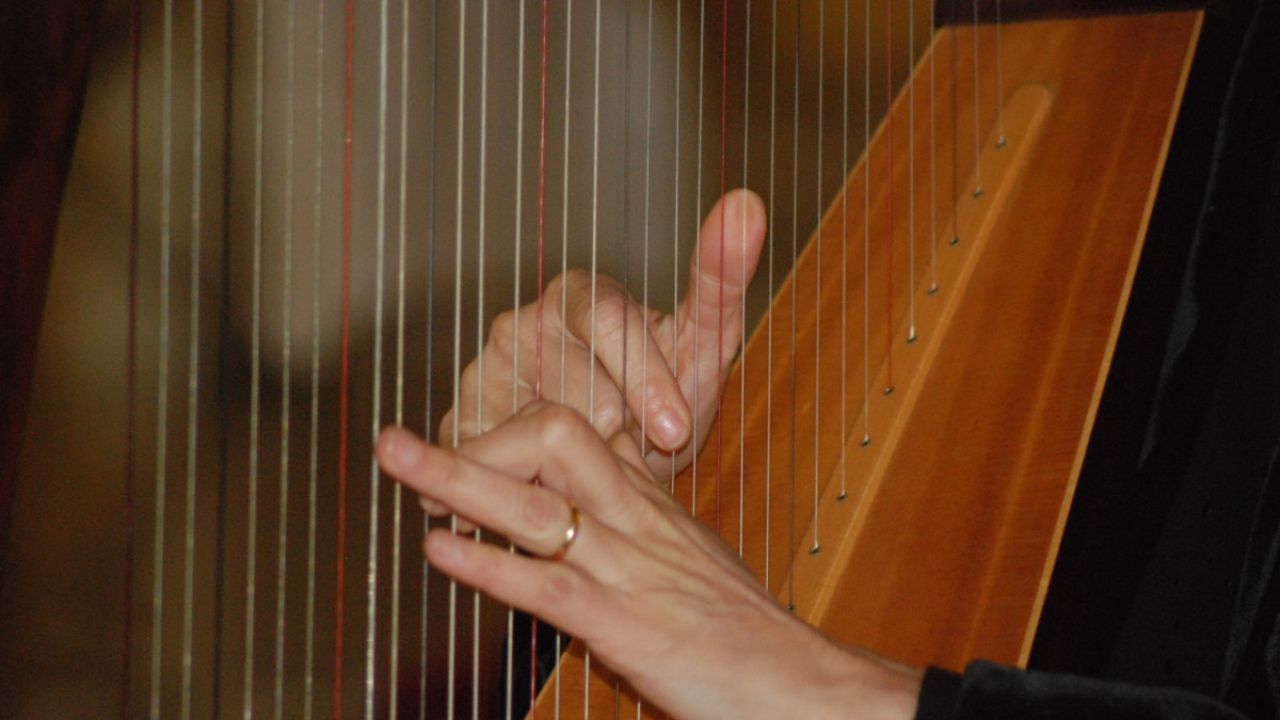
Today, they appear in films, stage performances, and cultural festivals, emphasizing Scotland’s ongoing dedication to heritage. Just as Irish Clarsach harps preserve musical tradition:
https://celtguide.com/what-is-a-clarsach-a-comprehensive-guide-to-the-celtic-harp/
…Ghillie Brogues preserve functional artistry in footwear.

Why Ghillie Brogues Matter
Ghillie Brogues combine history, culture, and practicality. They are not mere shoes; they are statements of identity, craftsmanship, and tradition. For anyone exploring Celtic heritage or Scottish fashion, these shoes exemplify how functionality and cultural pride can coexist in everyday attire.
For more insight into Scottish heritage and Celtic culture, explore the CeltGuide blog:
https://celtguide.com/blog/